
Engineering a protein revolution
Professor Tuck Seng Wong is using Darwinian evolution to deliver the next generation of sustainable proteins.

4 min read
Inside this story →
- Our food systems have an overeliance problem. We depend on three crops for nearly 60% of all plant-derived food calories consumed globally; rice, maize, and wheat.
- Professor Tuck Seng Wong is using precision fermentation to create alternative proteins at scale.
- Using a Darwinian approach, his team develops high-performing strains capable of producing essential ingredients (like dairy proteins) without having to rely on livestock or carbon-intensive farming.
From bread and beer to yoghurt and cheese, micro-organisms have always been put to work in our kitchens. The ancient Egyptians, for example, were using fermentation over 5,000 years ago. So while humans have long relied on microbes to sustain us, researchers are now looking at how we can better control the fermentation process, instead of leaving nature to do its own thing.
What is precision fermentation?
Precision fermentation takes this ancient craft and gives it a kind of modern ‘GPS’; providing pinpoint commands that tell microbes exactly what proteins to make.
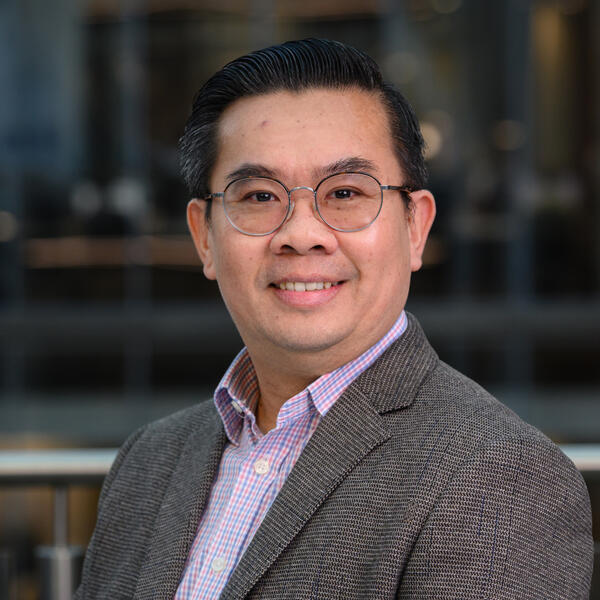
"Instead of asking a micro-organism to just ferment freely, we give it very specific genetic instructions" explains Professor Tuck Seng Wong, Chair of Biomanufacturing at the University of Sheffield and Deputy Co-Director of the National Alternative Protein Innovation Center (NAPIC).
Working at the intersection of chemical engineering and biology, Professor Wong and his team are pioneering methods to use micro-organisms to build a more scalable, resilient global food system.
Nature-inspired engineering
For Professor Wong, the secret to solving complex industrial challenges is learning from millions of years of natural biology. Instead of building new artificial systems from scratch, his research takes direct inspiration from nature, namely how organisms have evolved to solve survival problems.
"Nature is a much better engineer than me,” Professor Wong happily concedes.
"The best, most simple, and most elegant solution already exists in nature for the most complex challenges we face in society. Our job is not to invent something completely new, but to harness these natural solutions and turn them into something scalable, economically viable, and relevant."
"Our job is not to invent something completely new, but to harness these natural solutions and turn them into something scalable, economically viable, and relevant."
The approach relies on an idea as old as biology itself: survival of the fittest. By applying selective pressure (such as heat, alternative carbon source, or presence of inhibitors) in his automated fermenters, Professor Wong and his team let evolution reveal which microbial strains are best equipped to manufacture essential food ingredients at scale.
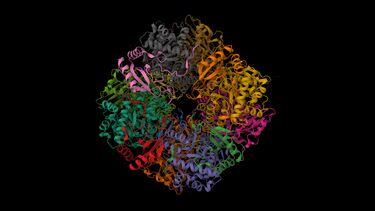
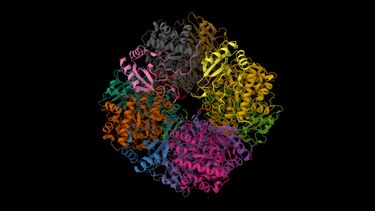
RuBisCO - the most abundant protein on Earth
Professor Wong's team have developed a way to reclaim RuBisCo from crop leaves and farm waste
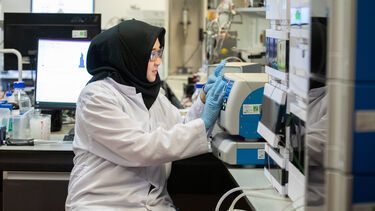
What really sets the work apart is speed. By pairing this Darwinian stress-testing with AI-driven automation, his team can screen millions of candidates in days rather than years. Crucially, these winning strains can be cultivated to produce essential food ingredients (like dairy proteins) without relying on livestock or carbon-intensive farming.
- More stories like this
Unlocking overlooked proteins
The research also considers the overlooked resources that nature already provides in abundance.
Despite thousands of edible species existing in nature, just three crops; rice, maize, and wheat, account for nearly 60% of all plant-derived food calories consumed globally. For Professor Wong and his team, this imbalance is a huge opportunity.
"Over-reliance on a tiny number of staple crops means we desperately need to diversify our food resources. We're only scratching the surface of what nature has given us, and that isn't healthy for the planet."
A new focus for the team is an enzyme called RuBisCo. Despite being the most abundant protein on Earth and containing all nine essential amino acids required for human health, it remains largely absent from our diets.
Professor Wong’s team have now designed a way to reclaim RuBisCo from crop leaves and farm waste, tapping into this widely neglected resource.
Research Roundup: Curious and groundbreaking research stories, delivered monthly to your inbox.
The nutrition paradox
Beyond the lab lies a stark socio-economic reality that drives Professor Wong’s research: the nutrition paradox.
While millions suffer from hunger and malnutrition globally, wealthy nations are grappling with rising obesity. In the UK, obesity rates have doubled since 1993.

"There's something deeply wrong about how we produce and consume food today,” says Professor Wong.
There's something deeply wrong about how we produce and consume food today.
Professor Tuck Seng Wong
Professor of Biomanufacturing, School of Chemical, Materials and Biological Engineering
“We live in a world where significant populations don't have enough access to good nutrition, while at the same time, others eat too much of the wrong food."
But addressing this challenge is a job for more than just engineers and biologists, says Professor Wong; it demands cross-disciplinary collaboration.
Working within the University of Sheffield’s Institute for Sustainable Food, he collaborates with behavioural psychologists, economists, and nutritionists, to better understand consumer habits, secure regulatory approvals, and design food people actually want to eat.
"Accessing nutritious food is a fundamental human right. Everyone deserves equitable access to good nutrition regardless of where they’re from. Solving this problem isn't just a biological challenge, it's engineering, economics, behaviour, policy, and culture working together."
By partnering with global manufacturing giants like Unilever and Mars (partners of NAPIC) and working with ambitious UK startups like FibreFolks to develop high-protein, high-fibre fermenter flour, the team is building the complete supply chain needed to turn alternative proteins into everyday ingredients we’ll soon see on supermarket shelves.
Connect with Professor Wong on LinkedIn

Written by Tommy Wilson (Marketing and Communications Officer, Research)
For further info contact: mediateam@sheffield.ac.uk