Research to tackle poor health outcomes in Nepal receives new funding
Ongoing collaboration with local governments in Nepal continues, providing training and mentoring to improve efficiency and decision making within healthcare provision.

- Health systems in Nepal face structural challenges to improving health outcomes
- Previous research found a lack of local-level capacity to effectively manage facilities and procurement
- New funding will allow continued work alongside community advocacy and academic partners in Nepal, providing further recommendations and training for local governments
The introduction of a new constitution in Nepal in 2015 led to a fundamental restructuring of healthcare provision across the country, devolving power to local governments. Despite improvements to healthcare in recent years, under-investment, governance deficiencies, and the country’s challenging geography all contribute to poor overall health outcomes.
A previous six-year project, funded by the Health Systems Research Initiative and the Medical Research Foundation, worked in three of Nepal’s seven provinces to examine all areas of the health system at federal, provincial and local levels, including health service delivery, governance, human resources, financing, health information systems, and medicines.
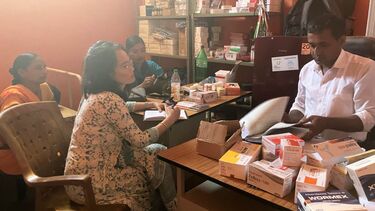
One of the key findings of the initial research was that the devolution of health system responsibilities from central to local government had not been accompanied by building local capacity to effectively and efficiently procure medicines and other essential supplies. Amshu Dhakal, a project researcher based at the Manmohan Memorial Institute of Health Sciences, said that “One of the things we've often found in our research with local government staff is that they feel the need for more support and training to do their jobs well - especially around complex tasks like forecasting what medicines each health facility will need, and making sure they are in the right places at the right time."

Led by Simon Rushton alongside partners in the UK and Nepal, the project has now received additional funding from the Medical Research Foundation as part of their Changing Policy and Practice scheme, to support real-world impact across often overlooked health areas.
A key part of the work has been the development of recommendations and training programmes for local government health system stakeholders across Nepal. This has included key partnerships with Nepali researchers and organisations, including PHASE Nepal and the Manmohan Memorial Institute of Health Sciences.
The new funding will build on previous interventions, and allow a new model of participatory training and mentoring to be developed and embedded within Provincial and Federal-level standard training packages, helping local-level decision-makers better understand and respond to health system needs in their areas. Barsha Rijal, project researcher from PHASE Nepal said, “We have found in our previous work with local government staff that participatory models of training, using approaches like role play and scenario-based exercises, can be really effective ways of staff learning the knowledge and skills they need - including learning from each other"