
Artificial Intelligence for Life Sciences MSc
School of Psychology,
Faculty of Science
School of Biosciences,
Faculty of Science
-
Start date
September 2027 -
Duration
1 year -
Attendance
Full-time
Explore this course:
Apply now for 2027 entry or register your interest to find out about postgraduate study and events at the University of Sheffield.

Course description
Combining theoretical teaching with hands-on computational practice, this MSc will train you in the knowledge and techniques you’ll need to apply artificial intelligence (AI) successfully, ethically, and in a robust way to research challenges in the life sciences.
You’ll explore the links between biological brains and artificial agents, understand AI’s current role in life sciences research, and master the fundamental computational skills needed to accelerate scientific discovery.
Explore your modules in detail
This interdisciplinary course brings together perspectives from biosciences, psychology, health, engineering and beyond. You’ll cover programming languages R and Python, machine learning techniques, and statistical and mathematical principles, before learning about applications of AI that are revolutionising life sciences, from natural language processing for text analysis, to the review of medical images.
The biggest part of the course is the research project in artificial intelligence for life sciences. Here you’ll apply the knowledge and computational skills you’ve gained to work on a project that contributes to a bigger research challenge, either independently or part of a small team under the supervision of one of our leading academics.
Example research project topics could include:
- Automated segmentation and 3D volume reconstruction of skin tissues imaged using optical coherence tomography
- Predicting readiness to engage in psychotherapy from self-referral forms: a natural language processing analysis of clinical documents
Who should study this course?
Whether your background stems from biology, chemistry, engineering, physics, mathematics, psychology or neuroscience, this interdisciplinary course will nurture your passion for understanding how AI can be used for good in life sciences research, ready for an exciting career.
Why Sheffield?
We’re home to the Centre of Machine Intelligence, one of the University of Sheffield’s Centres of Excellence. Here, we’re supporting world-class AI research, addressing global challenges and social harms associated with AI.
Modules
Core modules:
Research project in artificial intelligence for life sciences
Data Management and Visualisation
Neural Dynamics and Computation
Scientific programming in computational and cognitive neuroscience
Ethics of Artificial Intelligence and Contemporary Technology
Applied Statistical and Machine Learning Methods for Empirical Research
AI Applications in Biosciences
AI-Augmented Scientific Discovery: Frontiers and Issues
Core modules:
Research project in artificial intelligence for life sciences
Data Management and Visualisation
Neural Dynamics and Computation
Scientific programming in computational and cognitive neuroscience
Ethics of Artificial Intelligence and Contemporary Technology
Applied Statistical and Machine Learning Methods for Empirical Research
AI Applications in Biosciences
AI-Augmented Scientific Discovery: Frontiers and Issues
The content of our courses is reviewed annually to make sure it's up-to-date and relevant. Individual modules are occasionally updated or withdrawn. This is in response to discoveries through our world-leading research; funding changes; professional accreditation requirements; student or employer feedback; outcomes of reviews; and variations in staff or student numbers. In the event of any change we will inform students and take reasonable steps to minimise disruption.
Duration
1 year full-time
Teaching
You’ll learn through lectures, seminars, hands-on workshops, practical computational sessions, and individual research, delivered by research-active academics in the Schools of Biosciences and Psychology.
Your research project will allow you to work alongside an academic member of staff, conducting novel research.
We’ll provide you with regular feedback so you can understand your own development throughout the course.
Assessment
Assessment is mostly coursework-based and includes written exercises (essays, statistics and coding exercises, and e-portfolios) and oral presentations, and a written research report. Exams typically consist of short answers, numerical examples, and essay questions.
Your career
This MSc will give you knowledge of cutting-edge artificial intelligence tools and the skills to apply them to research problems in the life sciences.
It’s great preparation for research careers in the field of life sciences within academia or industry.
If you’re thinking about continuing your research training, you'll be well-equipped to pursue a PhD applying AI techniques to the most challenging problems in the biosciences, psychology, health, engineering and beyond.
School
School of Psychology
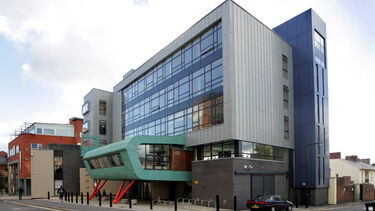
The School of Psychology at Sheffield is focused on exploring the science behind the human brain and human behaviour.
We're proud that 92% of our research is rated as world-leading or internationally excellent (Research Excellence Framework (REF), 2021). Our teaching is therefore informed by this cutting-edge scientific research, which ranges from cognitive and neural processes across the lifespan to the wellbeing of individuals and society. All of this has an impact on the population.
Our work explores child development, psychological therapies, health and wellbeing, lifestyle choices, cognitive behavioural therapy, safe driving, mother-baby interaction, autism, Parkinson's disease, and reducing prejudice and inequality. It’s research like this that our students are able to get involved in throughout their course.
Facilities
At Sheffield, we have a range of practical teaching and research facilities where you can get hands-on, applying the knowledge you’ve gained in your masters.
For your statistical training, we have computer labs where you can access industry standard statistical analysis software SPSS, computational modelling software MATLAB, as well as flexible programming languages Python and R.
You’ll also have the chance to access a range of tools for testing participants during your research projects. Depending on your project, these may include eye-tracking technology used in perception studies, TMS and TDCS equipment for experiments involving brain stimulation, and our state-of-the-art EEG suite for measuring brain activity. Individual and group testing rooms are also available.
School of Biosciences

The School of Biosciences brings together more than 100 years of teaching and research expertise across the breadth of biology. It’s home to over 120 academics who are actively involved in research at the cutting edge of their field, sharing their knowledge with nearly 2,000 undergraduate and postgraduate students.
We’re proud to be in the Top 5 in the UK for the quality of our research (Research Excellence Framework (REF), 2021). Our expertise spans the breadth and depth of bioscience, including molecular and cell biology, genetics, development, human physiology and pharmacology through to evolution, ecology, biodiversity conservation, and sustainability. This makes us one of the broadest and largest groupings of the discipline and allows us to train the next generation of biologists in the latest research techniques and discoveries.
Learn more about our research.
The school is based at the heart of the University campus, across the interlinked Firth Court, Alfred Denny, Florey, Perak and Addison buildings, which house lecture theatres, teaching labs and research facilities.
Entry requirements
Minimum 2:1 undergraduate honours degree in a relevant subject with relevant modules.
Subject requirements
We accept degrees in the following subject areas:
- Biosciences
- Chemistry
- Cognitive Science
- Computer Science
- Engineering
- Mathematics
- Neuroscience
- Physics
- Psychology
Module requirements
You should have studied at least one module on the topic of either Probability, Statistics, or Quantitative Analysis.
IELTS 6.5 (with 6 in each component) or University equivalent
Other requirements
We will not ask you to provide references or referee details as part of your application.
We will not ask for a formal supporting statement, although the application form will ask you to reflect on your previous background and experience relevant to the course.
If you have any questions about entry requirements, please contact the school.
Fees and funding
Additional costs
The annual fee for your postgraduate taught course may not include the costs for all compulsory elements. There are also other costs which you may need to consider. These costs may increase due to price increases outside of the University’s control and if you defer entry or change course.
Examples of what's included and excluded in postgraduate taught fees
Save on your course fees
Scholarships for international students
We offer scholarship opportunities worth up to £7,000 for international students from selected regions with excellent academic results and potential.
Alumni discount
As a Sheffield graduate, you’re entitled to a discount on your tuition fees worth up to £2,500.
Apply
You can apply now using our Postgraduate Online Application Form. It's a quick and easy process.
Contact
Any supervisors and research areas listed are indicative and may change before the start of the course.
Recognition of professional qualifications: from 1 January 2021, in order to have any UK professional qualifications recognised for work in an EU country across a number of regulated and other professions you need to apply to the host country for recognition. Read information from the UK government and the EU Regulated Professions Database.