
Environmental Science and Data MSc
School of Geography and Planning,
Faculty of Social Sciences
-
Start date
September 2027 -
Duration
1 year -
Attendance
Full-time
Explore this course:
Apply now for 2027 entry or register your interest to find out about postgraduate study and events at the University of Sheffield.

Course description
This course will build your knowledge of key environmental systems and processes while developing your ability to engage critically with contemporary environmental debates. Lectures, seminars and interactive discussions will provide you with a strong theoretical foundation. Building on this, the course focuses on developing enhanced data skills so that you can collect and analyse complex environmental data to back up hypotheses with scientific insight.
Hands-on learning will form a key element of your study experience - computer labs, fieldwork and laboratory sessions will give you practical experience in geospatial analysis, environmental monitoring and quantitative methods. You’ll apply these skills in real-world contexts and gain confidence in designing and conducting independent research projects under expert supervision.
An advanced research project will give you the opportunity to carry out an original study that integrates all your learning. Tailored tutorials and career guidance focus on preparing you for professional opportunities in environmental consultancy, policy, research and sustainability-focused industries worldwide.
We focus on the development of practical skills that are highly valued by employers from across the environmental sector, including geospatial programming, sensor deployment and machine learning - giving you the skills and knowledge to monitor the environment at scale.
We use an approach designed to deliver contemporary skills needed for our fast-changing world, for those who seek careers that tackle the climate crisis and natural hazards. You will be taught by world-leading experts in climate change, glaciology, volcanology, environmental hazards and climate adaptation.
Whether you're a graduate with a background in science, social science or engineering, or a professional wanting to retrain, this MSc could prepare you for the next step in your career. Our course welcomes applicants from diverse backgrounds who are eager to tackle today’s most pressing environmental challenges.
We welcome applicants with degrees in STEM subjects (for example environmental science, Earth science, the sciences) and quantitative social sciences (for example geography, economics, sociology) and professionals who want to upskill their data analysis skills.
Do you have a question? Talk to us
Book a 15-minute meeting online with the course lead to find out more information and ask further questions.
Book an appointment with Dr Jeremy Ely
Appointments will focus on providing insight into the course and learning experience. If you have any questions around fees, funding and applications, visit our Postgraduate homepage or get in touch.
Modules
Core modules:
Core modules:
- Geospatial Programming Essentials
-
This module aims to equip you with the practical skills and conceptual understanding needed to work with geospatial data using Python - one of the most widely used programming languages in environmental science, data analytics, and spatial research. It provides an applied, project-based learning environment in which you are able to gain hands-on experience in geospatial data processing, analysis, and visualisation, all within the context of understanding environmental issues.
15 credits
You will have time to learn how to manipulate and analyse spatial data, automating workflows using open-source Python libraries. The module will progress through core Python and geospatial concepts through to real-world scenarios addressing environmental and socio-spatial issues. Teaching includes interactive lectures, coding sessions, and guided projects, with no prior programming experience required. The module aims to equip you with essential geospatial data science skills for environmental modelling and spatial decision-making tailored for future employability. - Horizons in Environmental Change
-
This module explores the latest research into physical geography and environmental change, with a focus on contemporary research challenges. Focussing on cutting-edge environmental issues and research, the module examines a range of topics, innovative research approaches and methodologies.
15 credits
You will be able to engage with current research on topics such as climate modelling, observations of glacier change, and environmental monitoring. This is achieved through attendance at a series of research presentations by experts in the appropriate fields, and discussion of background concepts through paper discussions. Through a series of expert seminars, and group discussions led by module staff, you will use the knowledge and insights gained to critically review scientific literature and the methods and findings of research studies, and explore case studies that highlight the advances and applications of emerging research. You will be supported to develop both written and oral presentation skills to a variety of audiences. - Applied Environmental Monitoring
-
Applied Environmental Monitoring aims to equip you with the practical skills needed to observe, measure, and analyse our environment across a range of spatial and temporal scales, and ultimately understand the implications of monitoring outcomes. Drawing on laboratory techniques, field instrumentation, and remote sensing technologies, this module provides you with a comprehensive introduction to the methods used to monitor key components of our environment.
15 credits
Practical activities form a core part of the module. You will gain hands-on experience with environmental instrumentation in both field and laboratory settings. Throughout the module, emphasis is placed on understanding the strengths and limitations of different monitoring techniques, as well as on integrating data from multiple sources to develop a comprehensive view of environmental systems.
Through a combination of lectures and practical sessions, you will be able to build your capacity to evaluate and apply monitoring strategies to real-world environmental questions. By the end of the module, you will be prepared to contribute to data-driven environmental research, assessment, and decision-making in both academic, industrial, policy and applied contexts. - Designing Environmental Research
-
The Designing Environmental Research module provides you with the opportunity to develop essential skills to design and plan research projects. It offers a thorough introduction to the research process, focussing on the core elements necessary for a successful dissertation.
15 credits
The module will begin by exploring the origins of research problems and how individual topics contribute to broader scientific agendas. You will then be introduced to the principles of the 'scientific method', examining the roles of fieldwork, laboratory experiments, and modelling in research. The module aims to equip you with practical skills for planning a research project, including conducting literature reviews, performing data analysis, and presenting findings through written reports and graphical visualisations. It will also prepare you to develop a well-structured research proposal, providing a clear framework for your dissertation projects. As part of this we look at how others develop research, further enhance presentation and group work skills and reflect on transferrable skills valued in further education and employment.
By the end of the module, you will be equipped with the foundational knowledge and practical skills to design rigorous, impactful research that is aligned with current research priorities and methodologies.
Core modules:
Core modules:
- Machine Learning for Environmental Data
-
Machine learning is a rapidly growing technique for data analysis across a wide range of applications. Indeed, with the development of widely available open-source software packages, and the rapidly increasing volume of datasets made possible by technological advancements, more and more scientists are utilising machine learning algorithms in their research. This module provides you with a fundamental understanding of some of the most common algorithms currently utilised for analysis of geoscientific data. It will show you how to apply these algorithms to real-world datasets, using the Python programming language and its suite of freely-available software packages.
15 credits
You will be supported to develop a strong understanding of scientific computer programming (and Python specifically) and how machine learning may be utilised to help solve real-world research problems - extremely valuable skills for a range of careers paths. - Climate change: Science and Impacts
-
The Climate Change: Science and Impacts module offers you an in-depth understanding of the scientific foundations of climate change and its far-reaching impacts on the environment and society. This module explores the causes, processes, and consequences of climate change from a scientific perspective, while emphasizing the real-world implications for ecosystems, human societies, and global policy.
15 credits
You will get to examine the key scientific principles underlying climate change, including the greenhouse effect, climate modelling, and changing global circulations with far-reaching impacts. You will be able to explore the latest research on the impacts of climate change, focusing on areas such as extreme weather events, sea level rise, changes to ecosystems, and climate-sensitive diseases. Special attention will be given to understanding the social, economic, and political dimensions of climate change, including adaptation strategies and global mitigation efforts.
The module combines lectures, seminars, and case studies to provide both theoretical and practical insights into the science and impacts of climate change. You will be supported to gain the skills to critically evaluate scientific data and reports, engage with current climate research, and understand how climate change affects different regions and communities around the world.
By the end of the module, you will have been able to develop a solid grounding in climate science and an understanding of the multidisciplinary approaches required to address climate-related challenges. This module prepares you to contribute meaningfully to discussions and actions aimed at mitigating and adapting to climate change on a global scale. - Environmental Applications of GIS
-
This module introduces you to the role of Geographic Information Systems (GIS) in the study of the environment. You will explore a diverse range of topics, including the fundamental theory and practical applications of remote sensing, terrain analysis, hydrology, ecological mapping, and green/blue infrastructure. You will learn through a dynamic series of lectures, hands-on computer-based workshops, and practical fieldwork. Using both primary and secondary data, you will gain practical insights into the real-world environmental applications of GIS. You will be assessed through two pieces of coursework that allow you to demonstrate both your technical skills and your understanding of their application in a real-world environmental context.
15 credits
You will also take one optional module from the following:
You will also take one optional module from the following:
- Managing Climate Change
-
This module aims to provide you with a strong understanding of the social and physical science of climate change with relevance to international development. This understanding is then applied to consider the challenge of living with climate change in the Global South. The module is taught through seminars and lectures. Lectures introduce and impart factual knowledge while seminars allow you time and space to develop your skills in discussion, while enabling you to develop skills in applying key concepts to practical situations. Together these structure your learning, and provide an environment in which you can develop your skills in researching, presenting and debating arguments drawn from the wide ranging literature on climate change.
15 credits - Theory and Debates in Food Security and Food Justice
-
Food Security and Food Justice are areas of increasing importance at local, national, transnational and global scales. Political and non-political agents at multiple scales have recognised that Global Hunger and Food Security (of which Food Justice is a primary component) is a key challenge requiring urgent interdisciplinary investigation and problem solving. There remains limited agreement as to how best to approach these issues. This module provides you with a background to the problems encompassed within the food security/food justice nexus by drawing on academic and policy debates that focus on both the macro as well as the micro impacts. By looking across food systems, you will be able to hear about and develop skills in the critical evaluation of different strategies for mitigating the impacts of food insecurity and injustice. In addition to academic, knowledge and critical thinking skills, the module will help you to develop the following employability attributes: Communication, Networking, Collaboration, Influencing, Inclusivity, Defining Purpose, and Growth Mindset.
15 credits - Advanced Spatial Analysis
-
This module is aimed at students who already have a good degree of knowledge in GIS.
15 credits
In this module, you will develop a high degree of competence in a range of advanced spatial analysis methods. In doing so, you will explore different spatial approaches to problem solving and the theories and precepts which underlie software applications in GIS. You are taught in a series of inter-related computer workshops focusing on real-world data and problem scenarios. You will be assessed through a multiple choice exam, demonstrating your specialist knowledge, and via an in depth advanced methods report, providing evidence of advanced technical skills. These assessments will enable you to demonstrate the highly developed skills and knowledge sought by a range of employers. - The Urban Climate Emergency
-
Climate change is one of the most significant and urgent challenges of the 21st century. Cities generate over 70% of the world's CO2 and consume 60% of global energy, they therefore play an important part in mitigating the extent of climate change and in adapting to the effects of the climate crisis and its impacts on societies and the global environment. In this module you will get to explore the drivers of climate change and their implications for urban systems. The module will help you to develop skills in critically considering how urban professionals can respond to these challenges in ways that promote just and sustainable transitions. Key ideas and concepts will be presented in lectures, with supporting seminars providing space for discussion and debate. You will be supported to develop key employability skills in report writing and presenting clear and evidenced-based arguments.
15 credits
The Dissertation/Research Project module will run throughout the year covering autumn, spring and summer semesters.
Core module:
Core module:
- Advanced Research Project
-
This module offers you the opportunity to undertake a substantial, independent research project that reflects your academic interests and professional aspirations. The Advanced Research Project enables you to explore complex global issues within a chosen topic spanning climate change, natural hazards, biodiversity loss, environmental pollution and beyond.
60 credits
You will carry out an original research project, supported by expert supervision and, where relevant, engagement with ongoing research projects. The project may involve independent work or collaboration as part of a larger institutional research programme, allowing you to experience the real-world dynamics of academic research while developing your own contribution to the field.
The module is structured to guide you through the full research cycle. Beginning with topic selection you will progress through methodological design, data collection and analysis, and the production of a high-quality dissertation. Projects will draw on a range of methods, integrating science, data analysis, and critical insight into the societal impacts of environmental science.
This module not only strengthens your academic and analytical capabilities (independent problem solving, oral and written communication, data generation, manipulation and analysis), but also prepares you for future careers in research, policy or consultancy. For students looking to make an impact in addressing geographical or environmental issues, this Research Project module provides you with a platform to apply knowledge, test ideas, and contribute meaningfully to providing solutions to issues identified.
The content of our courses is reviewed annually to make sure it's up-to-date and relevant. Individual modules are occasionally updated or withdrawn. This is in response to discoveries through our world-leading research; funding changes; professional accreditation requirements; student or employer feedback; outcomes of reviews; and variations in staff or student numbers. In the event of any change we will inform students and take reasonable steps to minimise disruption.
Open days
Interested in postgraduate taught study? Book your place on our postgraduate online open day on Wednesday 25 November 2026.
Teaching
Teaching is active and immersive, designed to develop both your theoretical understanding and practical skills. Through a blend of lectures, seminars, workshops, lab sessions and fieldwork, you’ll get to explore key environmental systems, processes and methodologies while engaging critically with contemporary debates.
The course emphasises hands-on, applied learning, giving you opportunities to practise geospatial analysis, environmental monitoring, and quantitative research techniques in real-world contexts. Interactive online resources, flipped learning and scenario-based exercises support flexible study and encourage independent thinking.
Assessment
We use a diverse range of assessments to help you demonstrate your knowledge, skills and professional competence. Designed to reflect the applied nature of the programme, assessments encourage critical thinking, independent research and clear communication.
Assessments include essays to develop and test your conceptual understanding, oral presentations to help you to communicate research effectively, group projects to develop collaboration and interdisciplinary problem-solving skills, and data-led tasks, including geospatial and quantitative analyses, to develop and showcase your technical proficiency.
With constructive feedback throughout, these assessments are designed to build your intellectual independence and prepare you for careers in environmental consultancy, policy, research and sustainability-focused industries.
Your career
Graduates from this course could go onto careers in the environmental sector, data analysis, Geographic Information Systems, research and beyond.
We’re proud of the success of our alumni who have studied with us over the last two decades and have gone on to have tremendously successful and diverse careers, including:
- snow and avalanche research in Switzerland leading to a PhD studying snow on sea ice
- Expedition Guide and Glaciologist and Postgraduate Researcher in glacial geomorphology
- Lecturer in remote sensing and geography
- Environment Manager, Transport for London
- GIS Specialist, Ministry of Defence
School
School of Geography and Planning
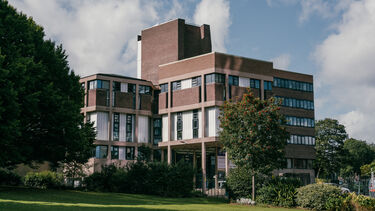
Student profiles
Meet our students: explore student profiles in the School of Geography and Planning.
Entry requirements
Minimum 2:1 undergraduate honours degree in a relevant subject.
Subject requirements
We accept degrees in the following subject areas:
- Social Sciences
- STEM subjects (Science, Technology, Engineering or Maths)
English language requirements
IELTS 6.5 (with 6 in each component) or University equivalent
Other requirements
If you have any questions about entry requirements, please contact the school.
Fees and funding
Additional costs
The annual fee for your postgraduate taught course may not include the costs for all compulsory elements. There are also other costs which you may need to consider. These costs may increase due to price increases outside of the University’s control and if you defer entry or change course.
Examples of what's included and excluded in postgraduate taught fees
Save on your course fees
Scholarships for international students
We offer scholarship opportunities worth up to £7,000 for international students from selected regions with excellent academic results and potential.
Alumni discount
As a Sheffield graduate, you’re entitled to a discount on your tuition fees worth up to £2,500.
Apply
You can apply now using our Postgraduate Online Application Form. It's a quick and easy process.
Contact
Any supervisors and research areas listed are indicative and may change before the start of the course.
Recognition of professional qualifications: from 1 January 2021, in order to have any UK professional qualifications recognised for work in an EU country across a number of regulated and other professions you need to apply to the host country for recognition. Read information from the UK government and the EU Regulated Professions Database.