
Next-generation of ankle replacements given major award boost at Sheffield
Researchers at the University of Sheffield have been awarded a £12m Engineering and Physical Sciences Research Council (EPSRC) grant for their work on ankle osteoarthritis, bridging the gap between engineering and healthcare.

Researchers at the University of Sheffield have been awarded a £12m Engineering and Physical Sciences Research Council (EPSRC) grant for their work on ankle osteoarthritis, bridging the gap between engineering and healthcare announced today, Thursday 18th June 2026.
Ankle osteoarthritis affects a significant portion of the adult population globally and most commonly occurs after an injury. Unlike hip or knee replacements, which are common operations in the UK, the ankle is a far more complex joint with a number of small bones and tendons surrounding it making surgical intervention much more difficult to achieve. Current available methods lack targeted investment meaning that even when surgeries are successful, patients are often left with chronic pain or limited movement. Consequently, both patients and surgeons tend to postpone the procedure, viewing surgery only as a last resort.
Engineering Advanced Solutions for End-stage Ankle Osteoarthritis (EASE-Ankle OA) is a five year project tackling Total Ankle Replacement (TAR). TAR is typically reserved for patients who are older, lighter or less active so new and more accessible implant designs are required to treat a wider range of people. The programme aims to develop new implants that will be longer-lasting, restoring mobility closer to that of the natural ankle and making them suitable for patients of all ages.
Led by University of Sheffield researchers from the School of Mechanical, Aerospace and Civil Engineering and the Insigneo Institute: Professor Claire Brockett (Project Lead), Dr Pinaki Bhattacharya and Dr Vee San Cheong alongside colleagues from the School of Medicine and Population Health: Professor Christine Le Maitre and colleagues from the University of Sheffield Advanced Manufacturing Research Centre, the project is truly global with collaboration with the Universities of Birmingham, Warwick, Leeds and Cardiff as well as Dartmouth College, USA and KU Leuven, the research has the potential to revolutionise how TAR is approached on a global scale.
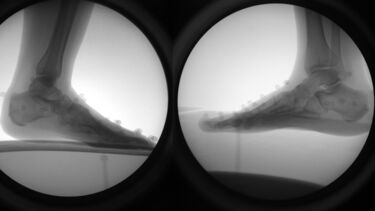
Claire Brockett, Professor of Biomechanics in the School of Mechanical, Aerospace and Civil Engineering, said: “The novelty with this project lies in the combination of the expertise of the team, that collectively means we can look at it all holistically and invest in making major improvements, as opposed to the small and slow improvements made over the last several decades. By delivering a patient-centred, computational and experimental modelling platform that enables robust assessment of existing and new implants, our implants will be positioned to transform patient mobility and quality of life.”
Professor Sue Hartley, Vice-President for Research and Innovation, said: “This is an exciting opportunity to work on a significant health problem that has been overlooked in the past. By bringing together diverse expertise, the research will have a profound impact on people's lives, not just in the UK, but globally.
“As the first large grant funded by EPSRC that focuses on the ankle, this project sets a new benchmark for the field - combining a world-leading systematic approach with a commitment to developing the next generation of research leaders to deliver life changing impacts for Total Ankle Replacements patients.”