
My Electrical and Electronic Engineering course provided a strong foundation in digital electronics and computer architecture for my placement year at Arm and my future career.

I decided to do a placement year because I wanted to gain practical industry experience and understand how the concepts I had studied at university translate into real engineering projects. It was also an opportunity to explore different areas of electronic engineering and develop a clearer idea of what I wanted to pursue after graduating. I spent my placement year as a CPU/SoC Verification Engineer with Arm, working across their offices in Cambridge and Sheffield.
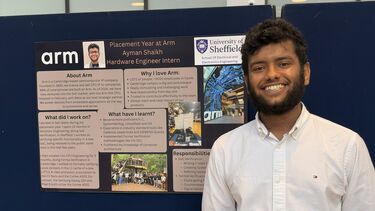
My favourite project was deploying CG-SEC across the L1 cache of a new A-class core. This involved dynamically turning off the clock on portions of the chip to reduce power consumption, and then verifying that the functional behaviour remained identical. It was fascinating, and I had the opportunity to solve several challenging problems along the way. Sometimes, even principal engineers would struggle to understand the reasons behind my bugs, so finding solutions to those issues was incredibly gratifying.
My degree provided a strong foundation in digital electronics and computer architecture. Choosing to do FPGA (Field-Programmable Gate Array) projects in my second and third year gave me technical skills in Verilog that really helped during my placement, alongside the C programming modules from my first two years. At work, I was often introduced to concepts and mechanisms that made no sense to begin with. Over time, however, the pieces gradually clicked into place through whiteboard sessions with my colleagues, combined with the academic knowledge I had built up during my course.
Beyond technical growth, the best part of my placement was being surrounded by knowledgeable, humble engineers who were always willing to take time out of their day to help and impart their wisdom.
Ayman Shaikh
MEng Electrical and Electronic Engineering
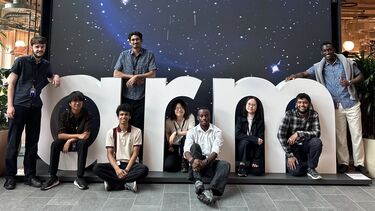
Beyond technical growth, the best part of my placement was being surrounded by knowledgeable, humble engineers who were always willing to take time out of their day to help and impart their wisdom. Being able to talk to them as colleagues, ask questions, and learn from them was so valuable. The intellectually stimulating environment made me excited to go to work every single day. On top of that, my fellow interns were wonderful, and it was great spending time together both inside and outside the office in Cambridge and Sheffield.
Working at Arm completely ratified my decision to pursue a career in the semiconductor industry. Before my placement, I was interested in several areas of electronic engineering but hadn't fully decided which direction I wanted to take. Working on CPU Formal Verification and processor design helped me develop a focused interest in digital hardware and processor verification.
My best advice is to apply, even if you don't feel you meet every single requirement in a job description. You aren't expected to know everything when you start. A large part of the experience is learning from the people around you and developing skills you might never encounter at university. Be proactive, ask questions, and make the most of every opportunity to work with different people and teams—it can lead you to opportunities you would never have otherwise considered.

Visit us
Discover what sets Sheffield apart at our next undergraduate open day in November.