
International Journalism MA
School of Information, Journalism and Communication,
Faculty of Social Sciences
-
Start date
September 2027 -
Duration
1 year -
Attendance
Full-time
Explore this course:
Apply now for 2027 entry or register your interest to find out about postgraduate study and events at the University of Sheffield.

Course description
Why study this course?
- See international journalism in action
Travel to Brussels as part of your studies, with costs included in your tuition fee. You will have the chance to report from another country, visit media organisations at the forefront of innovation and change, or hear from researchers working on key questions in the field. - Taught by active researchers and working journalists
Staff combine internationally recognised research with newsroom experience at outlets including the BBC World Service, Deutsche Welle, the Daily Mirror and the Yorkshire Post, among other news organisations in the UK and further afield. - Hands-on from week one
Our course has you producing journalism from the very beginning, building a portfolio of published work as you go, alongside a sharper critical understanding of how journalism is made. - In-demand digital skills
Newsrooms increasingly expect reporters to know how to investigate online. You'll learn to find, verify and interrogate evidence, and turn what you uncover into journalism that stands up to scrutiny. - State of the art facilities
Teaching takes place in The Wave, the University's flagship social sciences building. You'll have access to five newsrooms, four radio recording booths, and a fully-stocked media store with the latest cameras, microphones and editing software.
International news has never been more visible. Global networks broadcast around the clock, correspondents report to audiences of millions on social media, and stories move across borders in minutes. But the way that journalism gets made is changing fast, and this course teaches you both how to do it and how to understand it.
You'll learn to report stories that cross borders, from finding and interviewing sources to checking evidence, and producing journalism for different audiences and platforms. Digital investigation runs through the course, and you'll work with the Open-Source Intelligence (OSINT) techniques that are changing how many newsrooms find and check the news, from geolocating footage to working with large datasets. You'll also learn to use data and AI-assisted tools to understand what audiences read, watch and share.
Alongside the practice, you'll study how journalism itself works across countries, cultures and media systems. For example, you’ll get a chance to discuss questions such as why press freedom thrives in some places and struggles in others, how law and ethics shift across borders, and what happens to news when politics, technology and money collide. You'll put this into practice on a funded trip to Brussels, with costs covered by your tuition fee.
You'll be taught by an international team of researchers and working journalists who bring both worlds into the classroom. This means that your learning at the University of Sheffield will be shaped by the School's world-leading research in international journalism, which includes:
- Collaborating with radio stations in West Africa to empower women's voices
- Working with Russian exile media to develop new journalistic codes of practice
- Using AI to study how the news media use Freedom of Information requests
- Studying how AI is used by authoritarian regimes to spread propaganda
Towards the end of your course, you'll choose between a research dissertation and a final journalism project of your own. Either way, you'll graduate with a portfolio of work and a set of skills in demand well beyond the newsroom.
Do you have a question? Talk to us
Book a 15-minute meeting online with the course lead to find out more information and ask further questions.
Book an appointment with Dr Dani Madrid-Morales
Appointments will focus on providing insight into the course and learning experience. If you have any questions around fees, funding and applications, visit our Postgraduate homepage or get in touch.
Modules
Core modules:
Core modules:
- Theorising International Journalism
-
This module provides a theoretical foundation for the study of international journalism. You will critically examine the question, 'What do we mean by international journalism?', by engaging with key theories, concepts and debates. You will explore a range of perspectives that help define international journalism as a multifaceted and multi-layered phenomenon operating within, across and around different media systems, political contexts and global networks.
15 credits
The module also provides opportunities to discuss major events in contemporary international relations and their relationship to journalism. Through reading, analysis and informed discussion, you will develop an understanding of the role of international journalism from both contemporary and historical perspectives.
By completing the module, you will be able to critically assess different perspectives on international journalism and communicate your ideas clearly and effectively. You will also be able to summarise foundational theories and systems, and connect them to current developments and events in global journalism. These skills are valuable for careers in journalism, media, policy and research, where the ability to explain, evidence and justify well-informed views is essential. - Multiplatform International News Reporting
-
This module introduces you to the foundations of contemporary journalism in an international context. You will explore the complexities of reporting across borders, cultures and digital platforms, with a focus on accuracy, impartiality, ethics, trust and transparency.
15 credits
You will gain insight into the infrastructure of international newsgathering, moving beyond what a story is about to examine how it is reported, including the logistical and ethical challenges of sourcing, verifying and interrogating information. You will learn how to identify and vet sources, work with international networks of journalists such as stringers and fixers, and understand how news values shape coverage for diverse audiences alongside commercial expectations.
You will also develop practical skills in producing content across written, audio, visual and social media formats, and in critically assessing how different platforms shape the reporting of international news. By the end of the module, you will be equipped to operate as a multiplatform journalist in an international news environment. - Digital Investigations
-
This module introduces you to the practices of digital investigation in contemporary international journalism, where evidence, verification and data play an increasingly central role. You will learn how to collect, analyse and verify digital information, including conducting open-source investigations (OSINT) using tools such as reverse image searches, geolocation and metadata analysis.
15 credits
You will develop skills in fact-checking, working with datasets, and producing clear explainers for complex stories, alongside using digital tools to visualise and communicate findings. You will also engage with the ethical and legal considerations of investigative work in digital environments. Working collaboratively, you will apply these techniques to produce evidence-based investigations.
By the end of the module, you will be equipped with the practical and analytical skills needed to conduct rigorous digital investigations in a professional journalism context. - Journalism Ethics and Regulation
-
International journalism operates within complex legal, ethical and political environments where journalists must make difficult decisions under pressure. In this module, you will explore how media law, professional ethics and regulatory frameworks shape journalism across different national contexts.
15 credits
You will examine key issues such as freedom of expression, privacy, public interest, accountability, representation, harm and media regulation, considering how these principles are interpreted differently across countries and media systems. Using case studies of major international news events, you will analyse how journalists navigate tensions between legal obligations, ethical responsibilities and public expectations.
The module encourages you to apply ethical reasoning to real journalistic practice, critically evaluate reporting decisions and communicate your analysis clearly to wider audiences. These skills are valuable for careers in journalism, media, policy, and communication, where responsible decision-making and public accountability are essential. - News and Social Media Analytics
-
Data increasingly shapes how news organisations decide what to publish, where to invest resources, and how to reach audiences. This module introduces you to the practical use of news and social media analytics as a tool for evidence-based decision-making in journalism, including editorial and audience-focused roles such as audience editors.
15 credits
You will learn how to work with real-world data drawn from newsrooms and digital platforms, such as news content, engagement metrics, audience behaviour data, and social media interactions, focusing on how data can be acquired, prepared, analysed, and visualised using a range of accessible tools. The emphasis is on interpretation and judgement: understanding what data can and cannot tell you, recognising bias and uncertainty, and turning analysis into meaningful insights. The module also reflects the growing use of AI-assisted analytics in contemporary newsrooms, encouraging students to engage critically with automated and AI-supported tools.
By the end of the module, you will be able to use data confidently to support editorial and strategic decisions, communicate findings clearly to stakeholders, and make defensible recommendations grounded in evidence. These skills are increasingly valuable across journalism, audience development, media strategy, and research roles. - International News Production
-
This module develops your ability to operate as a journalist in an international newsroom environment, building on your prior experience with multiplatform reporting. You will work within a live student-run newsroom setting to produce and publish international news content under real-world conditions, including time pressure, limited resources and evolving stories.
15 credits
You will deepen your skills in desk-based reporting, including sourcing, verification and editorial decision-making, working with wire copy, multimedia material and user-generated content. You will learn how to shape stories for different audiences and platforms, and how to manage ethical and professional challenges in practice.
By the end of the module, you will be equipped to take on editorial responsibility and produce accurate, timely and engaging journalism for international and domestic audiences. - Researching Journalism and Audiences
-
Gaining a deep understanding of journalism and audience engagement requires structured, evidence-based investigation. This module introduces you to applied research methods for studying international journalism and its audiences in real-world contexts.
15 credits
You will explore how journalists, researchers and media organisations use evidence to understand news production, audience behaviour and engagement. Through the analysis of published studies, you will learn how research is designed, how data is collected and analysed, and how methodological choices shape findings. You will then apply these approaches in practice to design and carry out your own research project.
The emphasis in this module is on developing research as a professional skill: asking meaningful questions, selecting appropriate methods and producing credible, evidence-based insights. By the end of the module, you will be able to design and conduct research independently, interpret findings critically and communicate them effectively for both academic and professional contexts.
Plus either:
Plus either:
- Dissertation
-
You will design, plan and execute a substantial piece of independent work, which will lead to a dissertation that analyses an issue in journalism. You will also write a reflection on the skills you gained during the process of writing your dissertation. You will learn and apply knowledge regarding appropriate research methods for your study; ethical issues in research practice; reflection on the research's potential impact and dissemination, as well as the challenges faced by researchers. You will be able to make an informed choice about the nature of your research project in relation to your own strengths, areas for development and ambitions.
60 credits - Final Project
-
You will design, research and produce a substantial piece of international journalism, focusing on a global issue, region or transnational story of your choice. You will develop your project for a clearly defined audience and platform, drawing on appropriate reporting, production and editorial practices. Alongside your project, you will critically reflect on your decisions, including sourcing, ethics, representation and storytelling approaches in an international context. This module gives you the opportunity to consolidate your skills as a journalist, develop an original body of work, demonstrate your ability to produce rigorous, engaging and globally aware reporting and further develop your work portfolio.
60 credits
Optional modules (choose one):
Optional modules (choose one):
- Contemporary Issues in International Journalism
-
International journalism is shaped by rapid political, technological, and social change. This module invites you to engage with key contemporary debates in international journalism, its role, and its significance, particularly when it operates across borders and cultures. You will explore how journalists respond to contested issues such as power, authority, visibility, and responsibility in different national contexts.
15 credits
You will examine a series of current issues in international journalism through guided discussion, critical reading and applied analysis. The module encourages you to compare perspectives, evaluate competing claims, and develop, defend, and justify your own position. You will also consider how journalistic choices are shaped by different political, cultural and media environments around the world. Throughout, you will be supported to develop and articulate your own informed position on complex and often controversial questions.
By the end of the module, you will have strengthened your ability to analyse contemporary journalism critically, defend your arguments using appropriate evidence, and to communicate complex ideas clearly to wider audiences. These skills are valuable for careers in journalism, media, policy and research, where explaining and justifying decisions across different contexts is as important as producing content. - Innovation and Change in Journalism
-
In this module, you will explore how news organisations around the world respond to pressures brought about by technological, economic and social change. You will examine how journalism evolves through innovation in areas such as digital formats, audience engagement, newsroom workflows and organisational sustainability.
15 credits
Using a case study approach, you will learn from news organisations that are experimenting with new ways of producing and delivering journalism, adapting their practices, structures, and relationships with audiences. You will critically consider how innovation is influenced by questions of power, equality, diversity, inclusion, and decolonial practice, and how change is managed in complex professional environments.
Through analysis, discussion and collaborative problem-solving, you will develop the ability to evaluate change strategically and propose informed responses to real challenges facing international journalism today. These skills are valuable for careers in journalism, media management and communication, where understanding how to lead and respond to change is essential. - Overseas Field Reporting
-
This module introduces you to the challenges of reporting news across borders, cultures and unfamiliar environments, with a focus on ethical practice. You will examine how journalists plan and carry out fieldwork overseas, including how they work with local journalists and fixers, assess and manage risks, and navigate local laws, norms and expectations. You will consider how issues such as language, translation and access shape the stories you can tell, and how to avoid reproducing stereotypes or causing harm.
15 credits
Through workshops, practical exercises and a reporting trip in a foreign country, you will learn how to research and plan a story in a new context, conduct interviews, and write and produce material for different multimedia formats. You will also reflect critically on your own positionality and responsibilities as an outsider, and develop strategies for practising ethical, accountable reporting when working across borders.
By the end of the module, you will be equipped with the skills and awareness needed to report responsibly in diverse international settings.
The content of our courses is reviewed annually to make sure it's up-to-date and relevant. Individual modules are occasionally updated or withdrawn. This is in response to discoveries through our world-leading research; funding changes; professional accreditation requirements; student or employer feedback; outcomes of reviews; and variations in staff or student numbers. In the event of any change we will inform students and take reasonable steps to minimise disruption.
Open days
Interested in postgraduate taught study? Book your place on our postgraduate online open day on Wednesday 25 November 2026.
Teaching
You'll learn through a mix of lectures, seminars, and hands-on workshops where you put reporting, investigation and data skills into practice.
Newsdays and newsroom simulations are a distinctive part of the course. Working with other students, you'll produce journalism under realistic conditions, developing the editorial judgement and teamwork that newsrooms depend on.
The course also includes intensive, practice-focused weeks that bring students, staff and outside contributors together, from hands-on reporting training to a week of talks and workshops with working journalists and industry figures, giving you direct insight into the challenges of contemporary journalism around the world.
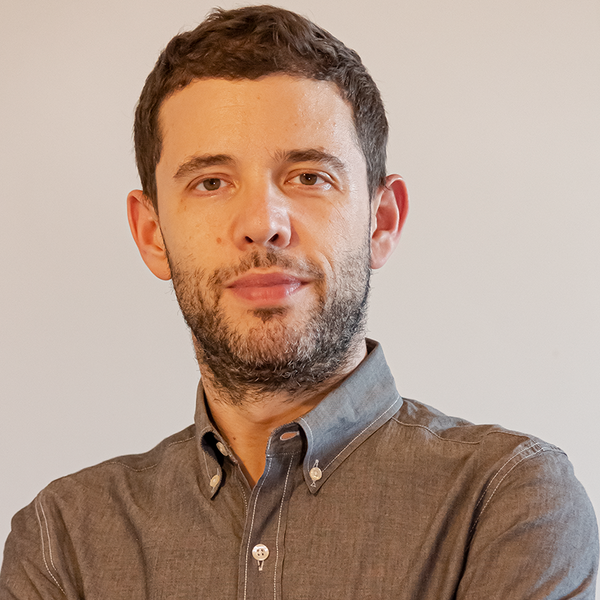
Learn more about academics involved in the programme
Assessment
You'll be assessed through a mix of academic and professional formats. Alongside essays. written exams and analysis of contemporary topics and issues in international journalism, you'll produce news stories, portfolios, pitches and multimedia work, the kinds of output you'd be expected to deliver in a newsroom.
You'll receive regular feedback on your work throughout the course, through workshops, drafts and peer review as well as formal assessment.
The course ends with a substantial piece of independent work: either a research dissertation or a final journalism project, supported by a dedicated supervisor from initial idea to completion.
Your career
The reporting, investigative and analytical skills you build on this course are in demand across news organisations, international bodies, NGOs, government and the private sector, anywhere people need to gather information, verify it and communicate it clearly to different audiences.
Previous graduates have gone on to work in roles such as:
- Journalist
- Reporter
- Editor
- Video producer
- Content executive
- Communications professional
- Project coordinator
- Postgraduate researcher
The skills developed on this course also prepare you for roles including:
- Foreign correspondent or international news reporter
- Data journalist or open-source investigator
- Fact-checker or verification specialist
- Audience or analytics editor
- Producer for broadcast, radio or digital
- Communications or media officer for NGOs and international organisations
- Media policy and regulation roles
Many of our graduates find work in news organisations, international organisations, the NGO sector, government and private companies. Workplace destinations include:
- Bloomberg
- Daily Express
- International Labour Organisation
- Xinhua News Agency
- People's Daily
- Fairchild Television
- Sohu.com
- China Newsweek
- World Affairs Press
- Ministry of Commerce
- Beijing Rehuo Haotian Technology Company
- Development Research Centre of the State Council
- CBN
You'll also benefit from the School's award-winning employability support, including one-to-one sessions and fortnightly masterclasses with working journalists.
Find out more about our graduates and where they go on to work.
Facilities
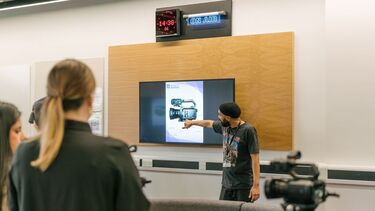
Hone your craft with industry-standard equipment in The Wave, the University of Sheffield's flagship social sciences building. You'll have access to five newsrooms, four radio recording booths and state-of-the-art TV and radio studios. We also have a fully-stocked media store, so you're guaranteed access to the latest cameras, microphones and editing software.
School
School of Information, Journalism and Communication
Here at the School of Information, Journalism and Communication, we've been training extraordinary journalists and information professionals and conducting pioneering research since 1994, when our department was launched by Observer Editor Donald Trelford at our first home in Minalloy House.
After 30 years in the industry, we've learnt a thing or two about networking. Study with us, and you'll have exclusive access to our unrivalled contacts and alumni network, situated in newsrooms across the world.
We’ll also provide you with award-winning employability support in the form of one-to-one support sessions and fortnightly masterclasses.
Our programmes will help you take full advantage of our state-of-the-art facilities and the research excellence we have to offer as a Russell Group institution.
Our graduates go on to achieve great things and remain part of our legacy forever, changing the world through the power of storytelling.

The Wave journalism facilities
Explore our world-class facilities.









Entry requirements
Minimum 2:1 undergraduate honours degree in any subject.
English language requirements
IELTS 6.5 (with 6 in each component) or University equivalent
Other requirements
If you have any questions about entry requirements, please contact the school.
Fees and funding
Additional costs
The annual fee for your postgraduate taught course may not include the costs for all compulsory elements. There are also other costs which you may need to consider. These costs may increase due to price increases outside of the University’s control and if you defer entry or change course.
Examples of what's included and excluded in postgraduate taught fees
Save on your course fees
Scholarships for international students
We offer scholarship opportunities worth up to £7,000 for international students from selected regions with excellent academic results and potential.
Alumni discount
As a Sheffield graduate, you’re entitled to a discount on your tuition fees worth up to £2,500.
Apply
You can apply now using our Postgraduate Online Application Form. It's a quick and easy process.
Contact
Any supervisors and research areas listed are indicative and may change before the start of the course.
Recognition of professional qualifications: from 1 January 2021, in order to have any UK professional qualifications recognised for work in an EU country across a number of regulated and other professions you need to apply to the host country for recognition. Read information from the UK government and the EU Regulated Professions Database.