
Human and Molecular Genetics MSc
School of Biosciences,
Faculty of Science
-
Start date
September 2027 -
Duration
1 year -
Attendance
Full-time
Explore this course:
Apply now for 2027 entry or register your interest to find out about postgraduate study and events at the University of Sheffield.

Course description
Designed in collaboration with the Sheffield Children’s Hospital NHS Foundation Trust, this course is for students who are fascinated by medical genomics and looking to launch a career in clinical genetics, genomic diagnostics, or life science research.
Every year, graduates of this MSc secure places on the prestigious NHS Scientist Training Programme (STP) in fields including Genomic Counselling, Genomics, and Cancer Genomics, in addition to roles across molecular bioscience, reflecting the depth of specialist training this course offers.
Working under the guidance of University academics and professional NHS diagnostic staff you’ll learn all about genomics and become skilled in the specialist computational and laboratory techniques used in diagnostic healthcare.
The course is built around three core elements:
NHS placements and training
Core to our teaching is our relationship with the Julia Garnham Centre (University of Sheffield and Sheffield Children's NHS Foundation Trust in Partnership), a multi-award-winning NHS-badged genomics facility right here in the School of Biosciences. Here you’ll be trained in NHS best practice and undertake a year-long NHS placement, giving you the opportunity to apply your newly developed genomics skills and make a real impact before you even graduate.
Your training will teach you how to evaluate genomic evidence and support clinical variant interpretation alongside clinical experts. You’ll start with inherited variants of rare disease in semester one, building on this in semester two where you’ll focus on cancer. Thanks to the skills and knowledge you’ll gain here, you’ll have the chance to achieve professional levels of analytic competence*.
To complement your practical training, you’ll also explore the genetic underpinnings of cancer and rare diseases through a series of lectures delivered by University academics and NHS clinical staff.
*Analytical competence is defined as being: Variant Interpretation for Rare Diseases, ACGS 2024 guidelines; Sheffield Children's NHS Foundation Trust In House Competence Assessment equivalent to 1st analysis check by a clinical scientist.
Laboratory skills training
Practical laboratory experience is also at the heart of our teaching and will make up more than half of your learning on the MSc. Whether you’re keen to kick-start your laboratory training or you’re looking to master more advanced techniques, our specialist molecular genetics training modules have been designed to be suitable for all skill levels.
At the start of the course, you’ll complete 12-weeks of training covering a wide range of exciting modern laboratory techniques. These can include molecular cloning, microorganism handling, DNA analysis, PCR, SDS-PAGE, western blotting and CRISPR. We’ll also teach you project management skills, experimental design, and how to analyse and present your own data.
In semester two, you’ll complete competence-based training to master specialist laboratory techniques that are used within the NHS, and across the global molecular biosciences and healthcare diagnostics sectors such as human cell culture, cytogenetics, fluorescence microscopy and qPCR. This specialist training will prepare you to carry out your own research.
Clinical research project
The biggest part of your course is the research project. Here you’ll spend up to five months carrying out novel molecular genetics research under academic supervision.
Your project will combine research in the Julia Garnham Centre with practical laboratory work to improve diagnostic certainty. This is your chance to apply the knowledge and extensive practical, analytical, and transferable skills you’ve gained during the year to generate impactful, novel research data.
Examples of previous student research projects include:
- Developing a functional genomics assay to increase PRRT2 diagnostic certainty
- Reducing diagnostic uncertainty through historic variant reclassification and high-throughput screening for nonsense-mediated decay
- FLT3 screening of MDS backlogs to identify patients at greatest risk of progression
- Hunting new pathogenic variants underpinning rare respiratory diseases
- Genomic haemato-oncology diagnostics: Improving patient outcomes for the Myelodysplastic Syndromes (MDS)
Alongside all of this, you’ll have plenty of opportunities to gain experience in scientific writing, experimental planning and troubleshooting, data interpretation, statistical analysis, and teamwork, ready for an exciting career.
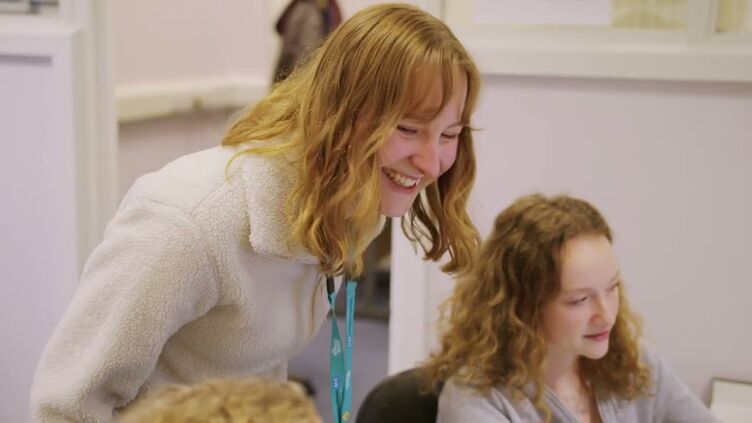
Do you have a question? Talk to us
Book a 15-minute online meeting with our Course Director to find out more about this course and get your questions answered.
Book an appointment with Dr Dave Turton
Modules
Core modules:
Core modules:
- Advanced Scientific Skills
-
This module builds on existing, and further develops, generic scientific skills to equip postgraduate taught students with strong competences in presenting and reporting their research work using written and oral formats, in analysing data and the scientific literature, and in acquiring and extending their critical analysis skills. Teaching will be delivered using a blended approach with a combination of lectures, workshops, tutorials and seminars together with independent study and on-line teaching.
15 credits
Taught throughout the academic year, the module will be articulated around three units addressing:
Unit 1) Scientific presentation skills. In this unit, students will explore how to develop their academic (writing and oral) presentation skills. Some of the topics taught may include how to formulate a research question and hypothesis, how to find information, and how to structure a scientific essay or report. Students will learn how to communicate effectively their research to a scientific, as well as lay, audience. Emphasis will be placed on short oral communications and poster preparation and presentation. The learning objectives will be acquired through lectures, workshops, tutorials and independent study.
Unit 2) Critical analysis skills. This unit prepares students to develop their ability to analyse and appraise the scientific value of the published and unpublished literature. Workshops and lectures will introduce students to the process of critical appraisal of scientific work.
Unit 3) Statistics and data analysis skills. In this unit, students will learn methods to gather and analyse large datasets. In particular, workshops and lectures will teach students the basics of R coding and statistics for application in biosciences. The unit may also deliver other forms of data analysis relevant to the programme of study. Teaching within this unit will be delivered mainly through on-line material, lectures and workshops. Independent study will be essential to complete the acquisition of skills. - Literature Review in Molecular Genetics
-
This unit involves an in-depth survey of the current literature relevant to the student's Research Project. It is carried out before laboratory work on the project commences in order to prepare the student with a comprehensive understanding of the relevant subject knowledge, approaches and techniques. Students will carry out an exhaustive search of the literature relevant to their project using the resources of the University, including appropriate databases and specialist search engines, as well as paper-based resources in the University Library. Based on primary research articles, review articles and textbooks, students will work independently under the supervision of the project supervisor to produce a document reporting on the background literature underpinning their research project. The literature review should demonstrate an ability to comprehend and synthesise the experimental evidence presented in the literature, to critically appraise previous studies and identify gaps in the knowledge. The unit involves primarily private study by the student under the direction of the project supervisor who will meet the student at regular intervals to discuss progress.
15 credits - Clinical Genomics of Cancer and Rare Genetic Diseases
-
This module will address the ways in which genetic factors influence our lifetime health. The module will focus on classic examples of leukaemia, lymphoma, solid tumours, rare inherited diseases and those commonly identified in prenatal diagnostic studies using real patient scenarios. The molecular and cytogenetic technologies and the underlying clinical diagnostic strategies will be discussed to provide students with a thorough understanding of clinical genomic diagnostics across the breadth of human acquired and inherited diseases. This module will be delivered by a combination of academic staff from the university, and clinical geneticists from the NHS.
15 credits - Advanced Molecular diagnostics and cell culture techniques
-
This module delivers specialist training in advanced laboratory techniques that are used across molecular genetics, healthcare diagnostics and research. Here students will undertake intensive training in the laboratory, supported by digital training packages to develop high-level skills in techniques such as, but not limited to, human cell culture, cytogenetics, fluorescence microscopy and qPCR. Students will learn through lectures, digital training resources and hands-on practical experience in the laboratory. This module builds upon practical training received in semester one and will prepare students for their BIS484 research projects.
15 credits - Laboratory Techniques in Molecular Bioscience
-
This module will provide background knowledge, technical training and extensive practical laboratory experience in molecular bioscience techniques. In particular, the module is designed to develop and practice core genetic and biochemical techniques to enable students to be technically confident and prepared for a research project and career in the field of genetics and molecular bioscience. Students will receive training in a number of commonly used and cutting-edge techniques. For instance, students may be trained in CRISPR genome editing technology in addition to other molecular biology techniques, including; protein and DNA manipulation, protein gel electrophoresis, Western blotting, plasmid construction, restriction mapping and PCR. Students will also develop skills in experimental planning and project management during this module.
30 credits
Genomics of Rare Disease, JGC Diagnostics Placement (15 credits)
Genomics of Cancer, JGC Diagnostics Placement (15 credits)
Research Project in Molecular Genetics (60 credits)
Genomics of Rare Disease, JGC Diagnostics Placement (15 credits)
Genomics of Cancer, JGC Diagnostics Placement (15 credits)
Research Project in Molecular Genetics (60 credits)
The content of our courses is reviewed annually to make sure it's up-to-date and relevant. Individual modules are occasionally updated or withdrawn. This is in response to discoveries through our world-leading research; funding changes; professional accreditation requirements; student or employer feedback; outcomes of reviews; and variations in staff or student numbers. In the event of any change we will inform students and take reasonable steps to minimise disruption.
Duration
1 year full-time
Teaching
You’ll be taught through lectures, practical laboratory classes, and NHS work placements in our Julia Garnham Centre. These will be led by a combination of academic staff from the University, and NHS clinical staff.
Your research project will allow you to work alongside an academic member of staff, conducting novel research in our specialist MSc laboratories.
We’ll provide you with regular feedback so you can understand your own development throughout the course.
Assessment
Assessment is based on a combination of coursework, practical laboratory work, oral presentations, competence assessments, the completion of training packages, and a research project dissertation. You’ll also be assessed through formal examinations.
Your career
You’ll be well-equipped to pursue a range of exciting careers following your masters. According to NHS England’s 10-year health plan, genomics will be used to support the diagnosis and monitoring of all individuals affected by cancer. Genomics will also be at the cutting edge of population health with a shift towards preventative medicine and early detection of disease.
Thanks to your new clinical skills (that are recognised by diagnostic facilities across the UK), as well as your experience in a professional laboratory, you’ll be well prepared to play your part in this as you step into healthcare diagnostics in the NHS, other companies allied to the provision of healthcare, or world-leading research centres.
Every year, graduates of this MSc secure places on the prestigious NHS Scientist Training Programme (STP) in fields including Genomic Counselling, Genomics, and Cancer Genomics at a variety of NHS Trusts. On successful completion of the STP, students are qualified to practice as NHS Clinical Scientists.
In addition to the STP, almost half of our graduates since 2016 are now employed across healthcare in roles such as:
- Genetic Technologist Analyst, The Royal Marsden Hospital
- Assistant Genetic Technologist, Great Ormond Street Hospital
- Healthcare Scientist (Rare Disease Genomics), Cambridge University Hospitals NHS Foundation Trust
- Healthcare Science Practitioner, Addenbrooke’s Hospital
- Cytogenetic Technologist, Nottingham University Hospital’s NHS Foundation Trust
Other roles that our previous graduates are now also making a difference in include:
- Research Scientist, The Francis Crick Institute
- Research Assistant, Wellcome Sanger Institute
- Senior Research Technician, The Medical Research Council (MRC) Epidemiology Unit
- Senior Medical Writer, Healthcare Consultancy Group
If you’re thinking about continuing your research training, you’ll be well equipped to pursue a PhD in areas as diverse as, infection, immunity, cardiovascular disease, RNA biology, molecular genetics, bioinformatics and cancer research.
Whatever your next step is, your time in the Julia Garnham Centre during your studies will make you stand out from the crowd. The centre won an AGCAS Academic Employability Award in 2025 in the category of “Postgraduate Employability”, showing how the skills you learn here are in real demand by employers.
School
School of Biosciences
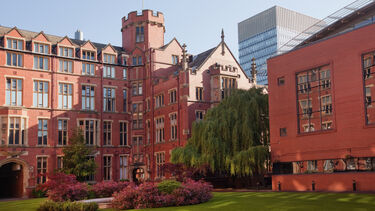
The School of Biosciences brings together more than 100 years of teaching and research expertise across the breadth of biology. It’s home to over 120 academics who are actively involved in research at the cutting edge of their field, sharing their knowledge with nearly 2,000 undergraduate and postgraduate students.
We’re proud to be in the Top 5 in the UK for the quality of our research (Research Excellence Framework (REF), 2021). Our expertise spans the breadth and depth of bioscience, including molecular and cell biology, genetics, development, human physiology and pharmacology through to evolution, ecology, biodiversity conservation, and sustainability. This makes us one of the broadest and largest groupings of the discipline and allows us to train the next generation of biologists in the latest research techniques and discoveries.
Learn more about our research.
The school is based at the heart of the University campus, across the interlinked Firth Court, Alfred Denny, Florey, Perak and Addison buildings, which house lecture theatres, teaching labs and research facilities.
Student profiles


Entry requirements
Minimum 2:1 undergraduate honours degree in a relevant subject with relevant modules.
Subject requirements
We accept degrees in the following subject areas:
- Biochemistry
- Biomedical Sciences
- Biotechnology
- Genetics
- Medical Genetics
- Medicine
- Microbiology
- Molecular Biology
Module requirements
You should have studied at least one module covering Genetics and at least one module covering either Biochemistry, Cell Biology or Molecular Biology.
English language requirements
IELTS 6.5 (with 6 in each component) or University equivalent.
Other requirements
If you have any questions about entry requirements, please contact the school.
Fees and funding
Additional costs
The annual fee for your postgraduate taught course may not include the costs for all compulsory elements. There are also other costs which you may need to consider. These costs may increase due to price increases outside of the University’s control and if you defer entry or change course.
Examples of what's included and excluded in postgraduate taught fees
Save on your course fees
Apply
You can apply now using our Postgraduate Online Application Form. It's a quick and easy process.
Contact
You can also book an appointment with Dr Dave Turton to find out more information and ask further questions.
Any supervisors and research areas listed are indicative and may change before the start of the course.
Recognition of professional qualifications: from 1 January 2021, in order to have any UK professional qualifications recognised for work in an EU country across a number of regulated and other professions you need to apply to the host country for recognition. Read information from the UK government and the EU Regulated Professions Database.