
Discovery and translational neuroscience
Discovery neuroscience establishes the fundamental knowledge needed to drive translational research forward.

Discovery research
Hearing research group
Bringing together experts in physiology, genetics, developmental biology and computational neuroscience to better understand the auditory system and develop therapeutic interventions for hearing loss.
Olfactory sensing coding and memory
Using fruit flies as a model system to study how the brain represents sensory information and allows it to store unique memories.
Pre-clinical neuroimaging research
The Sheffield Neurovascular Lab brings together a multidisciplinary team of neuroscientists from across the Faculties of Science and Medicine. They investigate the relationship between neural activity and brain blood flow in both health and disease. It is only by understanding how blood flow is regulated in health that we can fully appreciate how it is failing in aging and neurodegenerative diseases.
Centre for cognition in small brains
Decoding perception and behaviour in the nervous systems of flies and other insects to better understand the brain.
Stem cell genetics lab
Advancing understanding of pluripotent stem cell biology and its application in regenerative medicine and disease modelling.
Pain research group
Bringing together interdisciplinary expertise spanning neuroscience, pain biology, clinical research, cell biology, materials science and bioelectronics to understand mechanisms of chronic pain, identify therapeutic targets, and develop innovative approaches to diagnosis and treatment.
Research centres: connecting neuroscience discovery to translational impact for human health
Sheffield Institute for Translational Neuroscience
The Sheffield Institute of Translational Neuroscience (SITraN) is a world-leading, international Centre of Excellence. It supports discovery through translational research to develop new treatments and therapies for devastating neurological disorders, including Motor Neuron Disease (MND), Parkinson's and Alzheimer’s Disease.

Sheffield Institute for Translational Neuroscience
National Institute for Health and Care Research: Sheffield Biomedical Research Centre
The NIHR Sheffield Biomedical Research Centre (BRC) is part of the National Institute for Health and Care Research (NIHR) and hosted by Sheffield Teaching Hospitals NHS Foundation Trust in partnership with The University of Sheffield. The centre is dedicated to improving the treatment and care of people with long-term health conditions.
Sheffield Biomedical Research Centre
Bateson Centre
Bateson is a world-leading research centre using innovative models to understand human disease, focused around our expertise in non-mammalian models.
Sheffield early phase dementia clinical trials Centre
The Neuroscience Institute works in partnership with Sheffield Teaching Hospitals NHS Foundation Trust and the UK Dementia Trials Network to provide a hub for early‑phase clinical trial development, enabling the progression of preclinical discoveries through to first‑in‑human studies.
Dementia clinical trials centre
Sheffield trigeminal injury referral service
Preclinical studies of trigeminal nerve injury has allowed Sheffield researchers and clinicians to identify and develop the most reliable and successful methods for trigeminal nerve repair. Sheffield now provides the main UK tertiary referral service for the management of trigeminal nerve injuries and is the only national treatment service providing trigeminal nerve repair.
Spinout companies and industrial collaborations
Gene Therapy Innovation and Manufacturing Centre (GTMIC)
The GTIMC is accelerating the clinical development of new gene therapies through the manufacture of viral vectors, supported by process development, translational guidance, regulatory advice and training.
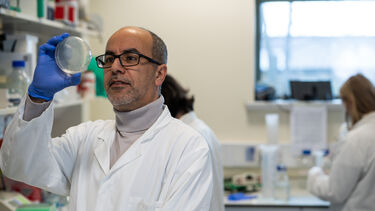
Rinri is translating pioneering research from the University of Sheffield’s School of Biosciences into cell therapies to treat hearing loss.
Opteran uses discovery neuroscience to understand the wiring of insect brains - and applies these insights to develop autonomous robotic devices.

Mitotype Precision Labs is a specialist spinout company dedicated to patient-derived drug discovery. It is accelerating preclinical drug development in the life sciences sector by providing rapid, in-depth assessments of therapeutic candidates specifically targeting mitochondrial and broader cellular health parameters.
Crucible brings together a highly collaborative team of R&D experts and biotech entrepreneurs. With deep expertise across research, development, and commercialisation, the team are dedicated to advancing innovative RNA-based therapies to transform patient outcomes. This work originates from the Sheffield Institute for Translational Neuroscience (SITraN) and the Sheffield NIHR Biomedical Research Centre (BRC) at the University of Sheffield – both internationally recognised institutes in neurodegenerative disease research.
Blackfinbio is a UK-based spinout company capitalising on their academic founder’s world-leading gene therapeutic translational research at the University of Sheffield.