
Transforming the future of energy
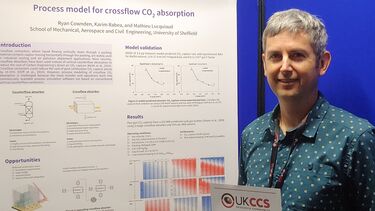
Ryan Cownden is a mechanical engineer currently working on his PhD focusing on developing innovative process designs to generate electricity and hydrogen from natural gas, with the ultimate goal of achieving negative life cycle emissions.

Ryan's research challenge
Developing solutions to resolve the reliability of natural gas (NG) as an energy source, with urgent climate targets whilst transforming it into a key player to help meet global climate goals.
The top results
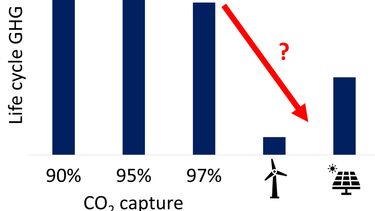
- The study concluded that generating electricity from natural gas (NG) can, with best practices, have a carbon footprint as low as wind power, as long as companies strictly limit supply chain emissions and capture most of the CO2
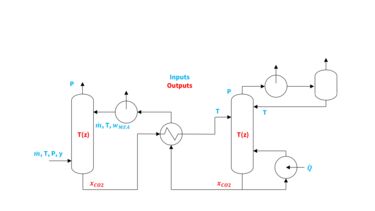
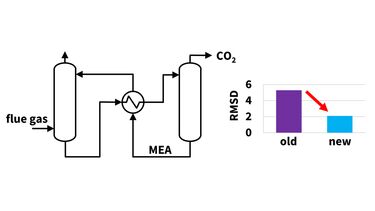
- Created two upgraded process models for carbon capture systems (MEA and crossflow absorption)
- This is the first study to look at the financial costs and total environmental impact of a NG power plant that helps the climate by using a liquid chemical system to trap and store carbon from both its own exhaust and the atmosphere
Behind the scenes
The world needs to change its energy systems and Ryan’s research aims to help fossil-fuel producing regions adapt. Around 65% of all human caused greenhouse gas emissions come from how we produce and use energy and because energy is the primary driver of climate change, transitioning to cleaner energy sources is the most important step to take.
To stop global warming at 1.5°C (the Paris Agreement goal) it isn’t enough to just stop emitting carbon. Between 2050 and 2070, the world will likely need to start removing CO2 from the air to cancel out the pollution that is impossible to eliminate and reduce the accumulated atmospheric inventory from historical emissions.
Countries or provinces that rely on selling oil and gas face a massive challenge. Their economies are built on fossil fuels, but the world is demanding they reduce emissions "dramatically and urgently" so this research explores how to transform the natural gas industry from a major polluter into a "climate-positive" one. By using production practices and advanced carbon capture, the study shows that natural gas could produce electricity with a carbon footprint as low as wind or solar power.
This was the first phase and Ryan is currently working on a process that will actually remove CO2 from the atmosphere while generating electricity. This process will have negative life cycle emissions. Wind and solar have positive life cycle emissions.
Who benefits from this work?
Ryan’s work is far reaching and will directly impact energy policymakers, jurisdictional authorities, carbon capture researchers, and natural gas consumers and producers aiming to reduce greenhouse gas (GHG) emissions. Indirectly, its effects will reach fossil fuel producers and consumers, as well as anyone impacted by climate change.
Research by Ryan Cownden
Transforming the future of energy
In Ryan’s words
Successfully mitigating global warming requires a diverse range of low-carbon energy supply options that address different perspectives and needs. Fossil fuel producing regions face significant challenges reconciling existing economic systems with expectations to dramatically and urgently reduce greenhouse gas emissions. This research seeks to address this by radically transforming natural gas production into a climate-positive industry that produces carbon-free energy vectors with negative life cycle GHG emissions
Ryan Cownden
PhD Mechanical Engineering
Ryan began his PhD at the university in 2023 and is an expert in carbon capture and energy.
Ryan's article "Cost-effective ultra-high CO2 capture rates for combined cycle gas turbines with monoethanolamine solvent” has now been published in Energy Conversion and Management: X.
Ryan's article "An improved open-access steady state model for flue gas CO2 capture with monoethanolamine" has been published in Science Direct.
Connect with Ryan on LinkedIn.