
Insigneo test machines
Experimental research plays an important role in informing the development of pre-clinical models and in model validation, whilst imaging technologies are often an essential element of both experimental and clinical research programmes.

Insigneo Biomechanics and Mechanobiology laboratory
Key features of the lab:
- a dedicated space for storage, preparation and mechanical testing of biological tissues
- a large space for cell cultures and kits to study the effect of mechanical and biological stimuli on cells
- a dark room for microscopy and AFM analyses
- a small room for qPCR measurements
The laboratory provides a unique environment to characterise the biological tissue at different dimensional scales from the molecular up to the whole organ levels.
For more details and access to the laboratory, contact Professor Claire Brockett.
Insigneo Movement Analysis and Activity Monitoring laboratory
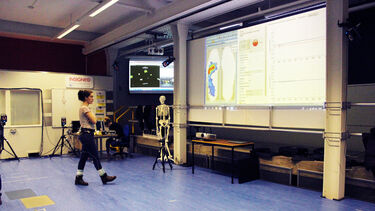
The aim of the laboratory is to investigate the biomechanics and motor control of human movement and various aspects of human-object interactions.
Key features of the lab:
The size of the laboratory and the configuration of the system allow for both small and large capture volumes (up to 6m x 4.5m).
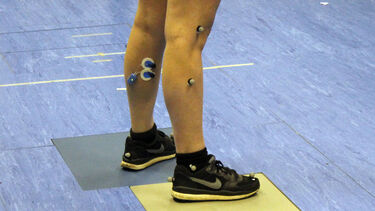
The lab features a 10 camera motion capture system (Vicon), two force platforms (AMTI), pressure insoles (Tekscan), a wireless electromyographic system (Cometa) and an isokinetic dynamometer (Biodex).
We also have a number of wearable sensors that can be used to quantify movement in the real-world, both in supervised and unsupervised scenarios. The camera based systems and the inertial measurement units can be used to capture the movement of any object that they can be attached to, hence enabling a broad range of applications different from human movement.
For more details and access to the laboratory, contact Dr Jennifer Rowson and Professor Claire Brockett or contact the team for general information.