Postdoctoral researcher explores the hidden science of pipe failure
How do aging cast iron pipes actually start leaking? Edward John, is the highlight in a new UKWIR video looking at his PhD research that uncovers how pressure changes in old cast iron pipes can cause cracks and leaks over time.

How do aging cast iron pipes actually start leaking? The School of Mechanical, Aerospace and Civil Engineering’s Edward John, is the highlight in a new UK Water Industry Research (UKWIR) video looking at his PhD research that uncovers how pressure changes in old cast iron pipes can cause cracks and leaks over time, with the findings enabling water companies to fix pipes before they burst completely.
Cast iron was the gold standard for plumbing for decades because of its balance of strength and manufacturability. However, it isn't invincible. With approximately 40% of the UK’s water supply network composed of cast iron pipes installed during or before the 1960s, large parts of the existing network are reaching the end of their natural lifespan. This aging infrastructure has led to a high failure rate, manifesting in frequent leaks and bursts and is a major barrier for UK water companies who want to achieve their goal of halving water leakage by 2050.
The transition from a solid pipe to a leaking one is usually a slow, chemical corrosion process that happens from the outside in, followed by a terminal phase of crack initiation and growth over a few years. Edward’s PhD research, seen in the UKWIR report, focuses on understanding the cracking part of the process, specifically looking at how pressure changes, such as at night when water usage is low and pressure is often higher, force small cracks to open up leading to the leaks we see today.
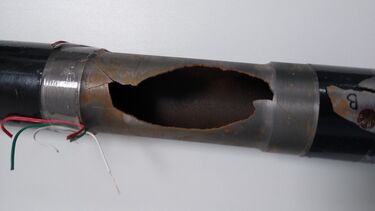
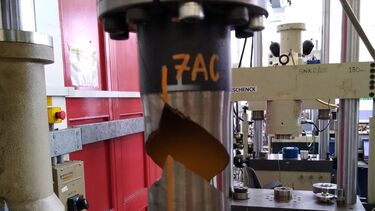
Using controlled lab experiments, Edward studied the mechanical fatigue behind these leaks and discovered that reducing pressure temporarily closes micro leaks by easing pipe stress but the cyclic pressure (the constant rising and falling of water pressure) causes the cracks to keep growing and the leak eventually becomes permanent.
By understanding these failure mechanics, the work allows utility companies to move beyond guesswork and target the specific pipes most likely to burst which reduces the occurrence of new leaks, saves millions of gallons of water and in turn reduces water bills for consumers.
The work has shown much promise with the potential of really changing how companies deal with underground pipes in the future.
Edward said: “We're hoping to carry out some follow-up research that will work towards having more of an implementable solution that's based on the kind of fundamental understanding from my PhD. The research will allow water companies to more fully understand pipe deterioration and proactively replace pipes in a targeted way.
“At the moment I am working on two projects about pipe condition assessment - one is looking at measuring the thickness of cast iron pipes using acoustic sensor techniques to detect small leaks. The other is looking at sewer liner condition assessment which is trying to find non-visible defects.”
View the full video on the UKWRI YouTube channel.