
Tom’s journey living with MND

When I first noticed changes in my voice and weakness in my hand, I never imagined it would lead to a Motor Neuron Disease (MND) diagnosis. I was only 29 and had only recently graduated from my PhD, just at the start of my career.
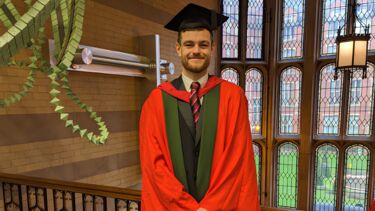
I loved my time at university in Sheffield. It gave me so many special memories, from meeting my partner Alex to making lifelong friendships. I played rugby for the Sheffield Medics’ team and enjoyed other sports including football, climbing and running.

Since my diagnosis in 2024, the disease has progressed rapidly; I am now unable to walk or stand unaided, have little function in my arms and hands, and receive most of my nutrition through a feeding tube.
The hardest part of living with MND is that it takes away your body, but not your mind. MND can make you feel powerless, but Sheffield’s research is giving me hope.
Despite everything, I try to stay positive and knowing there is so much promising research happening here in Sheffield really helps. I’ve been fortunate to take part in clinical trials at the Sheffield Institute of Translational Neuroscience (SITraN), and was immediately struck by the passion and dedication of the team not only for the research but also for trying to improve patients’ quality of life.
I feel fortunate that SITraN is located so close to where I live, and proud that it is part of the university I spent so many years at.
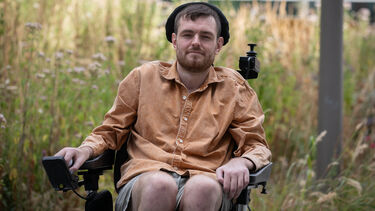
Right now, there's no way of treating or even slowing down the genetic variant of MND that I have. MND research is crucial for finding more treatments and trying to improve the lives of others like me, living with the disease. But, seeing the dedication of the SITraN team firsthand makes me feel hopeful about where research is heading.
Every breakthrough depends on the generosity of people like you, whose support allows the team at SITraN to keep pushing research forward to find a cure.