
Turning sunlight into greener aviation fuel
Decarbonising aviation is a major challenge. Discover how Professor Meihong Wang’s team are using fields of mirrors to harness sunlight and capture CO₂, powering the future of net-zero flight.

Aviation continues to be one of the most challenging sectors to decarbonise. Its heavy reliance on energy-dense fossil fuels, paired with a shortage of viable alternatives, creates major barriers to achieving net-zero.
In recent years, Sustainable Aviation Fuel (SAF) has emerged as a promising solution, offering a way to lower the sector’s carbon footprint by using renewable or waste-based materials. However, since SAF currently relies on scarce resources like used cooking oil, there’s a limit to how much we can produce. This supply gap prevents its ability to meaningfully reduce the industry’s overall carbon emissions.
Because of this, the industry now requires more cost-effective, scalable models that can meet the growing demand for lower-carbon air travel, while supporting the shift toward sustainable aviation.
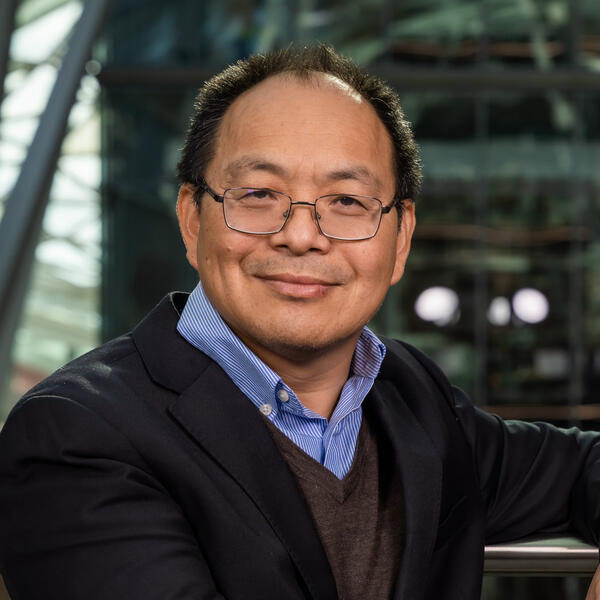
At the forefront of this challenge is Professor Meihong Wang from the University of Sheffield’s School of Chemical, Materials and Biological Engineering. Ranked among the top 2% of the world’s most-cited scientists and an elected Fellow of European Academy of Sciences, Professor Wang leads the Energy Systems Engineering Research Group and is internationally known for his work in Carbon Capture, Utilisation, and Storage (CCUS). His research combines advanced mathematical modelling with practical industrial applications, and has already influenced UK government policy, including contributions to reports by the Department for Business, Energy and Industrial Strategy (BEIS).
Currently, Professor Wang and an international team of engineers are developing a new approach to SAF production using solar energy. This technique could reduce the industry’s reliance on scarce resources and potentially transform how aviation fuel is made in the future.
The project responds to recent statistics from the UK’s SAF mandate, which show the majority of SAF in the UK is made from used cooking oil.
A solar-powered alternative to producing SAF
Rather than relying on traditional feedstocks (raw materials like crops and waste oils), Professor Wang’s research explores Direct Air Capture and CO₂ Utilisation (DACCU) to produce aviation fuel from atmospheric carbon dioxide. While DACCU is not a new concept, current methods often still rely on fossil fuels at some stage, limiting their sustainability.
To overcome this, the Sheffield-led team has developed a technique that captures CO₂ from the air, combines it with hydrogen, and then heats it using concentrated solar energy to produce the fuel.
“Decarbonising the aviation industry is key to slowing global warming and achieving net zero. SAF has shown great potential to meet energy needs while reducing greenhouse gas emissions, as it works in existing engines, potentially allowing for sustainable air travel without major mechanical changes to aeroplanes,” explains Professor Wang.
But while the technology is compatible with today’s fleet, the logistics of mass production remain a daunting barrier.
“However, a major challenge in switching to SAF is ensuring that we have enough feedstock to produce the huge amount of fuel that the industry needs and also making the fuel in a way that doesn’t require fossil fuels. Our solar-powered process however, addresses these challenges through capturing CO₂ from air and using renewable energy to create SAF cost-effectively,” adds Professor Wang.
Industrial-scale potential
In a study published in the Journal Nature Communications, the researchers used comprehensive computer modelling and simulation to understand how and where this first-of-a-kind technology could function at an industrial scale.
Their analysis suggests that five countries across different continents could be suitable for such large-scale SAF production plants, due to their high levels of sunlight and low costs of hydrogen or land. These are: the USA (North America), Chile (South America), Spain (Europe), South Africa (Africa) and China (Asia).
The process we have proposed has the potential to address key barriers in scaling up SAF. It also reduces electricity consumption in the production process and can fit within a circular economy.
Professor Meihong Wang
Professor of Energy Systems
A global collaboration
Supported by the EU RISE project OPTIMAL, the solar-driven SAF technique was developed in collaboration with researchers from the East China University of Science and Technology and the University of Manchester.
“The facilities and ethos at the University of Sheffield has enabled me to share ideas with the world. Some people are worried about collaborating because they don’t want to expose their ideas, but if we work together, we can create something new and make it practical. That really is the key,” explains Professor Wang.
The researchers from Sheffield and China have shown in their study that replacing the fossil fuel with concreted solar energy is capable of providing the intense heat needed to create the chemical reactions to produce SAF. It could also cost less than existing DACCU pathways, with projections estimating US$4.62 per kg compared to US$ 5.6 per kg.
“The heart of our innovation is a hydrogen-fluidised calciner. This is a specialised reactor that uses a field of mirrors to focus sunlight, eliminating the need for onsite fossil fuel combustion. By using hydrogen to circulate the carbon particles, the system also streamlines production as it serves as the medium to circulate the carbon particles while simultaneously providing the essential feedstock for fuel synthesis,” adds Professor Wang.
“This dual-purpose design allows us to bypass traditional, complex steps like syngas production and CO₂ purification, resulting in a much more streamlined and cost-effective production cycle. By converting atmospheric carbon into SAF directly onsite, we transform CO₂ from a waste product into a valuable resource, fostering a circular economy that eliminates the need for the expensive pipeline networks and geological reservoirs required by traditional carbon capture and storage,” explains Professor Wang.
The future of sustainable aviation
Beyond the initial development stages, Professor Wang and his team are exploring ways to reduce costs, including investigating alternative gases to green hydrogen and identifying commercial partners to test key components of solar-driven kerosene production.
“Our long-term goal is to move from a modelling-based study to pilot, demonstration, and then commercialisation. The world is unpredictable, but with the right collaborators, we can take the next step toward industrial deployment,” adds Professor Wang.

For further information contact: mediateam@sheffield.ac.uk.
Written by Anna Blagg (Marketing and Communications Officer, Research)