
Misinformation Spreading like Wildfire
With extreme heat and dry conditions raising wildfire risks across the UK, Richard Sulley from our Green Watch team shares his thoughts on the ongoing fiery debate: does rewilding make wildfires worse?

The ferns and bracken are already sprouting on the ash covered hillside above Capelulo, just outside Conwy in North Wales. The heather will take a while longer. When a fire burns this hot and right down to the soil it can take decades to recover. With the loss of heather goes habitats for invertebrates, mammals, and ground nesting birds.
In mid July, a fire spread over the hillside requiring local villagers to be evacuated and, at its peak, 12 fire appliances to douse the flames.
I was on a visit to the area a couple of weeks after the fire and got to witness what it had left behind. The mountain is now a surreal moonscape of blackened soil with occasional patches of vegetation that survived.
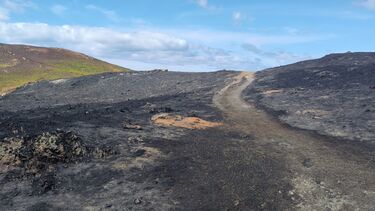
A local man I spoke to said it was the biggest fire he had seen in his lifetime, as well as one of the driest hottest summers, although he pointed to the lack of controlled burns as a potential cause, which he said were no longer being done for “various environmental reasons”.
Which got me asking the question:
Does re-wilding make wildfires worse?
That’s the claim in the Telegrph in an opinion piece by Jamie Blackett, although his second sentence “Net zero zealots will ensure that the historical narrative is all about climate change.” suggests that he may have an agenda wider than just minimising fires.
The Daily Mail blames “Labours eco-dogma” in an article about the summer’s wildfires, mentions the extensive drought and extended hot weather, but makes no mention of climate change at all.
Rewilding Britain, who could also be said to have an inherent bias, have published a webpage detailing what they consider to be the case for rewilding as a route to reducing wildfires. One of the case studies is the 2018 Saddleworth Moor fire, where contradictory claims have been made about the aggravating factors, with the RSPB’s “rewetting” being both held responsible for the blaze, and a spokesperson saying that there was “evidence wet gullies on the RSPB/United Utilities managed area, where peat-forming Sphagnum mosses have been re-introduced, played a role in slowing the spread and intensity of the fire”
But of course anecdote is not evidence, and that does appear to be lacking, with both sides of the argument claiming their position is supported by the science.
Natural England's 2020 report highlighted that for managed or prescribed burning “there appears to be limited evidence of its direct effect on wildfire ignition, behaviour, severity and extent, or in reducing wider negative impacts”, whereas there is moderate evidence that the severity and perhaps incidence of wildfires may be reduced when wetter conditions, in particular high water tables, are maintained or restored”. What is clear from the evidence is that proscribed burns, whilst not the largest cause of out of control fires, are still a significant source.
What also becomes clear as you delve into the voices for and against rewilding, is that there are a number of proxy wars being fought, with both wildfire suppression and prevention and upland bird protection often used by the self-proclaimed guardians of the countryside as reasons for maintaining the existing management regimes. This also brings in other issues such as what is variously called “predator management”, or “bird of prey persecution”, depending which side your sympathies fall on.
You don’t have to look far before issues of countryside access come up too, which again seems to pit organisations like the Countryside Alliance against those who would wish to open up access like Right to Roam.
This raises questions about the authenticity, if not the honesty of the positions taken.
The world is not static. Climate change is real and the UK is already seeing hotter and drier summers and warmer and wetter winters. How we manage land needs to change, both for mitigation and adaptation to climate change.
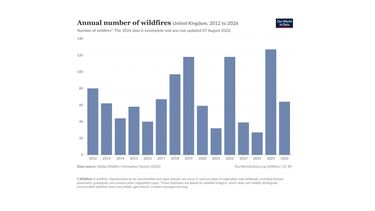
2025 was a record year for wildfires in the UK, and 2026 looks to be heading for similar numbers.
Rewilding would appear to have numerous benefits for bio-diversity, flood management, carbon sequestration and a potential for reducing wildfire ignition and propagation.
Maintaining the status quo, with uplands managed predominantly for the privileged few to continue with game shooting and associated activities, requires the moors to be managed to facilitate those activities. Drainage channels, regular managed burns and predator management, used to create the conditions for grouse and pheasant to thrive. Whilst it may have been possible to operate like this in the past, the degradation of the peat moors have contributed to our overall balance of carbon emissions, and the drier hotter weather with heavier but more sporadic rainfall exacerbates the wildfire risk.