
Big Walk stories: Why I'm getting involved
People join the Big Walk for all kinds of reasons - often deeply personal to them. Here, some of our 2026 walkers discuss their own motivations for signing up, and why they're so passionately driven to support MRI technology research at Sheffield.

Alex
Research Assistant, Insigneo
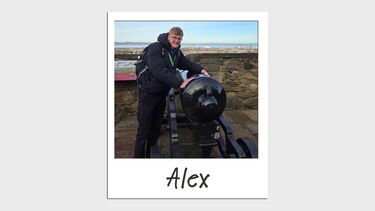
It’s great to see the direct link between the science and data modelling we do at Insigneo and the actual lives of patients.
We spend a lot of time with data, but the Big Walk is a reminder that behind every model is a person. Being part of a team that’s pioneering this kind of non-invasive imaging is exciting; it’s about taking the 'guesswork' out of treatment for doctors and making things safer for children. It makes me proud to go into work every day knowing the research we do has such a practical, life-changing application.
By taking part in the Big Walk, you can use your passion for hiking to benefit the lives of children for years to come while also having fun with colleagues/friends in the peaks!
Alex
For me, participating in the Big Walk is about taking that personal passion for hiking and pointing it toward something much bigger than just hitting a mileage goal. I’m walking for the kids and families who are dealing with the daily challenges of lung disease. If my sore legs for one day can help fund the technology that helps a child breathe easier for a lifetime, it’s an easy trade-off!
While I have only been living in Sheffield for a small part of my life, I quickly learned that there’s a true sense of grit and community, especially when it comes to the outdoors. Seeing hundreds of staff, students, and locals all heading out into the Peaks together on this walk will no doubt be a massive boost for everyone involved. I'm especially excited to see where the money raised will take this field of research in the next few years.
Jim
Professor of Magnetic Resonance Physics, Executive Director of Insigneo Institute
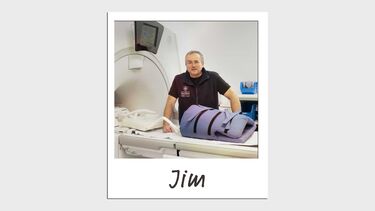
My personal research is around a technology called hyperpolarised gas imaging, and this allows us to image the lungs using an inhaled gas. We’ve been very active in developing the technology but also applying it and using it to understand lung diseases in children and adults in Sheffield.
The Big Walk is building on that research to make more impact with it clinically. The cause is really important to young people in this region, we’ve got a lot of paediatric lung disease, and the research is nationally important as well. We’re trying to put this technology on the map and expand it, and the Big Walk will really highlight the potential of the research.
For this Big Walk, we are raising funds to clinically translate and hopefully make clinical impact with the lung imaging technology that we’ve developed, working in partnership with Sheffield Children's Hospital.
Jim
It feels great to work with all the various groups that propel this research forward. Multidisciplinary research is the most stimulating aspect of what we do, and seeing an opportunity to make a difference and contribute clinically is great. Having a clinical application at the end of it gives it a real kind of purpose.
I’ve enjoyed these Big Walks over the years. They're a good community-building exercise as well as being good fun. It’s a great way to get to meet people across the University from across departments.
Sylvie
Teaching Associate in French, University of Sheffield
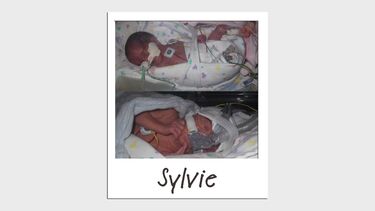
Every contribution really does make a difference. Supporting the Big Walk means helping to fund the kind of research and care that gives babies like ours a fighting chance.
The twins had to be delivered by emergency caesarean at 27 weeks and were fighting for their lives. Caring for sick babies can feel horrendously lonely and isolating. Radiation-free imaging is transforming neonatal care, and it is comforting to think that what families go through today could be made easier for others in the future.
It’s not just about equipment or treatments, it’s about giving families hope during some of the hardest moments of their lives. If you’re able to give, you’re directly helping to change outcomes for the most vulnerable babies.
Sylvie
When you’ve been through such an isolating and frightening experience, seeing a whole community come together in support is incredibly powerful. It reminds us that we’re not alone and that people genuinely care. Being part of that collective effort turns a very personal journey into something that can help others.
Laura
President-Elect - British Psychological Society, Chartered Occupational Psychologist
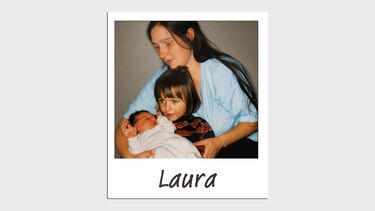
This research has the power to make a life-changing difference at the very start of a child’s life.
I’ve taken part in the Big Walk before, once as a participant and once as a volunteer back walker, but this year feels especially meaningful because of my personal connection to the cause. Although I no longer work at the University of Sheffield, I really believe in the importance of the research happening here, so coming back to support it feels significant. There’s something powerful about being part of a community coming together to make a difference for future families.
Laura
Premature babies are incredibly vulnerable, and improving how we understand and treat their lung development could transform outcomes for so many families. Supporting the Big Walk is a way to help ensure that care is guided by better information, less guesswork, and ultimately more hope.
Elisabeth
Centre Manager, English Language Teaching Centre, University of Sheffield
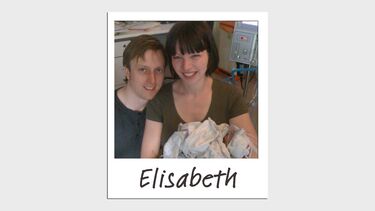
We have participated in the Big Walk before, but this one feels quite personal.
Elisabeth
Jan
Global Product Leader Digital at GE HealthCare
I was one of the first scientists in the UK to do a PhD in the field of hyperpolarised gas MRI more than 25 years ago, which is the technology that Professor Jim Wild and his team have developed into a clinical tool.
The work that the team in Sheffield is doing fills me with huge satisfaction, as I see some of the ideas from the early days of my career making a real impact on patients’ lives.
The Big Walk is a great opportunity to raise awareness of the pioneering work in Sheffield, but also of the existing unmet medical needs of patients.
Jan
Anybody giving to the Big Walk this year will make a contribution to high-impact research that will improve the outcomes of people living with chronic and life-threatening conditions. I am very excited to be part of the Big Walk this year and to combine two of my passions, healthcare technology and hiking.