Events
We host a number of events in the School of Electrical and Electronic Engineering.
Inaugural Lectures
All new professors, whether they have been internally promoted or appointed externally, are given the opportunity to host an inaugural lecture. The Inaugural Lecture series, provides our professors with an opportunity to celebrate their achievements, with each lecture representing a significant milestone in an academic's career.
Lectures are open to all University staff and students as well as to members of the public.
Upcoming Inaugural Lectures
Check back soon.
Past Inaugural Lectures
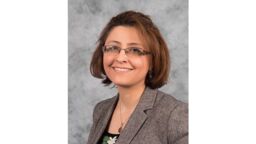
- From Brain Signals to Real-World Impact: My Journey in AI-Powered Neurotechnology
Professor Mahnaz Arvaneh
Tuesday 12 May 2026
Abstract
Over the past years, my research journey has been shaped by a simple but powerful question: how can we make neurotechnology more useful in real life? From my early work on brain signals and brain–computer interfaces to more recent research in AI-driven rehabilitation, brain stimulation, and inclusive design, I have been motivated by the belief that neurotechnology should not remain confined to laboratories and specialist clinics. In this inaugural lecture, I will reflect on that journey and share how artificial intelligence is helping us move neurotechnology closer to everyday use.
I will discuss the opportunities and challenges of building systems that can adapt to individuals, cope with variability in brain signals, reduce lengthy calibration, and support practical applications such as stroke rehabilitation. Drawing on examples from my work in closed-loop neurotechnology, transfer learning, generative AI, and home-based rehabilitation, I will highlight both the scientific progress we have made and the barriers that still remain. Above all, this talk is about people as much as technology. It is about designing neurotechnology that is not only intelligent, but also accessible, inclusive, and grounded in real human needs. Through this journey, I hope to share a vision for a future in which AI-powered neurotechnology can make a meaningful difference beyond the lab.
- Computational Microscopy: Imaging atoms, mapping magnets and surveying cells
Professor Andy Maiden
Tuesday 21 April 2026
Abstract
Traditional microscopy depends exclusively on lenses to form an image - whether using glass to focus visible light, gold nanostructures to diffract X-rays or magnetic fields to steer electrons. However, these physical optics introduce aberrations that fundamentally limit resolution, contrast and accuracy. Computational microscopy replaces optical hardware with advanced algorithmic methods that (in theory!) completely avoid aberrations and produce perfectly accurate images.
“Ptychography” (developed here in Sheffield and pronounced without the “P”) is one particular implementation of this computational approach to microscopy. In my talk, I will describe how it is fundamentally expanding what we can observe and measure. I will highlight how we are using this technique to solve practical imaging challenges across a diverse range of fields, allowing us to analyse atomic structures in advanced materials, map magnetic fields at nanoscale resolutions, and non-destructively survey living biological cells. Finally, I will discuss the future trajectory of computational imaging, exploring how ongoing algorithmic developments are driving new applications across the physical and life sciences.
The Harry Nicholson Lecture in Control Engineering
- Exploring the Frontiers of Model Predictive Control: Data-Driven Methods and Theoretical Foundations
13th Harry Nicholson Lecture in Control Engineering - Professor Frank Allgöwer, Director of the Institute for Systems Theory and Automatic Control, University of Stuttgart
Wednesday 25 September 2025
Abstract
Recent years have shown rapid progress of learning-based and data-driven methods, significantly impacting the field of control, including model predictive control (MPC). In addition to numerous methodological and computational advancements, a substantial number of application studies featuring data- and learning-based MPC are currently being published. In this talk, we will compare model-based and data-based MPC to explore which holds more potential for future impact. Highlighting recent developments, we will focus on two different data-based MPC schemes: one based on the Fundamental Lemma of Willems et al., and the other on the data-informativity paradigm. By providing an overview and introduction to these methods, we will discuss their theoretical properties, suitability for nonlinear systems, and demonstrate their advantages and limitations compared to model-based MPC through various application examples. This critical analysis and comparison aims to offer insights and recommendations for future research directions in the evolving domain of MPC.
- Making Neural Networks More Trustworthy and Sustainable
12th Harry Nicholson Lecture in Control Engineering - Professor Michael Unser, Professor of Image Processing, École polytechnique fédérale de Lausanne (EPFL), Switzerland
Thursday 6 June 2024
Abstract
The use of deep neural networks (DNNs) is currently transforming many areas of science and engineering. Although DNN-based techniques outperform traditional algorithms in most signal processing tasks, they can exhibit weaknesses such as reduced robustness and a tendency to produce hallucinations. These issues are linked to the DNN's Lipschitz constant, which typically worsens exponentially with the addition of layers.
In this work, we present a framework for the design of stable networks with maximal expressivity, Our scheme involves a combination of learnable 1-Lip activations and a few energy-preserving convolution layers. We train these activations using a second-order total variation penalty, leading to adaptive linear spline solutions and a corresponding representer theorem for Lip-1 deep splines. We illustrate our method with the task of image reconstruction, and demonstrate state-of-the-art results.
- Towards Optimal and Adaptive Control for Large-scale Systems
11th Harry Nicholson Lecture in Control Engineering - Professor Anders Rantzer, Professor in Automatic Control and Head of the Department of Automatic Control at Lund University
Tuesday 20 June 2023
Abstract
Classical control theory does not scale well for large systems like traffic networks, power networks and chemical reaction networks. To change this situation, new approaches need to be developed, not only for analysis and synthesis of controllers, but also for modelling and verification. In this lecture we will present some classes of networked control problems for which scalable distributed controllers can be optimised efficiently. Moreover, we will discuss how the lack of accurate models can be addressed using new methods for minimax adaptive control with provable robustness bounds for the closed loop system, including the nonlinear learning procedure.