
Success at the Materials Science and Technology Literature Review Prize
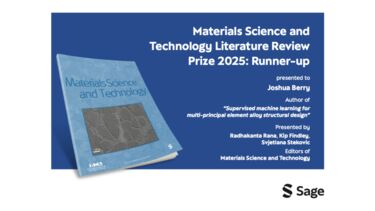
Josh Berry has been named a runner-up in the Materials Science and Technology Literature Review Prize.

The Materials Science and Technology (MST) Literature Review Competition encourages research students to produce definitive, critical reviews of literature, making their work available to a wider readership.
Josh submitted part of the literature review from hisPhD thesis to the competition, which was subsequently published in MST. Following the peer-review process, he was invited to attend a masterclass and present his review to a panel of judges composed of MST editors. The judges looked for a demonstration of not only deep technical knowledge but also the ability to communicate the significance of the research field to a broader materials science audience.
Reflecting on the masterclass and being named runner-up, Josh said: “I felt very privileged just to be invited to the final masterclass as one of the best four candidates, but when I found out I was runner up after hearing all the amazing presentations it was a great feeling. It is always good to have some external validation that the work you are doing and the ideas you have are listened to and valued by other members of the materials science community. Especially as I was discussing the future direction of materials design and how machine learning and artificial intelligence can support it. This formed the foundation of my PhD and is something I have become increasingly passionate about throughout my doctoral research and beyond.
The masterclass itself was also a very fun experience, it was great to hear the other 3 finalists talk about their reviews on topics they are so clearly very passionate about and provide such insightful answers to the tricky questions the judging panel posed. That made coming runner up an even better feeling because of the strong composition.”
Josh is now working as a Research Associate in the School of Chemical, Materials, and Biological Engineering. Looking back on his time as a PhD researcher he said “my PhD was an incredibly rewarding experience where I got to meet and work with so many talented individuals from a wide range of institutions and disciplines. It also provided me the opportunity to travel to so many incredible places and engage with the wider international materials community. As with every PhD it was an amazing journey with highs and lows, but these experiences have helped me to develop my problem solving and scientific skills and gave me greater confidence in my own abilities. It has laid the foundations for my continued growth as an independent researcher in the scientific community to help me continue onwards in my career.”