
Student blog: How the Harley Scholarship supported my Project Sunride America trip for student rocketry
The Harley Scholarship gives opportunities to students to travel overseas for part of their studies. This year Surina Singh used the scholarship to travel to America as part of Project Sunride.

Established in 2011 as a permanent endowment, thanks to a generous legacy from the estate of the late Mrs Margaret A Sheard, the Harley Scholarship is available to students in the School of Chemical, Materials and Biological Engineering who wish to undertake work experience overseas.
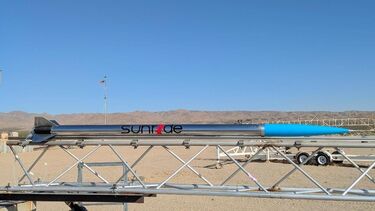
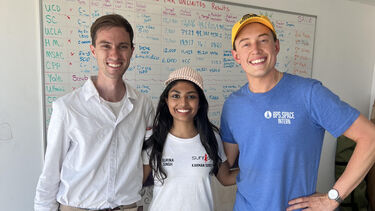
I am Surina Singh and I have completed my second-year in Biomedical Engineering. I was privileged to represent Sheffield University to launch high-performance amateur rockets with the Project Sunride co-curricular activity (CCA) in Mojave Desert, California, USA.
How does this link with your interests and/or the degree you are studying?
Many people might be perplexed as to why a Biomedical Engineering student became involved with launching rockets, considering it is predominantly an Aerospace pursuit. In the summer of 2025, without prior knowledge in this discipline, I challenged myself to design, create and launch a small-scale amateur rocket on a B-motor. Model rocket motors are classified by letters A through O for amateur rockets, with each letter approximately doubling the motor’s thrust. This means that I was using one of the smallest, commercially available sizes used for entry-level model rockets. I developed my skills in CAD, avionics and programming to launch my first rocket successfully. Subsequently, my interest in rocketry expanded, propelling me to learn more about the complexities of stability, aerodynamics and the fascinating field of rockets. When the academic year started, I applied for Project Sunride. This is a CCA known to motivate their engineering students and challenge them to build innovative rockets furthering their skills and expertise learnt from lectures, whilst having direct relevance to the industrial space propulsion sector.
Why did you apply and what support did you receive for your application?
Every year, Project Sunride launches two to three rockets in the Mojave Desert to break international records and prove that students can engineer a rocket comparable to industry ones. This was an opportunity I wanted to be a part of, despite not studying Aerospace Engineering.
As the only Biomedical Engineer in Project Sunride, I wanted to represent students who are fascinated by Engineering fields outside their course and demonstrate to students that they too can participate in something outside their comfort zone and can accomplish ground-breaking and challenging goals. I applied for the Harley scholarship to fund my trip to America, so that I could launch the rocket which our team spent an extensive time to manufacture. The application process was straightforward. I had to fill out a form in advance detailing the project I wanted funding for, which should include an element of travel abroad and provide specifics of the planned trip. Even at the application stage, I developed project management skills as I had to demonstrate how I could manage this project.
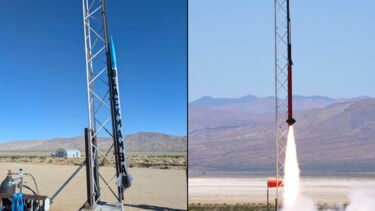
The aim of this trip was to launch two rockets, Black Mamba and Karman Delta, at the Friend of Amateur Rocketry (FAR) launch-site in America. Black Mamba was a liquid bi-propellent rocket, which aimed to break the European Student Liquid Rocket Altitude Record and Karman Delta was a two-stage rocket where both would demonstrate full rocket recovery and reusability. This launch campaign was imperative for breaking these records as this high-altitude record cannot be achieved within UK airspace currently due to laws and regulations.
What was the impact of the activity / future plans?
Upon launch, Black Mamba soared to an altitude of 32,834ft (10km), breaking our previous record of 26,879ft (8.19km) set by our rocket, Desert Winds, in 2024. Furthermore, Black Mamba was propelled by our Sunfire VI bipropellant, regeneratively-cooled rocket engine. This made it the highest flown regeneratively-cooled amateur liquid rocket in the world! We managed to retrieve all parts from the desert demonstrating full recovery, despite the tank unscrewing from the deployment recovery system on descent.
Unfortunately, for Karman Delta, the airframe buckled early in the flight, directly above the booster motor, which damaged it on impact when landing. However, our custom VECTOR arming board was successful in controlling our flight computers for ignition and recovery, meaning that it can be reused for future launches reducing the replacement for electronics.
Our targets for the future aim to investigate the flight computer data and conduct a root-cause-analysis on our weak points to improve the two rockets’ efficiency for next year’s campaign whilst remaining relevant, sustainable and cost-effective.
What technical / transferable skills did you acquire?
My attained skills supported me to assist my team to deliver a fully assembled rocket within a restricted timeframe. This allowed me to perform under pressure, improving my team-collaboration and communication skills that is fundamental in industry. Furthermore, this developed my launch-site operation skills which involved assembling the rocket on the launch-pad, troubleshooting issues on-site, running final electronics and assembly checks, and conducting quality checks on simulation data to ensure it remained unaltered. Moreover, when unexpected challenges appeared, we adapted and altered initial plans to ensure a successful flight, consequently enhancing problem-solving skills. Also, tracking and recovering the rocket post-launch strengthened my critical-thinking and team-building skills.
Subsequently, not only did I gain the technical skills in programming, 3D designing and manufacturing required for an Engineer, but the trip provided first-hand experience working with my team and other experts in this field, including Joe Barnard, the founder of Barnard Propulsion Systems (BPS.space), and Charlie Garcia, both known for developing advanced high-powered model rockets.
Why students should consider applying for the Harley scholarship?
The Harley scholarship funded my trip and allowed me the opportunity to participate in a ground-breaking launch and integrate the skills and knowledge I have learnt from this trip to further my academic career. The Harley Scholarship offers students the opportunity to design their own project or experience and acquire funding to bring it to life. Based on my application, I received more than funding. It offered me the opportunity to be a part of a team, to broaden my networking skills, showcase my passion for Engineering and be proud to be a student at Sheffield University. I would recommend Engineering students from CMBE to apply for the Harley Scholarship because it will definitely give you the opportunity to be a part of a similar rewarding experience, in an extraordinary city or a country that you may have never visited before. Even better, a once-in-a-lifetime opportunity to participate in a field that is not necessarily in your domain, but which you are passionate about exploring.

Visit us
Discover what sets Sheffield apart at an undergraduate open day in October or November.