
I couldn’t be happier that I applied for this course!

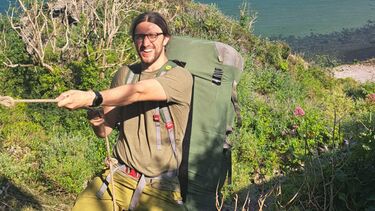
What have you enjoyed most about your course so far?
To work and study in conservation was something I aspired to do from childhood, spending my days roaming fields looking at insects, listening to birds, and catching frogs, but I always dismissed it as a career pursuit for the lucky few. After 'biting the bullet' (I thought at the time) and undertaking a BSc in conservation, I couldn't stop there and excitedly applied last minute for this MSc after talking about it all summer, and couldn't be happier that I did.
What made you decide to study at Sheffield?
Sheffield, for me, was quite an easy choice. The University of Sheffield's prestige in research and publication, its continually growing rankings, the country's best student union, and, of course, the modules the course offered. As someone who prefers in-field, hands-on experience, the modules offered in this course were especially attractive. And finally, as a climber, Sheffield was a no-brainer! This past year, I have spent as much time in lecture theatres and seminar rooms as I have in the glorious Peak District, soaking it all in as much as I could.
What have you enjoyed most about your course so far?
My final research project, investigating the occupancy responses of the European Nightjar to habitat fragmentation in the Peak District, was very exciting. Spending time in the Peaks (part of the reason I moved to Sheffield), watching an amazingly unique, rare and mysterious bird for weeks was so much fun, and gave me even greater insight and appreciation for my surrounding environment, something I wouldn't have experienced if not for this project.
However, it was the module 'Biodiversity in Space and Time' that really stood out for me; learning about evolutionary and phylogenetic diversity, and how to apply this knowledge to conservation approaches and priorities, I found so cool. This knowledge really opened my eyes to further elements of biodiversity and conservation, and helped me discover ZSL's EDGE programme, which I had never known about before, and I now find particularly interesting.
What skills have you developed during your course?
My coding skills have increased exponentially since taking this course, which is something I previously lacked and wanted to improve before applying (another alluring factor for me). To be taught by the authors of one of the most popular R introduction guides for biologists was very reassuring, especially for someone who found this element in conservation very intimidating. I can now confidently navigate R and produce high-quality, publication-ready graphs and figures, which is a skill I take great pride in.
Additionally, my writing skills were definitely tested and strengthened through the wide range of assignments, with each one different, yet relevant to the real world, which I really valued. These writing skills helped me build a versatile toolkit of report and essay styles I can now carry into future work.
What would you say to a student thinking about studying your course at Sheffield?
I'd always encourage anyone interested in conservation to consider studying conservation, and this course specifically, as I felt I gained a lot from it and built on the areas I wanted to improve. It gave me the chance to build my coding and data analysis skills, explore ornithology through unique field trips, and engage with one of the world's few long-term bird monitoring programmes. At the same time, I think it's worth acknowledging that a degree isn't the only way into conservation, and employers also look for practical experience and specific skills. Volunteering and gaining experience, both alongside and outside of this course, is something I would strongly encourage.
From my experience, this course is strongest in areas like bird and UK-based conservation, which makes the learning more focused. However, it's useful to go in with a clear sense of what you want to get out of it.
Related information

Postgraduate online open day
Find out more about becoming part of our community of talented postgraduate taught students. Register now to join us on Wednesday 25 November.