
Electrical and Electronic Engineering MEng
Discover the technology that powers modern life – from smartphones and electric vehicles to renewable energy systems and cutting-edge electronics. Learning spans everything from designing semiconductor chips, circuits and motors to building digital electronic, communication and power systems.
-
A Levels
AAA -
UCAS code
H629 -
Duration
4 years -
Start date
September -
Attendance
Full-time
- Accredited
- Course fee
- Funding available
- Optional placement year
- Study abroad option
Explore this course:
Course description
Why study this course?
Shape the future
Electronic and electrical engineering lies at the heart of many of the technologies that will shape the future. This programme will enable you to make a positive contribution to many global challenges, including green energy, AI, healthcare, cybersecurity and electric transport.
Study with experts
You will learn from academic staff who are involved in world-class research with our industrial partners. Their research informs our teaching.
Do engineering through project work
As well as learning about engineering, you will also do engineering by completing various projects. For your final year project you may be embedded within a research group or use the facilities in our bespoke project labs or the iForge Makerspace.
Specialist teaching laboratories
The Diamond building is dedicated to teaching engineering students practical skills. It contains large, modern labs where you can apply the theoretical material delivered in lectures to real-world applications. It's staffed by a team of technical and academic staff who are dedicated to teaching practical skills. The building also contains over 1,000 individual study spaces.
Exciting careers
The specialist and generic skills that you acquire will enable exciting well-paid global career opportunities in industry, commerce, research and beyond.

This degree spans everything from designing semiconductor chips, circuits, and motors to building complete digital, communication, and power systems. Informed by our world-leading research and shaped with input from industry, it will give you the skills and experience to launch a successful engineering career.
You will learn through lectures, labs, tutorials, and projects, many of which take place in our state-of-the-art teaching building, The Diamond. Here you will gain hands-on experience with industry-standard facilities, including our Electronics and Control Lab, teaching Cleanroom, computer labs, and student-led iForge makerspace.
In Year 1, you will gain a solid grounding in the key principles of engineering, spanning areas such as systems thinking, computing, electronics, engineering mathematics, and artificial intelligence, while also developing teamwork, laboratory, and project-based skills alongside employability skills.
In Year 2, you will broaden your knowledge through design-focused activities and applied studies in areas such as communications, control, embedded electronic technologies, semiconductor electronics, and electrical energy systems, with opportunities to explore both hardware and software perspectives.
In Year 3, you will take on an advanced individual project and you will have the flexibility to shape your degree by choosing a specialist pathway. Options allow you to focus on areas such as energy and power systems, semiconductor technologies, digital and integrated electronics, or advanced communications systems.
In Year 4, you will deepen your expertise with a major investigative group project and advanced modules in your chosen specialisation.
This integrated master’s degree gives you an extra year of advanced study, helping you graduate with the technical expertise, practical skills and professional confidence to make an immediate impact in industry or research.
Accreditation
Accredited by the Institution of Engineering and Technology (IET) on behalf of the Engineering Council (EC) for the purposes of fully meeting the academic requirement for registration as a Chartered Engineer.


Placement and study abroad
Placement
Study abroad
Modules
UCAS code: H629
Years: 2026, 2027
Core modules:
Core modules:
- Group Project and Engineering Skills
-
This module will help you develop the fundamental practical and professional skills that underpin electrical, electronic and mechatronic engineering. It will also help you develop the personal attributes essential in an engineer of any discipline.
40 credits
Five types of activities are used: —(1) lab-based activities to develop specific engineering skills and encourage the internalisation of theory;(2) an extended group project to develop an embedded system using the systems engineering approach. Students apply and develop technical and transferable skills simultaneously whilst working with partially open-ended problems; (3) address sustainability of the extended project using the UN's sustainable development goals; (4) programming skill lectures and laboratories to develop embedded programming abilities and support the extended project; and (5) a focussed, week-long, cross-faculty interdisciplinary design activity taken alongside students studying different engineering disciplines, addressing the ethical, social, economical and sustainability of solutions to engineering challenges of the 21st century. It will equip you with essential teamwork, design, problem-solving and communication skills. Particular attention will be paid to employability, sustainability, and inclusivity. Through real-life engineering projects, you will be introduced to tackling complex challenges.
The skills which you will develop include critical thinking, problem solving, adaptability in the face of unexpected challenges and professionalism. You will also develop the ability to use systems engineering approaches, to use specific pieces of hardware and software, to work effectively individually and in a group as an engineer, to approach challenges ethically and with a professional mindset, and to communicate effectively. - Engineering Modelling and Mathematics
-
This module serves as an introduction to common system analysis tools and their application to simple mechatronic systems.
20 credits
You will study fundamental mathematics topics and be introduced to the first principles of modelling and system behaviour. You will focus predominantly on first-order linear systems.
The tools you use in this module will be applied to a wide breadth of engineering applications. - System Analysis and Machine Learning
-
This module is an extension of system analysis tools for application to high order, non-linear and discrete mechatronic and AI systems.
20 credits
You will continue your study of fundamental, but slightly more advanced, mathematics topics. We will show you how to generalise and extend first-principles modelling and system behaviours to a broader range of systems.
We will also introduce you to computer tools used in electrical, mechatronic and computer engineering. - Electric and Magnetic Circuits
-
This module provides a comprehensive foundation in the analysis of circuits and networks, essential for any aspiring electrical engineer. You will learn both direct current (DC) and alternating current (AC) circuits, equipping you with the tools and techniques necessary to understand and solve electrical circuits and networks.
20 credits
You will learn to apply fundamental circuit theorems and analysis methods to determine voltage, current, and power in various circuit configurations. We will investigate the transient and steady-state responses of first and second-order circuits, both in the time and frequency domains, providing a deep understanding of circuit dynamics.
The second half of the module will be dedicated to magnetic circuits, including the analysis of transformers, motors, and generators, crucial components in power systems and electromechanical devices. We will discuss the interaction between electrical circuits and magnetic circuits and introduce the idea of mutual coupling and transformers. Finally, you will gain insight into the structure and operation of electrical networks, providing context for the practical application of the principles learnt throughout the module. - Analogue and Digital Electronics
-
This module provides a comprehensive introduction to the fundamental principles of both digital and analogue electronics, forming the foundations for further studies in electronic engineering. We will explore the building blocks of modern electronic systems, from the logic gates that underpin digital systems to the semiconductor devices that enable analogue signal processing.
20 credits
In the digital domain, you will learn Boolean algebra, apply logic manipulation techniques, and design both combinational and sequential logic networks, understanding their application in practical logic circuits. Furthermore, you will be introduced to hardware description languages (HDLs) and learn to analyse and simulate digital components and structures.
Transitioning to analogue electronics, we will introduce semiconductor materials, exploring the behaviour of diodes and semiconductor transistors. You will learn to apply circuit analysis principles to predict the behaviour of semiconductor devices in circuits. You will gain an understanding on the use of the transistor as switches and develop your ability to design and analyse transistor-based circuits. Furthermore, we will introduce operational amplifiers (op-amps), exploring their versatile applications. The module will conclude with an overview of integrated circuit manufacturing, from semiconductor boules to packaged ICs.
In your second year, you'll continue to build upon your knowledge of Electrical and Electronic Engineering and its practical applications. This will provide you with the fundamental knowledge needed to become a Chartered Engineer.
- Industrial and Design Projects
-
This module will give you the chance to apply the knowledge and skills you have acquired in your first year to engineering problems. The module has three elements: —(1) Project management approaches, taught mainly in lectures.(2) The Sheffield industrial project scheme (SHIPS) where you work on an industrial project in small groups, presenting a poster to industrial partners and your colleagues.(3) An extended design project where you apply project management and technical skills to model, design, implement and test an artefact. The list of available projects will vary from year to year, but will always encompass a range of topics from different aspects of electrical and electronic engineering.
20 credits
As part of this module, you will also undertake a focussed, week-long, cross-faculty interdisciplinary design activity, aimed at equipping you with essential teamwork, design, problem-solving, and communication skills. In addition to a focus on employability, sustainability and inclusivity, you will apply more advanced engineering technical knowledge to industry-relevant, complex and interdisciplinary problems. - Control and Communication Systems
-
In this module, you will learn how to model, analyse, and design both control and communication systems. You will explore how signals are represented, transmitted, received, and affected by noise, and how to calculate key performance metrics. You will also be introduced to the foundations of radio-frequency circuit analysis which is the cornerstone of modern communication architectures.
20 credits
You will also study the role of feedback in shaping dynamic system behaviour, learning to analyse stability and performance, and design controllers using classical and modern methods. Throughout the module, you will apply these concepts to practical engineering problems, integrating modelling, analysis, and design. By the end, you will have the skills to evaluate system performance, design effective solutions, and apply your knowledge to real-world communication and control challenges.
You will gain practical experience in applying theoretical concepts in the laboratory and reporting the experimental results. - Applied Engineering Mathematics
-
This module introduces advanced mathematical methods used to solve core problems in electrical, electronic, and mechatronic engineering systems.
20 credits
You will learn to use mathematical techniques to analyse signals, enabling the calculation of signal power and frequency response. You will also learn to model linear systems mathematically, decomposing them into characteristic modes to calculate time evolution, determine stability conditions, and implement noise reduction strategies.
You will gain foundational skills in regression, optimisation, and probability, enabling you to develop the machine learning and artificial intelligence algorithms used in modern autonomous systems.
Finally, you will explore engineering problems in multiple dimensions through vector calculus—the natural language of fields and waves. This framework will enable you to design and analyse physical components such as transformers, transmission lines, waveguides, and semiconductor devices. - Embedded Systems Engineering
-
This module covers embedded and system engineering. Systems engineering is a structured process for transforming stakeholder needs into a complete system solution through requirements analysis, design, implementation, testing and deployment. Most systems today are embedded systems and are made up of both hardware and software, underpinned by digital electronics and microcontroller-based embedded hardware. In this module, you will learn digital electronics concepts in embedded hardware and follow a software engineering approach to use them in an engineering design within a project context.
20 credits
The use of object oriented programming will be introduced, and you will write computer programs for embedded hardware. You will also study the interface between hardware and software, including how digital input/output (I/O) and common peripherals are used to connect software to real devices, and how embedded architecture affects design decisions and performance.
You will work on an embedded systems project that ties in all the concepts learnt in the module. From the outset, you will be performing system engineering inclusively, by designing and developing embedded systems in a way that is accessible, equitable and responsive to the diverse needs of users, developers and environments. - Electrical Energy Conversion
-
In this module you will apply the principles of electromagnetism to a broad array of electromechanical devices, such as actuators, solenoids and electrical machines. You will understand the operation and drive requirements of both DC and induction machines. This knowledge will enable you, in future years, to learn how to design electrical machines for a wide range of electromechanical energy conversion systems.
20 credits
You will also study power electronic energy conversion circuits. Common power electronic devices will be introduced in the context of power switching systems. You will learn how to analyse these circuits and design your own common power electronic circuits such as rectifiers, half and full bridges, linear regulators and switched mode power converters.
Your theoretical work will be underpinned by experimental work which will help you appreciate the practical limits and applications of electrical machines and drive technologies. - Analogue devices and circuits
-
In this module you will study the underlying physics of semiconductor devices, understand how they are designed and how careful design of semiconductors results in useful circuit elements. You will cover many types of semiconductor devices such as transistors (bipolar, field effect), diodes, light-emitting diodes, lasers, photodetectors and solar cells. We will also introduce you to opto-electronics. This knowledge will enable you, in future years, to learn how to design semiconductor devices for a wide range of applications.
20 credits
You will also study the use of semiconductor devices in circuits. Common circuit building blocks, such as voltage and power amplifiers, oscillators and digital logic are all implemented using different versions of the same semiconductor devices. You will learn how to analyse these circuits and design your own. You will also see how the design decisions made in silicon affect the function of a device in a circuit.
Your third year gives you the opportunity to do a practical project and choose a specialism that aligns with your interests and career goals. In your final year, you'll do an advanced project and develop further into the specialization you chose in your third year. This helps you gain advanced knowledge in your chosen field.
Third year core modules:
Third year core modules:
- Individual Project
-
This module is an important project where you will demonstrate your engineering competence at bachelor level. Working individually under the supervision of a member of academic staff, you will undertake an individual project to further develop your skills and gain new project-specific knowledge through independent learning and experimentation. To do this, you will need to draw on all the skills, knowledge and experience you have acquired during your studies.
40 credits
As part of the project, you will undertake a critical evaluation of technical literature, plan and manage time and resources in your project and convey the results to an audience using a combination of written and non-written techniques appropriate to the background of the audience.
Alongside your project, you will learn the fundamentals of engineering management, finance, law and the commercial context in which industrial projects sit. - Energy Systems and Power Electronics
-
In this module, you will be introduced to the concepts on electrical energy supply networks and the power electronics which are revolutionising electrical power delivery systems.
20 credits
In autumn, you will study the design and applications of power electronics - the use of electric switches and diodes to efficiently manipulate power flow - in more depth than in your second year. Focusing primarily on DC-DC and DC-AC conversion, we introduce you to several circuits and analysis techniques and discuss practical implementation issues such as gate drives and snubber circuits. You will also have the opportunity to apply the theory you learn in lectures in the laboratory.
In spring, you will study the structure of the power grid and the power flows in both synchronous generators and transmission systems, before performing stability analysis under load-change or fault conditions. The per-unit system will then be introduced to facilitate fault current calculations when short-circuit faults occur in electrical power systems. You will also learn about protection and switchgear used to limit fault currents and ensure safe system operation. - Electromagnetic Fields and Devices
-
This module will introduce students static electric and magnetic fields, Maxwell's equations and the application of these equations to electro- and magento-static field problems. This will be extended to consider low frequency time-varying fields and the magnetic field calculations necessary to analyse rotating electrical machines. There will also be a consideration of the numerical methods used to solve magnetic field problems. These ideas will then underpin the second half of the module that will concentrate on the design of electrical machines, considering rating, windings and magnets.
20 credits - Control Systems Design
-
In this module, we will show you how to design, implement and evaluate modern control systems from start to finish. You will explore how to model and analyse dynamic systems using both first-principles and data-driven approaches, and how to identify system behaviour when models are imperfect. We'll introduce state feedback, observers, and Kalman filtering to help you estimate system states in the presence of noise and uncertainty. You will then learn to design advanced controllers, including linear quadratic regulators and linear model predictive control, and test them in both simulation and on a real system using hardware-in-the-loop setups.
20 credits
Throughout, we will emphasise responsible engineering practice, including considerations of safety, efficiency, resource use and environmental impact. By the end of the module, you will have the skills and confidence to take a control concept from theory through to real-world implementation and evaluation, considering both technical performance and sustainability.
Third year optional modules:
Third year optional modules:
- Machine Learning and Optimisation
-
Machine learning is a component of artificial intelligence that enables a computer to learn how to perform a task from data or simulations rather than being explicitly programmed for every possible scenario. Machine learning is currently being applied in a wide array of technology sectors, including robotics and autonomous systems, healthcare, bioinformatics and finance, and has experienced a huge growth in industry in recent years.
20 credits
In the first semester, the focus is on the theory and geometry of convex optimisation. You will study objective function properties, constrained and unconstrained search, and techniques for transforming complex constraints into manageable mathematical forms. In the second semester, the focus moves to the machine learning pipeline, where you will study optimisation-driven model identification and the problem of achieving good generalisation on unseen data. You will conclude the module with an analysis of the ethical issues and mitigation strategies arising from training and deploying machine learning systems.
You will study through a combination of lectures, computational laboratories, and project work, implementing optimisation and machine learning algorithms using industry-standard software, and developing practical skills needed for research and industrial environments. - Electronic and Photonic Devices
-
This module provides the foundation and technological understanding of electronic, semiconductor and photonic devices. Knowledge from this module underpins the rapid progress in computing, data centers, high speed communication and electrical machines.
20 credits
This module will prepare you for work in the electronic industry (which is a very large industry), to pursue advanced courses in electronics and to enable you to contribute to rapidly developing electronic technologies. Specifically, you will learn the key device technologies for the fields of computing, photonics, RF and power electronics. This includes the understanding of how 1) the basic pn junction can be transformed into high efficiency solar cells to generate green energy. 2) compound semiconductors are used to create optical light sources and detectors which transmit high volumes of data through optical fibres3) transistor scaling and novel design to increase the computing power and memory4) wide bandgap semiconductors increase the current and voltage limits of transistors used in electrical machine drives5) advances in semiconductor fabrication lead to very high speed devices for RF applications. - Industrial Automation and Digitalisation
-
Industrial automation and digitalisation has become an important feature today, especially in this age of rapid production and high precision. Knowledge and skill in this area has therefore become increasingly necessary.
20 credits
This module provides an integrated introduction to modern industrial automation and the emerging digital technologies shaping Industry 4.0. You will develop core competencies in PLC programming, HMI design, instrumentation, and feedback control (PID tuning and implementation), with hands-on experience implementing automation solutions using industrial hardware and software tools.
Building on these foundations, the module explores cyber-physical production systems and digitalisation in manufacturing, including virtual commissioning, digital shadows and digital twin principles. - Digital Signal Processing
-
Digital signal processing (DSP) is a fundamental discipline at the intersection of mathematics, engineering and computer science that deals with the manipulation, analysis, and interpretation of signals represented in digital form. These signals can be derived from various sources such as audio, video, images, sensor data, and communication systems. At its core, DSP involves the transformation of analog signals into digital representations through a process called sampling. Once in digital form, signals can be processed, analysed, and modified using a variety of algorithms and techniques. DSP plays a crucial role in a wide range of applications including telecommunications, audio and video processing, medical imaging, radar systems and control systems.
20 credits
In this module you will learn the principles of discrete-time sampled systems, including difference equations and stability. You will learn to describe digital signals and systems in different domains (e.g. time, frequency and z domains) and use a range of methods to determine the output of a digital system for a given digital input. The concept of transforms, including the fast Fourier transform (FFT), will be introduced to you. Building on these core principles, digital filter design for finite and infinite impulse response (i.e., FIR and IIR) filters and their applications are addressed, before moving on to practical implementation and testing of DSP systems. You will learn both software and hardware based implementations and their limitations. The module concludes with a look at the extension of the core principles to 2D digital signals, i.e. image processing.
Fourth year core modules: (needs updating)
Fourth year core modules: (needs updating)
- Group Project
-
The project, performed under the supervision of either two academic supervisors, or one academic supervisor and one second external marker from an industrial partner, takes the form of a multidisciplinary investigative or design project usually with a significant industrial input. Students are divided into multidisciplinary teams and presened with the project brief by the industrialists involved. Project activities are based in the research labs of the supervisor(s) although students may also have to make use of the facilities, normally within the Department. Students hold regular minuted progress management meetings with group members rotating their group management responsibilities.
45 credits
- Advanced Machines and Actuators
- Advanced Power Electronics and Devices
- Control of Electrical Machines and Drives
- Future Energy Grids
- Advanced Machines and Actuators
- Advanced Power Electronics and Devices
- Control of Electrical Machines and Drives
- Future Energy Grids
Fourth year optional modules:
Fourth year optional modules:
- Real-time Control and Embedded Systems
- Power and RF Semiconductor Devices
- Real-time Control and Embedded Systems
- Power and RF Semiconductor Devices
Your third year gives you the opportunity to do a practical project and choose a specialism that aligns with your interests and career goals. In your final year, you'll do an advanced project and develop further into the specialisation you chose in your third year. This helps you gain advanced knowledge in your chosen field.
Third year core modules:
Third year core modules:
- Individual Project
-
This module is an important project where you will demonstrate your engineering competence at bachelor level. Working individually under the supervision of a member of academic staff, you will undertake an individual project to further develop your skills and gain new project-specific knowledge through independent learning and experimentation. To do this, you will need to draw on all the skills, knowledge and experience you have acquired during your studies.
40 credits
As part of the project, you will undertake a critical evaluation of technical literature, plan and manage time and resources in your project and convey the results to an audience using a combination of written and non-written techniques appropriate to the background of the audience.
Alongside your project, you will learn the fundamentals of engineering management, finance, law and the commercial context in which industrial projects sit. - Electronic and Photonic Devices
-
This module provides the foundation and technological understanding of electronic, semiconductor and photonic devices. Knowledge from this module underpins the rapid progress in computing, data centers, high speed communication and electrical machines.
20 credits
This module will prepare you for work in the electronic industry (which is a very large industry), to pursue advanced courses in electronics and to enable you to contribute to rapidly developing electronic technologies. Specifically, you will learn the key device technologies for the fields of computing, photonics, RF and power electronics. This includes the understanding of how 1) the basic pn junction can be transformed into high efficiency solar cells to generate green energy. 2) compound semiconductors are used to create optical light sources and detectors which transmit high volumes of data through optical fibres3) transistor scaling and novel design to increase the computing power and memory4) wide bandgap semiconductors increase the current and voltage limits of transistors used in electrical machine drives5) advances in semiconductor fabrication lead to very high speed devices for RF applications. - Digital Signal Processing
-
Digital signal processing (DSP) is a fundamental discipline at the intersection of mathematics, engineering and computer science that deals with the manipulation, analysis, and interpretation of signals represented in digital form. These signals can be derived from various sources such as audio, video, images, sensor data, and communication systems. At its core, DSP involves the transformation of analog signals into digital representations through a process called sampling. Once in digital form, signals can be processed, analysed, and modified using a variety of algorithms and techniques. DSP plays a crucial role in a wide range of applications including telecommunications, audio and video processing, medical imaging, radar systems and control systems.
20 credits
In this module you will learn the principles of discrete-time sampled systems, including difference equations and stability. You will learn to describe digital signals and systems in different domains (e.g. time, frequency and z domains) and use a range of methods to determine the output of a digital system for a given digital input. The concept of transforms, including the fast Fourier transform (FFT), will be introduced to you. Building on these core principles, digital filter design for finite and infinite impulse response (i.e., FIR and IIR) filters and their applications are addressed, before moving on to practical implementation and testing of DSP systems. You will learn both software and hardware based implementations and their limitations. The module concludes with a look at the extension of the core principles to 2D digital signals, i.e. image processing. - Integrated Electronic and Semiconductor Systems
-
This module focuses on the design and implementation of complete electronic and semiconductor system hardware, connecting system-level design to practical realisation.
20 credits
You will study digital, analogue, and how to integrate embedded software. Analogue electronics skills will be delivered with a strong emphasis on power electronics, including DC-DC and DC-AC converters. This will also serve as background to support engineering of high-voltage high-current energy, generations and motor systems. The module combines circuit analysis, practical implementation techniques, and laboratory experience.
For microelectronics and sensor systems you will examine power delivery, energy management alongside sensor integration, data conversion and communication required to build complete embedded communication control or sensing platforms. Implementation strategies for microelectronic and integrated semiconductor systems will be covered, including grounding, power distribution and EMI control. You will evaluate trade-offs between efficiency, accuracy, cost, reliability, and security, while considering safety standards and system lifetime requirements.Overall, this module develops the skills needed to design secure, reliable, and efficient electronic systems, preparing you for advanced study or professional engineering practice.
Third year optional modules:
Third year optional modules:
- Machine Learning and Optimisation
-
Machine learning is a component of artificial intelligence that enables a computer to learn how to perform a task from data or simulations rather than being explicitly programmed for every possible scenario. Machine learning is currently being applied in a wide array of technology sectors, including robotics and autonomous systems, healthcare, bioinformatics and finance, and has experienced a huge growth in industry in recent years.
20 credits
In the first semester, the focus is on the theory and geometry of convex optimisation. You will study objective function properties, constrained and unconstrained search, and techniques for transforming complex constraints into manageable mathematical forms. In the second semester, the focus moves to the machine learning pipeline, where you will study optimisation-driven model identification and the problem of achieving good generalisation on unseen data. You will conclude the module with an analysis of the ethical issues and mitigation strategies arising from training and deploying machine learning systems.
You will study through a combination of lectures, computational laboratories, and project work, implementing optimisation and machine learning algorithms using industry-standard software, and developing practical skills needed for research and industrial environments. - Communication Systems
-
This module provides you with a broad understanding of communication and radio frequency systems. You will first be introduced to the principles behind contemporary digital communication systems. You will then learn aspects of system design including modulation, coding and detection techniques, together with signal representation in the time and frequency domains, bandwidth considerations, the concepts of information and entropy, and basic performance metrics such as signal-to-noise ratio and bit error rate. You will learn to apply cryptography to ensure privacy and secure data exchange. You will also learn physical electromagnetic structures such as antennas and propagation environments.
20 credits - Computer and AI System Architecture
-
This module introduces the architecture of modern cloud, embedded and integrated computer systems. Students will explore the anatomy of computing platforms spanning processors, memory hierarchies, peripherals, and interconnects, together with the software stack, applications and operating system that manages them. A practical understanding of the Linux operating system is developed, including boot processes, device drivers, scheduling, and memory management.
20 credits
Students will apply benchmarking and profiling techniques to embedded applications and AI model, learning how architectural choices influence performance, energy consumption, and responsiveness. The module introduces hardware and software security concepts, including trusted boot, privilege levels, isolation, and attack surfaces, establishing security as an architectural concern rather than an afterthought. Emphasis is placed on system-level reasoning and quantitative evaluation, preparing students for advanced modules in safe, secure, and AI-enabled system architecture.
Through Practical coursework Build, implementation, optimisation, deployment and lifecycle management strategies for programmable software and configurable hardware systems.
Fourth year core modules:
Fourth year core modules:
- Group Project
-
The project, performed under the supervision of either two academic supervisors, or one academic supervisor and one second external marker from an industrial partner, takes the form of a multidisciplinary investigative or design project usually with a significant industrial input. Students are divided into multidisciplinary teams and presened with the project brief by the industrialists involved. Project activities are based in the research labs of the supervisor(s) although students may also have to make use of the facilities, normally within the Department. Students hold regular minuted progress management meetings with group members rotating their group management responsibilities.
45 credits
- Semiconductor Technologies for Computing
- Photonic Components and Integrated Circuits
- Semiconductor Manufacturing
- Advanced Integrated Electronics
- Semiconductor Technologies for Computing
- Photonic Components and Integrated Circuits
- Semiconductor Manufacturing
- Advanced Integrated Electronics
Fourth year optional modules:
Fourth year optional modules:
- Advanced Computer and Electronic System Architecture
- Verification and Test of Secure Microelectronics
- Resilient Microelectronic and Computing Systems
- Advanced Computer and Electronic System Architecture
- Verification and Test of Secure Microelectronics
- Resilient Microelectronic and Computing Systems
Your third year gives you the opportunity to do a practical project and choose a specialism that aligns with your interests and career goals. In your final year, you'll do an advanced project and develop further into the specialisation you chose in your third year. This helps you gain advanced knowledge in your chosen field.
Third year core modules:
Third year core modules:
- Individual Project
-
This module is an important project where you will demonstrate your engineering competence at bachelor level. Working individually under the supervision of a member of academic staff, you will undertake an individual project to further develop your skills and gain new project-specific knowledge through independent learning and experimentation. To do this, you will need to draw on all the skills, knowledge and experience you have acquired during your studies.
40 credits
As part of the project, you will undertake a critical evaluation of technical literature, plan and manage time and resources in your project and convey the results to an audience using a combination of written and non-written techniques appropriate to the background of the audience.
Alongside your project, you will learn the fundamentals of engineering management, finance, law and the commercial context in which industrial projects sit. - Integrated Electronic and Semiconductor Systems
-
This module focuses on the design and implementation of complete electronic and semiconductor system hardware, connecting system-level design to practical realisation.
20 credits
You will study digital, analogue, and how to integrate embedded software. Analogue electronics skills will be delivered with a strong emphasis on power electronics, including DC-DC and DC-AC converters. This will also serve as background to support engineering of high-voltage high-current energy, generations and motor systems. The module combines circuit analysis, practical implementation techniques, and laboratory experience.
For microelectronics and sensor systems you will examine power delivery, energy management alongside sensor integration, data conversion and communication required to build complete embedded communication control or sensing platforms. Implementation strategies for microelectronic and integrated semiconductor systems will be covered, including grounding, power distribution and EMI control. You will evaluate trade-offs between efficiency, accuracy, cost, reliability, and security, while considering safety standards and system lifetime requirements.Overall, this module develops the skills needed to design secure, reliable, and efficient electronic systems, preparing you for advanced study or professional engineering practice. - Electromagnetic Fields and Devices
-
This module introduces the fundamentals of electromagnetic fields and their application to the design of electrical machines used in renewable energy, electric vehicles, and aerospace systems.
20 credits
In Semester 1, you will develop an understanding of the physical behaviour of electric and magnetic fields and build a strong mathematical foundation for analysing these fields using Maxwell's equations. Analytical methods will be applied to solve practical engineering problems, with an emphasis on electrical power applications. You will also learn numerical techniques for field computation and gain hands-on experience using open-source finite element analysis (FEA) software.
In Semester 2, the focus shifts to the fundamentals of electrical machine design, covering both radial-field and axial-field topologies. You will explore the key principles, configurations, and industrial applications of these machines. The module develops general torque equations based on electrical and magnetic loadings, linking machine geometry, material properties, and performance. It also examines magnetic materials, including the characteristics and limitations of permanent magnets (hard) and laminated steels (soft). Additionally, you will study winding structures, winding factors, and methods to reduce electromotive force (EMF) and magnetomotive force (MMF) harmonics, as well as control winding reactances, providing you with the analytical and design skills essential for modern electrical machines.
Third year optional modules:
Third year optional modules:
- Machine Learning and Optimisation
-
Machine learning is a component of artificial intelligence that enables a computer to learn how to perform a task from data or simulations rather than being explicitly programmed for every possible scenario. Machine learning is currently being applied in a wide array of technology sectors, including robotics and autonomous systems, healthcare, bioinformatics and finance, and has experienced a huge growth in industry in recent years.
20 credits
In the first semester, the focus is on the theory and geometry of convex optimisation. You will study objective function properties, constrained and unconstrained search, and techniques for transforming complex constraints into manageable mathematical forms. In the second semester, the focus moves to the machine learning pipeline, where you will study optimisation-driven model identification and the problem of achieving good generalisation on unseen data. You will conclude the module with an analysis of the ethical issues and mitigation strategies arising from training and deploying machine learning systems.
You will study through a combination of lectures, computational laboratories, and project work, implementing optimisation and machine learning algorithms using industry-standard software, and developing practical skills needed for research and industrial environments. - Electronic and Photonic Devices
-
This module provides the foundation and technological understanding of electronic, semiconductor and photonic devices. Knowledge from this module underpins the rapid progress in computing, data centers, high speed communication and electrical machines.
20 credits
This module will prepare you for work in the electronic industry (which is a very large industry), to pursue advanced courses in electronics and to enable you to contribute to rapidly developing electronic technologies. Specifically, you will learn the key device technologies for the fields of computing, photonics, RF and power electronics. This includes the understanding of how 1) the basic pn junction can be transformed into high efficiency solar cells to generate green energy. 2) compound semiconductors are used to create optical light sources and detectors which transmit high volumes of data through optical fibres3) transistor scaling and novel design to increase the computing power and memory4) wide bandgap semiconductors increase the current and voltage limits of transistors used in electrical machine drives5) advances in semiconductor fabrication lead to very high speed devices for RF applications. - Communication Systems
-
This module provides you with a broad understanding of communication and radio frequency systems. You will first be introduced to the principles behind contemporary digital communication systems. You will then learn aspects of system design including modulation, coding and detection techniques, together with signal representation in the time and frequency domains, bandwidth considerations, the concepts of information and entropy, and basic performance metrics such as signal-to-noise ratio and bit error rate. You will learn to apply cryptography to ensure privacy and secure data exchange. You will also learn physical electromagnetic structures such as antennas and propagation environments.
20 credits - Digital Signal Processing
-
Digital signal processing (DSP) is a fundamental discipline at the intersection of mathematics, engineering and computer science that deals with the manipulation, analysis, and interpretation of signals represented in digital form. These signals can be derived from various sources such as audio, video, images, sensor data, and communication systems. At its core, DSP involves the transformation of analog signals into digital representations through a process called sampling. Once in digital form, signals can be processed, analysed, and modified using a variety of algorithms and techniques. DSP plays a crucial role in a wide range of applications including telecommunications, audio and video processing, medical imaging, radar systems and control systems.
20 credits
In this module you will learn the principles of discrete-time sampled systems, including difference equations and stability. You will learn to describe digital signals and systems in different domains (e.g. time, frequency and z domains) and use a range of methods to determine the output of a digital system for a given digital input. The concept of transforms, including the fast Fourier transform (FFT), will be introduced to you. Building on these core principles, digital filter design for finite and infinite impulse response (i.e., FIR and IIR) filters and their applications are addressed, before moving on to practical implementation and testing of DSP systems. You will learn both software and hardware based implementations and their limitations. The module concludes with a look at the extension of the core principles to 2D digital signals, i.e. image processing.
Fourth year core modules:
Fourth year core modules:
- Group Project
-
The project, performed under the supervision of either two academic supervisors, or one academic supervisor and one second external marker from an industrial partner, takes the form of a multidisciplinary investigative or design project usually with a significant industrial input. Students are divided into multidisciplinary teams and presened with the project brief by the industrialists involved. Project activities are based in the research labs of the supervisor(s) although students may also have to make use of the facilities, normally within the Department. Students hold regular minuted progress management meetings with group members rotating their group management responsibilities.
45 credits
- Future Energy Grids
- Advanced Integrated Electronics
- Future Energy Grids
- Advanced Integrated Electronics
Fourth year optional modules:
Fourth year optional modules:
- Advanced Power Electronics and Devices
- Control of Electrical Machines and Drives
- Advanced Digital Communications
- Mobile Communications and Networks
- Advanced Computer and Electronic System Architecture
- Deep Learning for Engineering
- Advanced Power Electronics and Devices
- Control of Electrical Machines and Drives
- Advanced Digital Communications
- Mobile Communications and Networks
- Advanced Computer and Electronic System Architecture
- Deep Learning for Engineering
Your third year gives you the opportunity to do a practical project and choose a specialism that aligns with your interests and career goals. In your final year, you'll do an advanced project and develop further into the specialisation you chose in your third year. This helps you gain advanced knowledge in your chosen field.
Third year core modules:
Third year core modules:
- Individual Project
-
This module is an important project where you will demonstrate your engineering competence at bachelor level. Working individually under the supervision of a member of academic staff, you will undertake an individual project to further develop your skills and gain new project-specific knowledge through independent learning and experimentation. To do this, you will need to draw on all the skills, knowledge and experience you have acquired during your studies.
40 credits
As part of the project, you will undertake a critical evaluation of technical literature, plan and manage time and resources in your project and convey the results to an audience using a combination of written and non-written techniques appropriate to the background of the audience.
Alongside your project, you will learn the fundamentals of engineering management, finance, law and the commercial context in which industrial projects sit. - Communication Systems
-
This module provides you with a broad understanding of communication and radio frequency systems. You will first be introduced to the principles behind contemporary digital communication systems. You will then learn aspects of system design including modulation, coding and detection techniques, together with signal representation in the time and frequency domains, bandwidth considerations, the concepts of information and entropy, and basic performance metrics such as signal-to-noise ratio and bit error rate. You will learn to apply cryptography to ensure privacy and secure data exchange. You will also learn physical electromagnetic structures such as antennas and propagation environments.
20 credits - Digital Signal Processing
-
Digital signal processing (DSP) is a fundamental discipline at the intersection of mathematics, engineering and computer science that deals with the manipulation, analysis, and interpretation of signals represented in digital form. These signals can be derived from various sources such as audio, video, images, sensor data, and communication systems. At its core, DSP involves the transformation of analog signals into digital representations through a process called sampling. Once in digital form, signals can be processed, analysed, and modified using a variety of algorithms and techniques. DSP plays a crucial role in a wide range of applications including telecommunications, audio and video processing, medical imaging, radar systems and control systems.
20 credits
In this module you will learn the principles of discrete-time sampled systems, including difference equations and stability. You will learn to describe digital signals and systems in different domains (e.g. time, frequency and z domains) and use a range of methods to determine the output of a digital system for a given digital input. The concept of transforms, including the fast Fourier transform (FFT), will be introduced to you. Building on these core principles, digital filter design for finite and infinite impulse response (i.e., FIR and IIR) filters and their applications are addressed, before moving on to practical implementation and testing of DSP systems. You will learn both software and hardware based implementations and their limitations. The module concludes with a look at the extension of the core principles to 2D digital signals, i.e. image processing.
Third year optional modules:
Third year optional modules:
- Machine Learning and Optimisation
-
Machine learning is a component of artificial intelligence that enables a computer to learn how to perform a task from data or simulations rather than being explicitly programmed for every possible scenario. Machine learning is currently being applied in a wide array of technology sectors, including robotics and autonomous systems, healthcare, bioinformatics and finance, and has experienced a huge growth in industry in recent years.
20 credits
In the first semester, the focus is on the theory and geometry of convex optimisation. You will study objective function properties, constrained and unconstrained search, and techniques for transforming complex constraints into manageable mathematical forms. In the second semester, the focus moves to the machine learning pipeline, where you will study optimisation-driven model identification and the problem of achieving good generalisation on unseen data. You will conclude the module with an analysis of the ethical issues and mitigation strategies arising from training and deploying machine learning systems.
You will study through a combination of lectures, computational laboratories, and project work, implementing optimisation and machine learning algorithms using industry-standard software, and developing practical skills needed for research and industrial environments. - Electronic and Photonic Devices
-
This module provides the foundation and technological understanding of electronic, semiconductor and photonic devices. Knowledge from this module underpins the rapid progress in computing, data centers, high speed communication and electrical machines.
20 credits
This module will prepare you for work in the electronic industry (which is a very large industry), to pursue advanced courses in electronics and to enable you to contribute to rapidly developing electronic technologies. Specifically, you will learn the key device technologies for the fields of computing, photonics, RF and power electronics. This includes the understanding of how 1) the basic pn junction can be transformed into high efficiency solar cells to generate green energy. 2) compound semiconductors are used to create optical light sources and detectors which transmit high volumes of data through optical fibres3) transistor scaling and novel design to increase the computing power and memory4) wide bandgap semiconductors increase the current and voltage limits of transistors used in electrical machine drives5) advances in semiconductor fabrication lead to very high speed devices for RF applications. - Computer and AI System Architecture
-
This module introduces the architecture of modern cloud, embedded and integrated computer systems. Students will explore the anatomy of computing platforms spanning processors, memory hierarchies, peripherals, and interconnects, together with the software stack, applications and operating system that manages them. A practical understanding of the Linux operating system is developed, including boot processes, device drivers, scheduling, and memory management.
20 credits
Students will apply benchmarking and profiling techniques to embedded applications and AI model, learning how architectural choices influence performance, energy consumption, and responsiveness. The module introduces hardware and software security concepts, including trusted boot, privilege levels, isolation, and attack surfaces, establishing security as an architectural concern rather than an afterthought. Emphasis is placed on system-level reasoning and quantitative evaluation, preparing students for advanced modules in safe, secure, and AI-enabled system architecture.
Through Practical coursework Build, implementation, optimisation, deployment and lifecycle management strategies for programmable software and configurable hardware systems. - Integrated Electronic and Semiconductor Systems
-
This module focuses on the design and implementation of complete electronic and semiconductor system hardware, connecting system-level design to practical realisation.
20 credits
You will study digital, analogue, and how to integrate embedded software. Analogue electronics skills will be delivered with a strong emphasis on power electronics, including DC-DC and DC-AC converters. This will also serve as background to support engineering of high-voltage high-current energy, generations and motor systems. The module combines circuit analysis, practical implementation techniques, and laboratory experience.
For microelectronics and sensor systems you will examine power delivery, energy management alongside sensor integration, data conversion and communication required to build complete embedded communication control or sensing platforms. Implementation strategies for microelectronic and integrated semiconductor systems will be covered, including grounding, power distribution and EMI control. You will evaluate trade-offs between efficiency, accuracy, cost, reliability, and security, while considering safety standards and system lifetime requirements.Overall, this module develops the skills needed to design secure, reliable, and efficient electronic systems, preparing you for advanced study or professional engineering practice.
Fourth year core modules:
Fourth year core modules:
- Group Project
-
The project, performed under the supervision of either two academic supervisors, or one academic supervisor and one second external marker from an industrial partner, takes the form of a multidisciplinary investigative or design project usually with a significant industrial input. Students are divided into multidisciplinary teams and presened with the project brief by the industrialists involved. Project activities are based in the research labs of the supervisor(s) although students may also have to make use of the facilities, normally within the Department. Students hold regular minuted progress management meetings with group members rotating their group management responsibilities.
45 credits
- Advanced Digital Communications
- Mobile Communications and Networks
- Radio Architectures for Wireless Communication
- Antennas and Intelligent Electromagnetic Systems
- Advanced Digital Communications
- Mobile Communications and Networks
- Radio Architectures for Wireless Communication
- Antennas and Intelligent Electromagnetic Systems
Fourth year optional modules:
Fourth year optional modules:
- Advanced Integrated Electronics
- Advanced Computer and Electronic System Architecture
- Resilient Microelectronic and Computing Systems
- Deep Learning for Engineering
- Advanced Integrated Electronics
- Advanced Computer and Electronic System Architecture
- Resilient Microelectronic and Computing Systems
- Deep Learning for Engineering
The content of our courses is reviewed annually to make sure it's up-to-date and relevant. Individual modules are occasionally updated or withdrawn. This is in response to discoveries through our world-leading research; funding changes; professional accreditation requirements; student or employer feedback; outcomes of reviews; and variations in staff or student numbers. In the event of any change we will inform students and take reasonable steps to minimise disruption.
Learning and assessment
Learning
Learning will be delivered through a combination of lectures, practical labs and tutorials as well as independent study that is supported by problem classes.
In your first and second year all your labs will be held in The Diamond, where you'll use our large Electronics and Control Lab, Electrical Machines Room and have lab sessions in the dedicated teaching Cleanroom.
In the third year, you’ll carry out your own research project, supervised by an academic.
Our teaching is informed by our research. This results in learning by a combination of theory and hands-on, practical lab sessions in our state-of-the-art-facilities with our fully accredited courses.
Assessment
You will be assessed using a mixture of exams/tests, coursework and practical sessions.
Entry requirements
With Access Sheffield, you could qualify for additional consideration or a contextual offer - find out if you're eligible.
The A Level entry requirements for this course are:
AAA
including Maths and a science
- A Levels + a fourth Level 3 qualification
- AAB including Maths and a science + B in a relevant EPQ; AAB including Maths and a science + B in AS or A Level Further Maths
- International Baccalaureate
- 36, with 6 in Higher Level Maths and a science; 34, with 6,5 (in any order) in Higher Level Maths and a science, and B in a science-based Extended Essay
- BTEC Extended Diploma
- DDD in Engineering, Applied Science or Physical Science + B in A Level Maths
- BTEC Diploma
- D*D in Engineering or Applied Science + B in A Level Maths
- T Level
- Distinction in the relevant T Level, including grade A in the core component + B in A Level Maths
- Scottish Highers + Advanced Higher/s
- AAABB + AA in Maths and a science
- Welsh Baccalaureate + 2 A Levels
- A + AA in Maths and a science
- Access to HE Diploma
- The award of the Access to HE Diploma in a relevant subject, with 45 credits at Level 3, including 39 at Distinction (to include Maths and Physics units), and 6 at Merit + B in A Level Maths
-
Science subjects include Biology/Human Biology, Chemistry, Computer Science, Electronics, Engineering, Further Maths, Physics, or Technology
-
Relevant T Level subjects include: Maintenance, Installation & Repair for Engineering & Manufacturing; Building Services Engineering for Construction; or Design & Development for Engineering & Manufacturing
The A Level entry requirements for this course are:
AAB
including Maths and a science
- A Levels + a fourth Level 3 qualification
- AAB including Maths and a science + B in a relevant EPQ; AAB including Maths and a science + B in AS or A Level Further Maths
- International Baccalaureate
- 34, with 6,5 (in any order) in Higher Level Maths and a science
- BTEC Extended Diploma
- DDM in Engineering, Applied Science or Physical Science + B in A Level Maths
- BTEC Diploma
- DD in Engineering or Applied Science + B in A Level Maths
- T Level
- Distinction in the relevant T Level, including grade A in the core component + B in A Level Maths
- Scottish Highers + Advanced Higher/s
- AABBB + AB in Maths and a science
- Welsh Baccalaureate + 2 A Levels
- B + AA in Maths and a science
- Access to HE Diploma
- The award of the Access to HE Diploma in a relevant subject, with 45 credits at Level 3, including 36 at Distinction (to include Maths and Physics units), and 9 at Merit + B in A Level Maths
-
Science subjects include Biology/Human Biology, Chemistry, Computer Science, Electronics, Engineering, Further Maths, Physics, or Technology
-
Relevant T Level subjects include: Maintenance, Installation & Repair for Engineering & Manufacturing; Building Services Engineering for Construction; or Design & Development for Engineering & Manufacturing
You must demonstrate that your English is good enough for you to successfully complete your course. For this course we require: GCSE English Language at grade 4/C; IELTS grade of 6.5 with a minimum of 6.0 in each component; or an alternative acceptable English language qualification
Equivalent English language qualifications
Visa and immigration requirements
Other qualifications | UK and EU/international
If you have any questions about entry requirements, please contact the school.
Graduate careers
School of Electrical and Electronic Engineering
Our courses prepare you for a career where you'll apply your creative problem-solving skills and your understanding of engineering principles to the real world, while working in multidisciplinary teams. These transferable skills can be applied in many sectors across the breadth of engineering and beyond.
During your degree you'll have plenty of opportunities to enhance your employability. You can choose to go on a placement in industry, either during the summer or as a year in industry. Or you could consider studying abroad, either for a full year, or as part of a summer school.
We also have extracurricular projects where you can work with other engineering and science students to design and build rockets, submersible robots, autonomous payloads for satellites, rovers and more. You could also take part in a fully-funded scheme for undergraduates where you work on research projects with academics over the summer period.
Our graduates are highly sought-after across a diverse range of industries. Roles our alumni have gone on to include cybersecurity consultant, design engineer, energy engineering consultant, system engineer, electrical engineer, technology analyst, nuclear controls engineer, software engineer and electronics field engineer.
Employers of graduates include ARM, ARUP, BAE Systems, Barclays, Deloitte, Jaguar Land Rover, Nissan, National Grid, National Instruments, Renault, Rolls Royce, Shell, Siemens, Unilever and Volvo.

The course content is really varied - you learn a lot of really interesting things and there’s a lot of avenues that you can go down
Systems Engineer, Sagentia Innovation,
MEng Electrical and Electronic Engineering with a Year in Industry

I got a job! - Aiman's journey with General Electric Renewable Energy, from a placement year to a graduate job
MEng Student,
Electrical and Electronic Engineering, took an Industrial Placement Year

Wei Theng's MEng Electrical and Electronic Engineering experience
Undergraduate student,
Electrical and Electronic Engineering (MEng)
School of Electrical and Electronic Engineering
Department statistics
Top 10 in the UK for electronic and electrical engineering
The Guardian University Guide 2025
Top 3 in the Russell Group for organisation and management
National Student Survey 2024
In the School of Electrical and Electronic Engineering, students learn by applying theory to real engineering challenges. Our undergraduate BEng and MEng degrees are designed to develop strong analytical foundations alongside practical skills, ensuring you graduate with the knowledge, experience, and professional competencies sought by employers across a wide range of engineering sectors.
You will learn from academics who are internationally recognised experts in electrical and electronic engineering, mechatronic and robotic engineering, and computer systems engineering, with strong links to industry and active research portfolios. Our courses benefit from close engagement with industrial partners, ensuring that teaching remains relevant and informed by real-world practice. Throughout your degree, you will also be supported by an academic personal tutor who will guide your academic and professional development.
All our undergraduate degrees share a common first year, providing a broad grounding across electrical and electronic engineering, mechatronic and robotic engineering, and computer systems engineering. This offers you the flexibility to refine your degree choice at the end of Year 1. Alongside core technical modules, all students take part in faculty-wide initiatives such as the Global Engineering Challenge and Engineering – You’re Hired, working collaboratively with students from other engineering disciplines to address real-world problems.
Each of our BEng degree programmes integrates an individual research or design project – with an additional final-year group project for MEng programmes – all supervised by an academic, allowing you to explore an area of interest in depth and develop skills in independent problem-solving, project management, and technical communication.
Our school is a vibrant, diverse and supportive community of like-minded people. If you decide to join us at Sheffield, you’ll be welcomed as part of our community and presented with a multitude of opportunities for extracurricular activities. That is why studying in our school is an excellent investment in your future, whatever path you choose.
The School is based primarily in the Sir Frederick Mappin Building and the Amy Johnson Building, with additional teaching and laboratory facilities located in The Diamond. The majority of undergraduate lectures, tutorials, and laboratory classes take place in The Diamond, providing a modern, multidisciplinary and collaborative learning environment.
Facilities
Our students benefit from access to state-of-the-art laboratories equipped with industry-standard hardware and software. These facilities support hands-on learning across areas such as electronics, communications, control, power and energy systems, and robotics. Laboratory sessions are closely integrated with taught modules, enabling you to directly apply theoretical concepts to practical experimentation. Alongside teaching spaces, students also have access to shared engineering facilities and makerspaces that support design, prototyping, and innovation throughout the degree.
University rankings
A world top-100 university
QS World University Rankings 2027 (82nd)
Number one in the Russell Group for student voice
National Student Survey 2026
92 per cent of our research is rated as world-leading or internationally excellent
Research Excellence Framework 2021
University of the Year for Student Experience
The Times and The Sunday Times Good University Guide 2026
Number one Students' Union in the UK
Whatuni Student Choice Awards 2024, 2023, 2022, 2020, 2019, 2018, 2017
Number one for Students' Union
StudentCrowd 2025 University Awards
7th best University for Work Experience
Higherin 2026-27
Student profiles
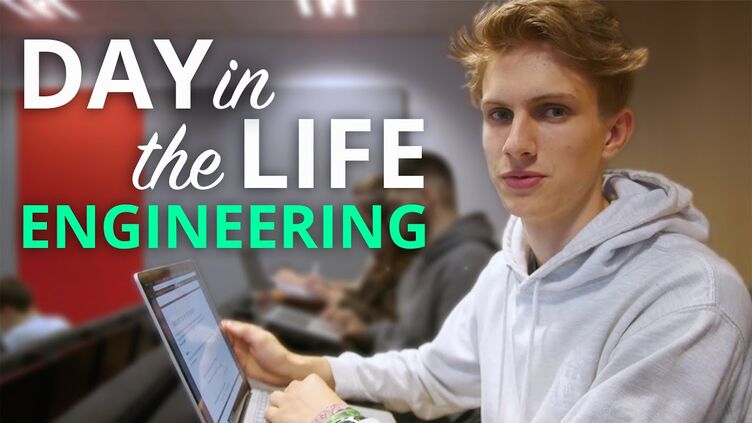

Programming modules really piqued my interest
Undergraduate student,
MEng Electrical and Electronic Engineering
Fees and funding
Fees
Additional costs
The annual fee for your undergraduate course includes a number of items in addition to your tuition. If an item or activity is classed as a compulsory element for your course, it will normally be included in your tuition fee. There are also other costs which you may need to consider. These costs may increase due to price increases outside of the University’s control, if you defer entry or if you choose to change course.
Examples of what’s included and excluded in undergraduate fees
Funding your study
Depending on your circumstances, you may qualify for a bursary, scholarship or loan to help fund your study and enhance your learning experience.
Use our Student Funding Calculator to work out what you’re eligible for.
Visit
University open days
We host five open days each year, usually in June, July, September, October and November. You can talk to staff and students, tour the campus and see inside the accommodation.
Online events
Join our online information sessions to find out more about different aspects of University life.
Subject tasters
If you’re considering your post-16 options, our interactive subject tasters are for you. There are a wide range of subjects to choose from and you can attend sessions online or on campus.
Offer holder days
If you've received an offer to study with us, we'll invite you to one of our offer holder days, which take place between February and April. These open days have a strong department focus and give you the chance to really explore student life here, even if you've visited us before.
Campus tours
Our weekly guided tours show you what Sheffield has to offer - both on campus and beyond. You can extend your visit with tours of our city, accommodation or sport facilities.
Apply
The awarding body for this course is the University of Sheffield.
Recognition of professional qualifications: from 1 January 2021, in order to have any UK professional qualifications recognised for work in an EU country across a number of regulated and other professions you need to apply to the host country for recognition. Read information from the UK government and the EU Regulated Professions Database.
Any supervisors and research areas listed are indicative and may change before the start of the course.