

It has been one year since the University introduced separate food waste collections on the main campus and at the AMRC, and expanded the scheme to all 32 blocks of flats in the residences.
To support the rollout, 611 caddies, 43 external bins and 26 customer-facing bins were introduced in University cafés and communal areas. Thanks to this infrastructure - and to the efforts of staff and students across our community - more than 200 tonnes of food waste have been separated from general waste.
That represents an overall 18% increase in food waste collections across the University, including a 14% increase on the main campus and at the AMRC, and a 23% increase at the residences.
The scheme matters because food waste should be managed differently from general waste. WRAP’s food and drink material hierarchy puts prevention first, followed by redistributing edible surplus food to people, then animal feed, with recycling through routes such as anaerobic digestion below those options and disposal as a last resort. In other words, the best food waste is food waste that never arises in the first place.
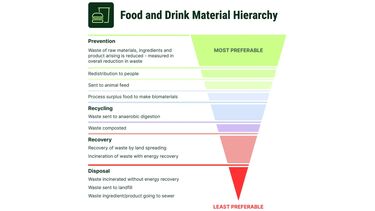
Separate collections help ensure that unavoidable food waste is treated in a better way. The University’s general waste, along with that from black bins across Sheffield, is sent to the city’s Energy Recovery Facility, where it is incinerated and used to generate electricity and heat. But government guidance says food waste should be collected separately where possible so it can be sent to anaerobic digestion or composting. Anaerobic digestion is better for the environment than composting because it can also generate renewable energy while recycling nutrients.
The food waste collected from the University is sent for anaerobic digestion, where it is broken down to produce biogas and digestate. That means unavoidable food waste can be used to generate energy and produce a nutrient-rich material that can be used as an alternative to fossil fuel-intensive fertiliser.
This work also links directly to the University’s Sustainability Strategy. The strategy says the University will reshape its campus food system around health, fairness and low carbon, use Menus of Change principles to support plant-forward food choices, and minimise food waste through redesigned systems and reuse. It also commits the University to reducing the amount of waste sent for energy recovery and increasing the percentage sent for recycling, composting and anaerobic digestion. Separate food waste collections are therefore one practical example of the strategy in action - helping ensure unavoidable food waste is managed better, while supporting the wider aim of preventing more food waste from arising in the first place.
Thank you to everyone who has taken part in the scheme so far. Staff and students who would like to share feedback on the scheme can email wasteandrecycling@sheffield.ac.uk.