
Advanced Metals Processing
Building on the UK's strength in metals processing and providing support needed to deliver innovative metals processing technologies and novel alloy solutions. Supporting industries in transitioning to a resource efficient, zero-pollution, digitalised and agile future.
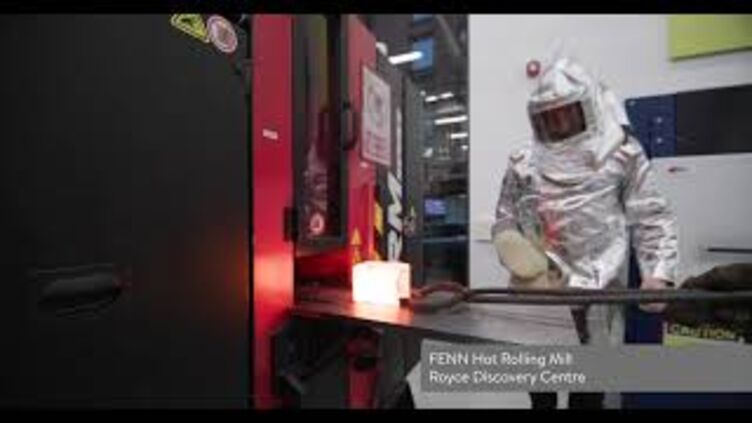
Introduction and Scope
Metallurgy and metals processing is changing, driven by the need to rapidly transition to a low-carbon and more circular economy. Improved innovation and in-service performance is required, whilst addressing the socio-economic drivers of reducing process waste, and emissions, and development cycle times.
Our focus on metals process innovation is the “missing gap” between small-scale laboratory metals processing and the industrial scale. Through a combination of small-scale experiments, materials characterisation, and modelling, our aim is to develop an integrated computational materials engineering approach to metals processing across the whole manufacturing process, accelerating manufacturing agility and efficiency.
Led by the University of Sheffield and working with the Universities of Manchester and Strathclyde, the Advanced Metals Processing Research Area engages the entire Advanced Metals community in the UK.
Application areas include:
- Light weight system solutions for transport industry;
- New steels for nuclear industry;
- Net shape aerospace components;
- Additive repair of high value components;
- Materials tailored for orthopaedic applications;
- Primary metal suppliers for automotive manufacturers;
- Primary metal suppliers for aerospace component manufacturers, gas turbine suppliers.
Current and Future Research
To facilitate and support the development of competitive, resource-efficient, zero-carbon, digitalised, and agile UK metals manufacturing, through:
- the adoption of new technologies based around heat from electricity/hydrogen
- Materials 4.0 (e.g. “digital twin”) development for rapid and intelligent
process support - new solutions for de-commissioning and recycling/re-use of metal products
(including understanding the resiliance of alloys to repetitive recycling) - the transition to more efficient and affordable processing routes with more
consistent properties to reduce design conservatism (use of less material
by challenging our approach to risk assurance).
Key Case Studies
- Collaboration Rapidly Develops Rare-Earth-Free Materials
- An Experimental Approach to Simulate Ejecta on Titanium Spacecraft Surfaces Under Re-entry Extreme Environment Conditions
- Powder and Hot Isostatic Processing for Designer Metallic Structures
- 'FAST-Forge' Process Developed at Royce at the University of Sheffield Could Revolutionise Production of Titanium Goods
A part of the Henry Royce Institute
Led by the University of Sheffield and working with the Universities of Manchester and Strathclyde, the Advanced Metals Processing Research Area engages the entire Advanced Metals community in the UK.