
Exploring historical trauma in South Korean videogame narratives
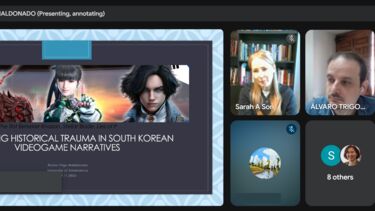
On 22nd April, Álvaro Trigo Maldonado joined us online from the University of Salamanca in Spain for a talk on a lesser discussed area of Korean popular culture, the video game industry.

While much of the global spotlight has been on K-dramas, film, and music, this online talk explored how video games are starting to carve out space as platforms for storytelling, particularly when it comes to history and associated trauma.
The talk began by looking at the development of gaming culture in South Korea, which evolved from early arcade spaces to the rise of PC bangs in the late 1990s. This growth was closely tied to Korea’s recovery from the Asian Financial Crisis and the huge success of the video game StarCraft, which helped position South Korea as a global leader in esports. Today, gaming in Korea is shaped by high speed connectivity, a strong mobile market, and monetisation models like gacha systems.
The focus of the talk then turned to the engagement of some South Korea games with Korean history or cultural narratives. Dr Maldonado suggested that global market pressures and the sensitivities surrounding historical topics in East Asia play a role in limiting the extent of these themes in popular games, but he also highlighted the potential of video games as an exciting medium that allows players to actively experience historical narratives rather than just observe them.
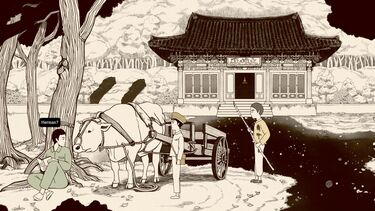
Dr Maldonado explained that it’s in the independent gaming scene where some of the most interesting work is happening. He introduced several examples of smaller scale projects that take on historical themes in creative ways. Wonhon, for example, draws on the concept of han, often described as a deeply felt sense of unresolved grief or injustice, to shape its narrative. Pechka uses a more narrative based approach, encouraging players to learn about historical events through interaction and discovery. Meanwhile, Camellia Tales Unfold focuses on the Jeju Massacre, using personal memory and storytelling to bring attention to a history that is still not widely known.
The online talk concluded with an interactive Q&A session, giving participants the opportunity to explore the themes in greater depth.
Many thanks to Dr Maldonado for introducing our audience to such a thought provoking topic.
Speaker Bio
Álvaro Trigo Maldonado is an Associate Professor of Korean Studies and the East Asian Studies B.A. Coordinator in the Department of Modern Languages at the University of Salamanca. He is also a Visiting Professor in the Korean Studies M.A. program at the University del Salvador (Argentina). He holds an M.A. in Korean History and Culture from the Academy of Korean Studies and earned his Ph.D. in Modern Korean Literature from the University of Salamanca. In 2017, he won LTI Korea’s prize for aspiring translators after completing two years of study in LTI's regular course. In 2024, he was awarded the Daesan Literary Prize in the translation category. He has translated novels by writers such as Kim Kyeong-uk, Chang Kang-myoung, O Jeonghui, and Kim Aeran, among others. His main areas of research include modern Korean literature and history, as well as their relationship with contemporary culture.