
Reports, data and research
We’re committed to taking steps to protect students from harassment and sexual misconduct. This commitment includes understanding the prevalence of these issues and actively collecting feedback to inform our interventions.
Our commitment
We’re committed to providing a safe and supportive environment for our students and staff. This includes using anonymised data from disclosures and reports of concerning behaviour, such as bullying, harassment, sexual violence, and discrimination, to inform our approach to prevention and intervention.
To truly create change we need to work together as a University community and be honest about the challenges that we face.
Transparency is crucial to ensuring that students and staff feel confident in disclosing concerns to our teams and trust that we will do our best to help them to access the right support.
Sharing our data
We’ve made a commitment to share data relating to the disclosures of harassment and sexual misconduct we receive and the actions we’ve taken in response.
Sexual violence campus climate survey
We recognise that many factors can prevent individuals from coming forward to disclose their experiences.
Understanding the difference between how often incidents occur and how often they are disclosed is crucial. This is why we conduct a student survey every two years. The purpose of the survey is to better understand the prevalence of sexual violence and sexual misconduct experienced or witnessed by students and their awareness and perceptions of the support the we offer.
We use the results from the survey to review the support we provide and inform areas for further development.
Results from the 'Sexual Violence and Harassment Views and Experiences' survey
Office for Students sexual misconduct survey
In 2025, in addition to the National Student Survey, the Office for Students asked all final-year undergraduate students across England to complete a survey on sexual misconduct in higher education.
What the national data shows
The national data presents insights into the prevalence of sexual misconduct across the higher education sector in England. It is clear that providers have more work to do in order to provide all students with a safe and inclusive university experience.
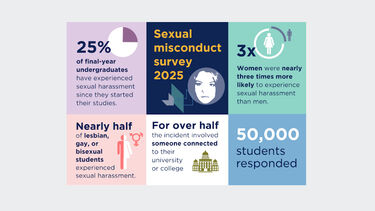
What our data shows
A total of 770 final-year undergraduates from the University of Sheffield completed the survey. An analysis of our respondent data highlighted experiences faced by our students over the last year, both on and off campus.
- 16.6% of respondents experienced sexual harassment in the last year
- 6.7% of respondents experienced sexual assault or violence in the last year
- 62.6% of incidents involved someone connected to the University
- 62% of respondents felt confident about where to seek support
- Only 10.7% of respondents formally reported their experiences to the University
You can find a fuller breakdown of the figures below:
What we are doing in response to these findings
- We continue to make improvements to our student training, with all students now required to undertake modules on harassment and sexual misconduct annually.
- We have created a single source of information that is publicly available, setting out clear information about the available support and reporting options for students who experience harassment or sexual misconduct.
- We have updated the University’s Intimate Personal Relationships Policy, which now clearly sets out the University’s expectations on staff/student intimate relationships.
- We will continue to improve our communications with students and staff about the support that is available at the University.
- We will make improvements to the way we promote Report and Support, with the aim of increasing awareness of reporting options amongst our community.
- We will continue to offer a specialist pathway of practical and counselling support for students who experience sexual misconduct or sexual violence.
- We will work with the Students’ Union to identify ways in which we can improve awareness of available support and reporting options for students.