
Annual Placement Award winner: Kris's placement year at Northrop Grumman

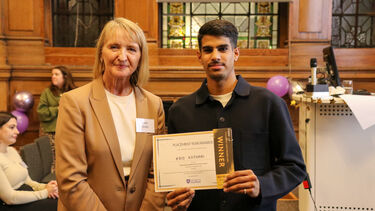
My placement was a mix of hands-on engineering and problem-solving. I started with building and testing hardware, but quickly moved into improving workflows for the team. The biggest project I completed was a PowerShell automation tool that replaced a slow manual process and ended up being used daily across multiple teams. It also earned me two awards, which was a huge confidence boost.
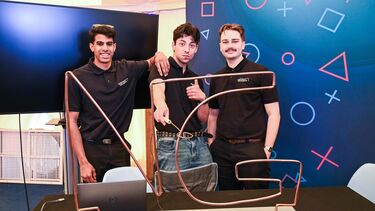
Another highlight was leading the build of an interactive buzzer game for the Cheltenham Science Festival. I wrote the code, built the hardware, and it ran perfectly all week—kids loved it.
The biggest challenge was being put in charge of a shortages-tracking project with another engineer working under me, which pushed me to develop leadership and communication skills.
Overall, the placement was fast-paced, varied, and genuinely rewarding, giving me experience I couldn’t have gained from university alone.
What are the best things about your placement?
The best part of my placement was the amount of responsibility and trust I was given so early on. I wasn’t just completing tasks—I was improving processes, building tools that teams relied on, and seeing my work make a real impact. The support from the engineers around me made it even better; I always felt encouraged to push ideas further and try new things.
A quote that sums this up is from one of the awards I received:
“Kris has excelled himself to help improve our ways of working, going far beyond what is expected of him. I hope once he finishes his degree he comes to work here full time, he will be invaluable"
That line reflects exactly why the placement was so rewarding: I was given the space to make a difference, and I believe the work I did genuinely mattered.
What skills have you gained from your placement year that you think will be most useful in terms of your final year of studies and future career?
The most valuable skills I gained were clear problem-solving under pressure, strong time management, and the ability to break large tasks into manageable pieces—skills that will directly help with final-year project work and juggling multiple modules. I also improved massively in communication and leadership after running a small task group and presenting my tools to managers.
On the technical side, learning to automate processes, write efficient code, and optimise workflows has given me a mindset focused on working smarter, not harder—something that will be useful in any engineering role.
How did your course prepare you for your placement year? Did any specific modules or skills help you?
My course mainly prepared me for the placement through the way it teaches you to manage deadlines, prioritise tasks, and work under pressure. Those habits transferred directly into the fast-paced environment of my placement.
Technically, the overlap was limited. Most of the tools I relied on day-to-day—Excel, PowerShell, PowerQuery, VBA—weren’t covered in my degree. Instead, the course helped by giving me a solid foundation in problem-solving and programming logic, which made it much easier to teach myself new software and scripting languages quickly.
So while the technical content didn’t directly match the job, the mindset and transferable skills from university definitely helped me adapt and succeed.
What are the best parts of studying your course?
The best part of studying my course has been the problem-solving side of engineering. I’ve always enjoyed breaking down a challenge, figuring out the logic behind it, and building something that actually works. The coding elements—whether in robotics, C, or other modules—were the parts I found the most engaging, because they gave me the freedom to be creative and approach problems in my own way.
I also enjoyed the group projects. Working with different people, coordinating tasks, and seeing an idea turn into a working prototype was always satisfying, and those experiences linked really well with the teamwork I ended up doing on placement.
Overall, the course has been most enjoyable when it’s hands-on, technical, and lets me think independently rather than follow a set process.
How has your placement influenced your future career plans?
My placement has had a huge influence on my career plans. Being trusted with meaningful projects—and seeing my work genuinely improve team efficiency—showed me the kind of environment I want to work in. I’ve been encouraged to return, and there have already been discussions about creating a role focused on optimisation within the hardware team, which has given me a lot of confidence in my abilities.
At the same time, the experience has helped me refine what I want from my career. I’m now looking for roles that align more closely with my degree and long-term interests, especially positions that blend engineering with automation, coding, and workflow improvement.

Visit us
Discover what sets Sheffield apart at our next undergraduate open day in November.