
The Museum of Breathing at ARLIS 2026
By Louise Atkinson
- This blog post focuses on the ARLIS (Art Libraries Society) UK & Ireland Conference which explored the theme of Challenging Collections.
- Louise presented her project The Museum of Breathing which explores the histories of respiratory illness and mechanical ventilation.
- Many of the conference presentations focused on whose knowledge is included and whose is overlooked.
On 6th and 7th July I attended the ARLIS UK & Ireland conference on behalf of Cripping Breath to talk about my Instagram-based project, The Museum of Breathing. My role sits within the project’s Arts and Archival strands, which has involved spending a lot of time thinking about museums and archives, and whose experiences are represented within them. Because of that, the conference theme of Challenging Collections felt particularly relevant.
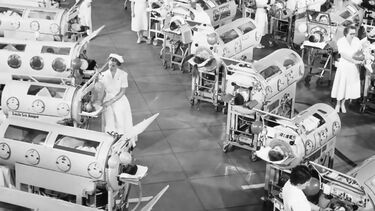
My talk introduced The Museum of Breathing as a public-facing project that uses social media and online collections to explore the histories of respiratory illness and mechanical ventilation. The project asks what happens when these histories are approached from the perspective of disabled and chronically ill people, rather than solely through narratives of medical progress and scientific innovation.
Across the two days there were lots of sessions that resonated with questions we’ve been exploring throughout Cripping Breath. These included talks and workshops using creative approaches to consider who is excluded and how institutions make space for different forms of knowledge and lived experience.
The first keynote even featured work by Rachel Gadsden, one of the artists on our Contemporary Art strand. This talk discussed UCL’s 2024 project, Words Matter, which explored the legacies of Francis Galton’s work in eugenics at the university. Although we imagine these debates as safely in the past, they have recently become much more urgent with new laws around assisted dying. As disabled activists have pointed out, public conversations about quality of life are often shaped by assumptions about disabled and chronically ill bodies, arguing “Assist us to live before you assist us to die.”
These issues are fundamental to Cripping Breath, so it was encouraging to find so many points of overlap between our work and the conversations taking place within the library and archive sector. In fact, I enjoyed it so much that I signed up as a member and I’m already looking forward to next year’s conference.