Imagining Anti-Ableist Research Cultures in the University
By Kirsty Liddiard
- In this blog post Kirsty reflects on her recent visit to the Disability Publics Lab at Toronto Metropolitan University.
- She talks about Cripping Breath and another Wellcome-funded project she has worked on called the Anti-Ableist Research Culture Project (WAARC).
- Kirsty talks about the power of disability in the university: what disability, chronic illness and other forms of difference can bring to the ways in which we undertake research.
On Wednesday 26th August, Cripping Breath’s Principal Investigator Dr Kirsty Liddiard visited the Disability Publics Lab at Toronto Metropolitan University to deliver a talk to students and staff entitled, The power, place and potentiality of disability in the university.
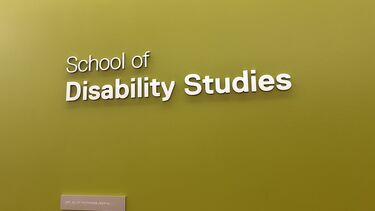
Returning to Toronto Metropolitan University (TMU), where I undertook my first postdoctoral fellowship in the School of Disability Studies, was a wonderful experience. The School of Disability Studies is the first in Canada to provide a degree education exclusively from a disability studies perspective. To undertake a postdoc there - getting to think, create and write with disabled scholars and researchers - was a rich experience that has shaped my scholarship ever since. Returning to TMU last month with over a decade of collaborative research, with the aim of sharing and learning from Canadian colleagues, was even more exciting. I centred my talk on two Wellcome Trust–funded projects I have the privilege to work on with colleagues here at Sheffield —the Anti-Ableist Research Culture Project (WAARC) and Cripping Breath: Towards a new cultural politics of respiration.
Much of my talk spoke to forms of academic ableism - within our research cultures, projects and university structures. In academic environments, "anti-ableism" can still feel provocative because it demands that we value more than just ability. Intersectional analysis is essential here too: marginalised bodies—whether Black, disabled, or queer—can be routinely Othered within elite institutions. Canadian colleagues and I mapped out similar kinds of ableism in and across our universities. There were many overlaps: academic ableism is not the preserve of British institutions or research cultures.
However, the value of WAARC was about making space to re-imagine disability in the university: to think about the possibilities and potentialities of what might happen if we stop treating disability as an obstacle to accommodate, and start valuing it as a source of creativity, critical insight, and collective strength. WAARC brought together researchers, our professional services colleagues, and Disabled People’s Organisations (DPOs). DPOs were paid co-leaders across every project phase, reshaping not just our methodologies and our analyses, but our dissemination methods and ways of sharing. A series of resources from the WAARC team which will be of interest to anyone in the university who is seeking to develop and promote anti-ableist practice is available here.
It was also great to share what we are doing in Cripping Breath in terms of disrupting, or pushing back on, standard academic timelines, and ways of being and doing in the academy. In the project, resisting the "projectification" of academia allows us to practice slow/er scholarship rooted in radical care. I also talked about the value of things like co-production and arts and theatre to health research, and the integral role of our Community Researcher Cooperative.
Upon returning home, I was interviewed by The Eyepener. The Eyeopener is Toronto Metropolitan University’s independent student newspaper, and has been since 1967. It is owned and operated by Rye-Eye Publishing Inc., a non-profit corporation owned by the students of TMU. You can read the article here.
In sum, I think what both WAARC and Cripping Breath are showing is that by fostering genuine co-leadership, valuing lived experience, and dismantling bureaucratic and institutional barriers, we can cultivate new forms of community and care within the university. When we ground our work in solidarity, trust, and compassion, we create research environments where disabled scholars and communities can truly thrive.