
Blog post #23 Introducing our Theatre Collaborators and our Theatre Process
By Jamie Hale
- The first part of this post introduces our three Theatre Collaborators.
- In the second part, Jamie talks about our process, which we are trying to make more accessible than a regular theatre rehearsal process.
- There have been challenges, including health issues. It can be difficult to be as flexible as people need, partly because of money, and partly because of time.
- Jamie reflects on the themes that have come through as we adapt Romeo and Juliet. These include control, freedom, joy, and independence.
Now that we’ve started our Cripping Breath theatre process, we’d like to introduce our 3 Theatre Collaborators, as well as share about our activities so far. We have carried out 4 workshops and, this week (beginning 2nd March), we are partway through our research and development process. Through these activities, we’re working towards developing a version of Shakespeare’s Romeo and Juliet with theatre artists who use (or will use) ventilation.
So, without further ado, we’re delighted to welcome Tatum Swithenbank, Stephanie Castelete-Tyrrell, and Kate Mellor to the Cripping Breath team!
Kate Mellor
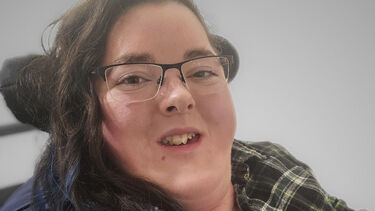
An honours graduate from The University of Winchester with a degree in Digital Media Design, Kate has always been drawn to all aspects of television, film and theatre production. Being a queer, disabled, feminist, Kate has a strong interest in creating and designing theatre that highlight the stories of the underrepresented, particularly any story that demonstrates the intersectionality between the Disabled and LGBTQIA+ communities. Kate describes herself as an open minded, curious, and creative individual.
Stephanie Castelete-Tyrrell
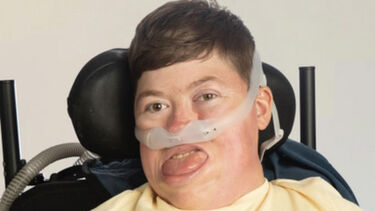
Stephanie Castelete-Tyrrell is a BA (Hons) graduate from the University of Portsmouth and a MA graduate from the University of Bristol in Film and Television. She is an actor, filmmaker and company director of Four Wheel Drive Productions, a disabled-led production company. Stephanie has produced two award-winning documentaries through her company, one of which was screened at Pinewood Studios. Stephanie’s films all focus on telling stories from disabled people, including sports and current societal issues.
Tatum Swithenbank
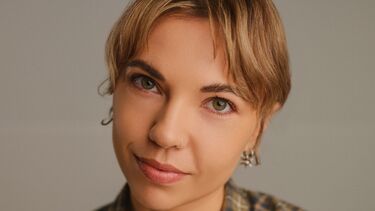
Tatum Swithenbank is a working-class, disabled performer, producer, and facilitator from the Midlands. Approaching their work through a queer crip lens, they are passionate about shaping narratives that centre community, culture, and accessibility. Their performance and theatre practice includes collaborations with CRIPtic Arts, Camden People’s Theatre, and the Roundhouse. Tatum has produced powerful storytelling for BBC Radio 4, Audible, and BBC Sounds, including the award-winning series WITCH. Across disciplines, their work explores the threads between identity, folklore, and the obscure.
About our process
The Cripping Breath theatre collaboration is one of collaborating in process as well as practice. With myself (Jamie Hale), Tatum Swithenbank, Stephanie Castelete-Tyrrell, and Kate Mellor as the Theatre Collaborators, we are working together to create a Romeo and Juliet, and to create rehearsal processes that facilitate this, with all our differing relationships to breath and ventilation, and our differing experiences as disabled people.
Making this work has been an effort in understanding what an accessible process might be. As far as possible, we have tried to tear up the assumptions that typically govern the rehearsal space and replace those with a set of co-created ways of working that reflect what we all require.
This has been easier said than done. These rules that we absorb are difficult to let go of and are, to some extent, rooted in realities (such as the knowledge that when the curtain goes up, we must be ready). So how do you build an adequate contingency to a process? And what does it mean to take time to rest when your funding allows for a limited number of days of work?
We have also carried out this process at a time where illness has followed the group, from COVID exposure to surgery to hospitalisation. At every stage, we have had to adapt our processes to the needs of the people undertaking them. This might mean missing sessions, attending a session online, delivering a session someone else has created from their notes, or delivering a session online. It could even, and perhaps should even, have meant canceling a session – but that felt like anathema to a team steeped in the theatre idea that the work must go on.
And the work itself has great value as well. In taking Shakespeare's Romeo and Juliet and reimagining it through a disabled framework – a framework that centres themes and questions of breath and ventilation – we're asking what it means to speak a classic text when you cannot speak Shakespeare in the ways people expect Shakespeare to be spoken, and what it means to play a romantic lead when you are not configured in the way society expects a romantic lead to be configured.
Within this, we have found so much richness. We have found so many stories of the ways in which women such as Juliet were compressed and controlled, and how that maps onto some of the control that disabled people experience even today. We found narratives of freedom and of seizing life while you have it, in the ways that you have it. We found stories of joy and autonomy and adulthood for young people to whom the world would often deny that.
Being a part of this cohort and co-creating this work and this process together feels like a privilege. It feels like a chance to experiment and to be playful, to learn, to grow, to imagine, and to reimagine in a world that sometimes denies us imagination. But it also makes me wonder whether we're imagining far enough, or whether, particularly with questions of process, we're still caught in the expectations of a theatre world that we can't quite get rid of.
What would it look like to create a truly anti-ableist rehearsal process and let go of all of those expectations? Could that be done whilst also preparing a show for the curtain to go up on a set date, or are those two things a tension that cannot be reconciled?
There's always the question of the wider context. Does one have the budget to simply add more and more weeks of work, more and more time, and more and more rest days? If one does, then possibly there are solutions. But those solutions all come down to finance, and that comes down to what the sector can hold. Theatre is expensive, and there may be no appetite for the level of investment that a truly anti-ableist rehearsal process could be.
So perhaps what we are limited to is working around the edges, imagining and creating the best thing we can within the very real limitations of time and money that we face. But for all that we're creating within those limitations, I want us to be imagining beyond them, to be picturing and working towards the process even if we can't quite have it yet.