
Gabriela Leal
Faculty of Social Sciences
Urban Institute International Fellow

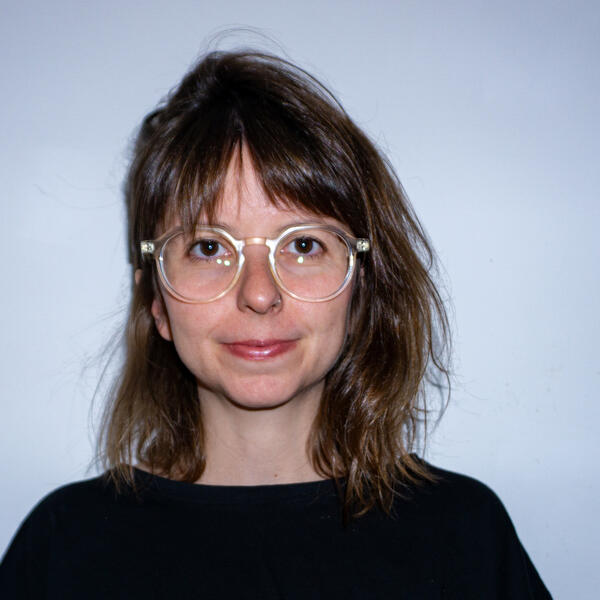
The Wave
Full contact details
Gabriela Leal
Faculty of Social Sciences
The Wave
2 Whitham Road
Sheffield
S10 2AH
Faculty of Social Sciences
The Wave
2 Whitham Road
Sheffield
S10 2AH
- Profile
-
Gabriela's PhD research is funded by a Fundação para a Ciência e a Tecnologia scholarship. She collaborates with the City Anthropology Study Group (GEAC-USP), co-founded CAU (Urban Anthropology Collective, CICS.NOVA & CIES-Iscte), and integrate the Etno.Urb network.
Between September and December 2024 Gabriela was a visiting researcher at the Urban Institute, University of Sheffield, where she contributed to comparative debates on urban knowledge regimes, presented ongoing doctoral research on rap poetics and peripheral epistemologies, and led the workshop Rebel Rebel: Exploring the Epistemic Work of Creative Methods — an inquiry into the possibilities and challenges of methodological innovation at the intersection of academic and artistic practices.She holds an MA in Social Anthropology and a BA in Social Sciences from the University of São Paulo, as well as a specialization in Communication Theories and Practices from Fundação Casper Líbero. Alongside academic work, she engages in independent visual arts and fanzine projects and have collaborated with art collectives and received cultural promotion grants in São Paulo, Brazil.Gabriela is the author of Cidade: modos de ler, usar e se apropriar. A São Paulo do graffiti (2023), which investigates graffiti practices as both an object of analysis and a lens for producing knowledge about urban life. In 2024, she co-edited (Re)Encantar o mapa: fantasmas, imaginários, prefigurações, a collective work that questions cartographic reason and explores mapping as an evocative, prefigurative, and political instrument for forging new affective, aesthetic, and political connections — drawing together academic, activist, and artistic perspectives.
- Research interests
-
Gabriela's research sits at the intersection of Anthropology, Hip Hop Studies, and Urban Studies, with a sustained focus on peripheral territories, expressive practices, and knowledge production in Brazilian and Portuguese cities.At the centre of her doctoral research is the question of how rap — and in particular the practices of women rappers in the peripheries of São Paulo and Lisbon, including rap kriolu — operates as a site where complex knowledge, interpretations, and understandings about urban life are created, recorded, and shared. Her central argument is that the knowledge regime produced by this aesthetic and urban practice not only captures past memories and present events but also fosters the capacity to imagine other possible futures. In a counter-colonial endeavour, she seeks to recognise rap's paradigms, models, and theories as potential sources of innovation for Urban Studies — not to validate their epistemological scope, which others have already done, but to intervene in, destabilise, and contest concepts such as “periphery" within dominant urban traditions, making space for alternative ontologies and spatial grammars.A broader thread across her work concerns the relationship between expressive practices and urban space. From graffiti and pixação as appropriation and resignification of the street to rap as articulation of peripheral subjectivities, she is interested in how cultural practices become modes of reading, contesting, and reimagining the city. This extends to methodological commitments as well: I engage with experimental, collaborative, and artistically-informed forms of knowledge production — including fanzines, creative cartography, and collective artistic practices — as both epistemological and political gestures.