
Economics and Politics BA
Explore the relationship between economic and political aspects of the modern world in this dual honours degree.
-
A Levels
AAB -
UCAS code
LL12 -
Duration
3 years -
Start date
September -
Attendance
Full-time
- Course fee
- Funding available
- Optional placement year
- Study abroad option
- Dual honours
Explore this course:
Course description
Why study this course?
Work experience opportunities
This degree comes with the opportunity to do a year-long, paid work placement with a leading employer in your second year. You will also be able to do internships, voluntary work and access employability advice and workshops through the Sheffield Economics Employability Development (SEED) scheme.
Research-informed teaching
You’ll be taught by political experts and economists whose modules are informed by their latest research.
Variety, choice and flexibility
Rooted in core economic theory and analysis, with options to broaden the scope of the degree according to your interests.
Excellent career prospects
Our graduates develop the key skills that employers in a variety of fields value. They go on to kick start careers across computing, banking, actuarial work and data science for employers such as Amazon, the Bank of England, Goldman Sachs, IBM, PwC, HM Treasury, the NHS and the Civil Service.

Understand the integral relationship between economics and politics and explore how the two work together to shape policies and influence your daily life.
You’ll analyse political ideas, institutions and practices while developing the quantitative and analytical skills essential for effective economic analysis.
After a first year spent primarily on micro- and macroeconomic analysis and key political concepts, you will create your own mix of core and optional modules in both economics and politics during your second year.
With the option to complete a year-long work placement after your second year, you could learn how to apply your knowledge and skills to industry work and develop a more balanced understanding of both disciplines as you move into your third year.
Your final year will include a research project in politics and the opportunity to apply your economics skills to contemporary issues and themes in a module on policy and practice. Upon graduation, you will have developed a deep understanding of political ideas and action, alongside the analytical and methodological skills needed for economic analysis. Both will help you stand out within the job market for whatever career you decide to pursue.
Modules
A selection of modules are available each year - some examples are below. There may be changes before you begin your studies. As you progress through your course, we’ll confirm additional details for the core and optional modules available to you.
Choose a year to see modules for a level of study:
UCAS code: LL12
Years: 2026, 2027
Economics core modules:
Economics core modules:
- Microeconomic Analysis and Policy
-
This module introduces you to the fundamental principles of microeconomic theory, focusing on the behaviour and decision-making processes of individuals, households, and firms. You will gain a solid understanding of key microeconomic concepts, such as choice theory, market structures, consumer behavior, and firm decision-making. The module explores the practical application of microeconomic analysis to contemporary policy issues. This module provides you with the foundations in microeconomics required for advanced study.
20 credits - Macroeconomic Analysis and Policy
-
This module introduces you to the foundations of macroeconomic theory and analysis. You will explore how economies operate at the aggregate level and develop the analytical tools needed to understand key economic indicators such as interest rates, national output, inflation, unemployment, and exchange rates. A central focus will be on understanding how these variables interact and influence one another over the short and long run. Through real-world examples and policy applications, you will learn how macroeconomic analysis informs and shapes economic decision-making and policy evaluation in both national and global contexts. Topics covered will include the determination of output and employment and the role of fiscal and monetary policy. By the end of this module, you will be equipped to evaluate the effectiveness of monetary and fiscal policies and understand the complex dynamics shaping economic outcomes in national and global contexts.
20 credits
Plus one of the following (module one for those without A Level Maths and module two for those with A Level Maths or equivalent):
Plus one of the following (module one for those without A Level Maths and module two for those with A Level Maths or equivalent):
- Mathematical Methods for Economics 1
-
This core module is designed for students who do not have an A Level in Mathematics (or an equivalent qualification) and provides supportive, step-by-step training in key mathematical concepts. The main focus is on practical application, helping you use maths as a tool to solve real economic problems. You will build confidence while learning essential topics such as basic algebra, functions and graphs, sequences and series, introductory calculus (including differentiation), elasticity, integration, constrained optimisation, and matrix algebra, all taught in an applied context. The skills you develop will support your studies throughout the rest of your degree.
20 credits - Mathematical Methods for Economics 2
-
This module is designed for students with A Level Mathematics (or an equivalent qualification). You will revisit key mathematical tools covered in A Level Mathematics (such as differential calculus) and learn to use them to formulate and solve problems in economics and finance. You will also be introduced to other techniques that are essential for problem solving in economics. These tools will be used throughout the rest of your degree. The topics covered include: sequences/series and the economics of finance, functions, univariate optimisation, elasticity, integration, multivariate optimisation, constrained optimisation and matrix algebra.
20 credits
Politics core modules:
Politics core modules:
- Political Analysis 1: An Introduction to Research and Scholarship
-
As the first part of three key modules taken throughout your degree, Political Analysis 1 will introduce you to the study of politics as an academic discipline.
20 credits
You will discover different ways to research the dynamics of different political worlds and acquire the foundational knowledge and skills needed to build, test and evaluate rigorous accounts of political problems.
Throughout the module, you will learn through a combination of lectures and seminars. You will also undertake independent study to delve deeper into the case studies of political scandal and failure discussed each week. - Thinking Politically: Key Concepts
-
A concept is a general idea about something. We use concepts all the time to make sense of the world. For example, we use the concept of a 'table' to describe a piece of furniture with a flat top and some legs to keep it stable. We also use concepts to make sense of our experiences and not just to describe 'things'. For example, we talk about a painting being 'beautiful' or a tyrant being 'cruel'. In this course, you will be introduced to a range of core concepts that inform the study of politics and international relations in the twenty-first century: politics, the state, authority, power, democracy, rights, justice, freedom, nations, and populism. You will discover how these concepts shape our understanding of the political world around us, and learn how to engage in conceptual analysis (i.e. how to argue about how we should understand each of these concepts). By the end of the module, you will have learnt to problematise and evaluate events, information, and academic literature, enabling you to successfully and critically use key concepts in political debate.
20 credits
Plus one optional module:
Plus one optional module:
- British Politics
-
You will be introduced to the key concepts and debates that have shaped British politics with an emphasis on history, institutions and culture.
20 credits
Each lecture will focus on a specific element of British politics, with subsequent and linked seminars providing an opportunity to deepen this knowledge by looking at critical case studies or official reviews.
This module provides key employability skills and practice based knowledge through a focus on the theory and practice of political decision-making processes and the challenges of implementing policy. - Gender Politics
-
This module aims to interrogate the role of gender and sex in shaping world politics. To do this, it asks how notions of masculinity and femininity shape our institutions, how gender might influence the political problems we prioritise and whose voices are taken seriously in developing responses to these problems.
20 credits
Students will answer these questions through the study of the politicisation of sex, the relationship between gender and violence, how current practices of gender are shaped by colonialism and a range of other timely topics that shape the world today.
The module will allow students to develop an understanding of different approaches to gender, be introduced to key concepts from feminism and queer theory, learn to apply these ideas practically to a set of case studies and debate what the future of gender is in world politics. - Global Political Economy
-
Global political economy (GPE) is a field of study that investigates the interaction between political and economic forces in contemporary and historical capitalism. You will consider key mainstream and critical theories.
20 credits
You will be introduced to major processes of trade, production and exploitation, sketching the power relations of the global economy by using examples of contemporary production in different industries. You will also consider how the political economy of race, class and gender have structured the global economy through histories of colonisation and decolonisation, from the fourteenth to the twenty-first century. - World Politics
-
This module serves as an introduction to International Relations as a discipline.
20 credits
Throughout this module you will engage in key international relations concepts and discussions, including migration, climate change, poverty and global inequalities, sexual violence and armed conflict.
As an introductory module, you have the opportunity to develop the tools needed to understand, analyse and reflect on in-depth theoretical and empirical international relations which shall continue to support you throughout your degree. - Western Political Thought
-
During this module, you will be introduced to political theory as a distinctive way of thinking about politics. You will engage with some of the most influential and renowned thinkers from the history of Western political thought, critically analysing questions of power, justice and legitimacy.
20 credits
Through the study of seminal texts, you will be challenged to evaluate historical responses to political questions and thereby start doing political theory for yourself. You will also develop a deeper understanding of various concepts that can be applied to your analyses of contemporary issues throughout the degree. - Race and Racism in World Politics
-
Through historical and contemporary case studies, students will study how our world today has been shaped by historical events, many of which continue to inform current relations. We will discover how discourses around race, ethnicity, gender and class construct realities today, determining who rules and who is ruled, who lives and who dies.
20 credits
The module will give students a theoretical toolkit, including approaches from the majority world, enabling them to appreciate power and the political significance of silences in accounts of the global and political.
We will learn about the historical production of the idea of race; how it configured the world in particular ways; how race mandated the colonial project. However, the module will also go beyond race to think about colonialism and the identities that operate in conjunction with race including class, ethnicity, and gender, and how they can determine what type of life people can live or whether they can live at all. For example, they determine whether a child has the right to security, or has to risk losing life in the Mediterranean escaping violence at home.
Students will also learn about resistance and efforts to construct a different and more just world. Through rich historical and contemporary case studies, students will learn how to connect theories to understand current affairs, drawing on thinkers from various backgrounds to counter some of the dominant narratives within international relations.
Core economics modules
Core economics modules
- Statistics and Econometrics
-
Proficiency in statistics and econometrics is an important skill for economists working with real-world data. This core module is designed for dual honours students studying economics. In the first part of the course, you will learn how to calculate descriptive statistics and apply probability theory to make robust inferences from sample data. In the second part of the course, you will learn the tools of econometrics to make inferences about causal relationships between economic variables. You will learn how to use specialist statistical software to apply this learning to the analysis of real data. By the end of the module, you will have the tools to analyse quantitative data effectively and the knowledge to understand and interpret empirical results from applied economic research.
20 credits - Intermediate Macroeconomics
-
The aims of this course are to provide firm grounding in the analytical tools of modern macroeconomics; to use these tools to understand critically the conduct of economic policy nationally and internationally. The course builds on level 1 modules in macroeconomics. The main subject areas covered are: Basic macroeconomic models: consumption/leisure choice, closed economy one period-macro models, models of search and unemployment; Savings, investment and government deficits: consumption/savings choice (two-period model), credit market imperfections, real intertemporal model with investment; Money and business cycles: flexible price models, New Keynesian economics (sticky prices), inflation; International macroeconomics: international trade, money in open economy; Economic growth: Malthus and Solow growth models, convergence, endogenous growth model.
20 credits - Intermediate Microeconomics
-
This module builds on Level 1 modules in microeconomics and mathematical economics, using the mathematical training to allow a more rigorous investigation of the principles of microeconomics. It aims to develop an understanding and ability to undertake economic analysis of models of the behaviour and interaction of economic agents (consumers, firms and government) in a market economy, the functioning of different types of industries, decision making under uncertainty and economic welfare.
20 credits
Core Politics module
Core Politics module
- Political Analysis 2: How to do empirical research
-
An important skill for the study of politics and international relations is the ability to effectively collect, analyse and evaluate reliable and robust evidence about real-world political phenomena. A good grounding in methods for collecting qualitative data can allow you to both make more sense of (and critically engage with) the research literature, and to carry out your own independent research, enabling you to address your own questions about the political world. Political Analysis 2 will introduce you to a range of quantitative and qualitative methods for studying political phenomena which will give you the skills you need.
20 credits
In the course of the module, we will look at:The principles of effective research design in politics and IR - how to set up your research to answer your questions effectively and reliablySources of qualitative and quantitative data for politics and international relation researchMethod for collecting qualitative dataHow to code and analyse qualitative dataAnalysing trends and associations in political data;Using quantitative data and regression analysis to evaluate theories about real-world politics.
Building on the module taking in the first year, you will have the opportunity to learn how to apply the practical tools needed to collect and independently analyse data.
Optional modules
Optional modules
- Industrial Organisation
-
This module will introduce you to contemporary topics in industrial organisation with a particular emphasis on the role of economic analysis of strategic decision making. You will learn to use and appraise a range of economic techniques to make better strategic decisions. In this module you will build on and expand on your knowledge of microeconomics related to market structure; such as competition in oligopolistic industries. You will also become familiar with further oligopoly models (product differentiation, collusion, mergers) as well as behaviour in platform markets. We will also consider market implications when consumers are imperfectly informed (or naive) about prices or product characteristics.
15 credits - International Economics
-
In this module, you will explore fundamental questions in International Economics, focusing on the phenomenon of 'global imbalances.' Many countries, including the world's largest economies, have accumulated significant external debt or asset positions over recent decades, raising concerns about global economic stability. You will learn to use modern, microfounded tools based on the latest economic research to analyse these imbalances and their implications.Throughout the module, you will engage with key topics such as the determinants of global capital flows and current account balances, the role of exchange rates, and major policy challenges. By the end, you will be able to critically assess policy debates and apply advanced economic models to real-world scenarios, preparing you for careers in international finance, policy analysis, or further academic research.
20 credits - Labour Economics
-
Labour Economics provides the analytical tools needed to understand wage determination, employment, inequality, and the role of policy in shaping labour market outcomes. This module develops your ability to apply economic theory and empirical evidence to contemporary labour market issues.
20 credits
You will develop a rigorous understanding of how labour markets operate, starting with the competitive model and the analysis of labour supply and demand. You will explore how wages, employment, and inequality are shaped by institutions, market imperfections, and policy interventions. Alongside theory, you will engage critically with empirical evidence to assess how well models explain real-world labour market outcomes. By the end of the module, you will be able to apply theoretical tools to analyse contemporary labour market issues and interpret empirical findings with confidence. - Public Economics
-
Public Economics uses the tools of microeconomics and empirical analysis to study the impact of government policies on economic outcomes and the distribution of resources in the economy. In this module, you will explore how the government intervenes in the market to address issues such as inequality, environmental externalities, and the provision of public goods. You will analyse real-world policy design, such as: how taxation affects work incentives, and how the implementation of public services can bridge the gap between social necessity and market failure. By participating in this module, you will gain the analytical skills necessary to evaluate the efficiency and equity of public policies. These tools will equip you with the up-to-date knowledge and skills needed to pursue careers in policy analysis, government, and economic consultancy.
20 credits - Macroeconomic Policy
-
This module offers a rigorous exploration of the frameworks used by modern central banks and governments to manage the economy. The first half of the course focuses on monetary policy, where you will master a contemporary three-equation model to analyze how central banks respond to demand, supply, and inflation shocks. A critical component of this study involves evaluating the Rational Expectations Hypothesis against adaptive models to understand how the public's forecasts influence policy effectiveness.
20 credits
You will also explore fiscal policy, examining the mechanics of government intervention through the lens of the fiscal multiplier and the challenges of managing sovereign debt. You will analyze the factors that determine the effectiveness of tax and spending changes while exploring the vital interactions between fiscal and monetary authorities. - Economics of Financial Institutions
-
In this module, you will explore the core mechanisms of financial intermediation and the role of financial institutions in the modern economy. You will examine the flow of funds and the determinants of interest rates in bond and money markets, alongside the function of equity markets in capital allocation and valuation.
20 credits
The module also analyses how banks manage liquidity and credit risk. Furthermore, it investigates how asymmetric information shapes financial structures and market outcomes. Drawing on theoretical models and real-world examples, you will evaluate the causes of financial instability and the role of regulation in promoting stability and efficiency in the global financial system. - Economic Decision-making
-
In life we are constantly making economic decisions: whether to go to university; whether to leave a tip in a restaurant; whether to buy a house or rent; whether to declare all our income to the tax authority; whether to play the lottery; whether and how much to invest in the stock market. In this module we study economic theory and evidence related to decision-making in these different contexts with a view to understanding human decision-making, how it deviates from standard notions of economic rationality.
20 credits - Intermediate Microeconomics
-
This module builds on Level 1 modules in microeconomics and mathematical economics, using the mathematical training to allow a more rigorous investigation of the principles of microeconomics. It aims to develop an understanding and ability to undertake economic analysis of models of the behaviour and interaction of economic agents (consumers, firms and government) in a market economy, the functioning of different types of industries, decision making under uncertainty and economic welfare.
20 credits - Intermediate Macroeconomics
-
The aims of this course are to provide firm grounding in the analytical tools of modern macroeconomics; to use these tools to understand critically the conduct of economic policy nationally and internationally. The course builds on level 1 modules in macroeconomics. The main subject areas covered are: Basic macroeconomic models: consumption/leisure choice, closed economy one period-macro models, models of search and unemployment; Savings, investment and government deficits: consumption/savings choice (two-period model), credit market imperfections, real intertemporal model with investment; Money and business cycles: flexible price models, New Keynesian economics (sticky prices), inflation; International macroeconomics: international trade, money in open economy; Economic growth: Malthus and Solow growth models, convergence, endogenous growth model.
20 credits - Tackling the World's Wicked Problems: theoretical tools and applications
-
The world is faced with many pressing problems, from military conflicts to climate change, terrorism, and humanitarian catastrophes. These problems often seem intractable.
20 credits
In this module, you will be presented with a variety of theoretical perspectives and tools, such as Postcolonialism and Green Theory, that seek to address these various 'wicked problems'. The module offers an in-depth discussion of some of the most important International Relations theories and applies them to empirical cases.
You address how various theories propose to practically solve the most pressing problems in world politics. You will also gain experience in approaching problems from a diversity of perspectives in order to better understand how problems arise and come to exist in global politics. - Migration and World Politics
-
Migration has been receiving more attention in international politics. This module analyses migration using a world politics lens. It will provide students with the concepts and theories - as well as the historical, contextual and critical skills - needed to understand international migration from different perspectives. It will discuss migration and problematise migration concepts and categories such as forced migration (asylum and internal people displacement), statelessness and citizenship, border control/security, labour migration, migration diplomacy, family migration and environmental migration. It will also approach case studies including the Migration and Asylum Policy of the European Union, migration politics in Latin America and the USA-Mexico border among others.
20 credits - Political Theory in Practice
-
You will explore key debates in political theory and their implications for current political practice.
20 credits
You will have the opportunity to engage in: debates surrounding justice and what these mean for welfare and taxation policies; disputes over the meaning of democracy and their implications for how we choose our leaders; discussions about different ideas of freedom of speech, and what 'hate speech' is; and to explore controversies around multiculturalism, in particular its impact upon women.
Overall, this module will help you become well-equipped to identify and evaluate the competing values that lie behind so many of our current political controversies. - Europe in Crisis
-
The European Union (EU) is a unique and highly developed instance of transnational governance and a major actor in world politics. It remains, despite Brexit, an important political and economic ally and partner to the United Kingdom.
20 credits
Your lectures will discuss the history and institutions of the EU and explore a range of contemporary debates and issues. Seminars will offer an opportunity for you to review and explore these topics in greater detail.
The module will provide a working knowledge of European integration, EU policy making, and of various recent political and economic crises. At the same time you will, via various seminar activities, group work and assessments, have the opportunity to develop a range of relevant transferable skills. - Chinese Politics
-
The objective is to increase students' ability to read, write and speak Korean. Those taking this course should have already studied Advanced Korean I, or achieved an equivalent level of competence.
20 credits - Contemporary Security Challenges
-
Throughout the module you will examine a series of key contemporary challenges to international security.
20 credits
You will engage in debates about the changing nature of security, analyse some of the causes of conflict and the development of new security threats, and understand the key ways in which states and non-state actors shape and respond to these threats.
You will explore a range of approaches to gain a theoretically-informed but policy-relevant understanding of security-related issues in the twenty-first century. - The Political Economy of Global Capitalism
-
In this module you will explore the political dynamics that underpin the organisation of capitalism.
20 credits
You will study major issues within the global economy, ranging from the contested rise of neoliberal globalisation to the gendered and racialised patterns of work, production, inequality, and (financial) crises. You will investigate the history and contemporary operation of capitalism as a mode of production, and examine how capitalist social relations affect individuals, communities, states and the environment.
The module will provide detailed knowledge of the political economy of capitalism and expose you to the tools to critically analyse it. You will become more familiar with cross-disciplinary methods as the module draws on a wide range of scholarship drawn from (International) Political Economy, Sociology, Geography and History. Finally, through a critical media analysis assessment, you will analyse current real-life developments with the help of theories and concepts. - Africa in the World
-
Africa has long been treated as a marginal part of the world, both historically and in relation to contemporary global politics. Throughout this module you will challenge this misconception by exploring the crucial role that Africa plays in the current world order and the way it has historically evolved.
20 credits
You will be introduced to the political, economic, socio-cultural, and military of Africa's international relations, familiarising yourself with the key actors, institutions and processes involved. You will assess how the slave trade and colonialism have shaped the modern world order, the global reverberations of African independence movements and pan-Africanism, and how continuing unequal relations are expressed in the politics of debt and military intervention. You will also analyse Africa's relations to emerging global powers.
By the end of the module you will have used a range of theoretical and conceptual tools from the field of international relations, drawing to a considerable extent on the work of African thinkers. - The Making of The Modern Middle East
-
You will examine the key political, economic and social dynamics that have shaped and have been shaped by the politics in the contemporary Middle East. Drawing on insights not only from politics but also from history, sociology, anthropology, and political economy, you will explore historical developments and political themes in the region.
20 credits
The module content will encourage the development of the skills and knowhow to use the 'politics from below' perspective, listen for multiple discourses and silences, and contextualise these voices and silences historically, politically, economically and geographically in wider regional and global power structures.
By the end of the module, you will have used the conceptual and analytical skills needed to de-exceptionalise your understanding of politics in the Middle East. - Oppression and Resistance
-
Contemporary politics is shaped by ongoing debates about oppression — what it is, how it operates, and how it can be challenged.
20 credits
In this module, you will examine different forms of oppression, including racism, sexism, homophobia, class-based inequality, and violence against non-human animals. You will study the strategies, methods, and legacies of key resistance movements such as the Haitian Revolution, Black Lives Matter, Pride, #MeToo, and the 504 Disability Rights Sit-in.
The module explores not only how these movements confronted oppression, but also how their effectiveness can be evaluated and what they reveal about the long-term possibilities for social and political change.
Through this exploration, you will gain historical, theoretical, and empirical tools to critically analyse how oppression functions, and how it can be resisted today. - The Left: Past, Present and Future
-
From its origins in the French Revolution, the movement of 'The Left' has struggled to balance equality, liberty and solidarity. Implementing these values has given rise to many different strands of leftist thought, leading to debates between radicals and proponents of meliorism.
20 credits
This module will provide you with the historical, theoretical and empirical tools to understand 'The Left' as a continuing project. You will explore topics such as defining 'The Left', its origins and development, its relation to political economy, and the current state of the Left in the UK and around the world.
Core Economics module
Core Economics module
- Economic Policy and Practice
-
This module provides an opportunity for you to apply your skills and knowledge to contemporary economic policy challenges. You will develop new skills in economic policy evaluation, and in the communication of economics to both specialists and non-specialists. You will develop a range of subject-specific and generic skills relevant to applied economists working in a variety of jobs (e.g. Government Economic Service, policy-orientated 'think-tanks', third-sector organisations, economic consultancy, etc). This will help you to understand and appreciate the breadth of work undertaken by economists in practice. Finally, you will have an opportunity to reflect on the skills you have developedThe module has a strong emphasis on employability, and the skills you acquire will help you develop various examples of the Sheffield Graduate Attributes (SGA). In particular, key SGAs you will develop are:a) Applying and translating knowledge - you will take the theories and techniques learned in your earlier core modules, and apply them to contemporary economic issues, problems andchallenges.b) Research skills and critical thinking - you will need to critically appraise, analyse and interpret theevidence that you research on the economic policy issues you are considering in order to be able to offer conclusions and recommendations.c) Communication - you will need to communicate your ideas, findings and conclusions using avariety of communication tools and methods that could be appropriate for different circumstances, for example a formal report, a blog or podcast for non-specialists, a datavisualisation or infographic, a video or oral presentation, a policy briefing for a government minister etc.d) Working with others - you will need to work effectively with others, collaborating andcontributing as part of a team.
20 credits
Core Politics module
Core Politics module
- Research Project 1
-
You will choose to research and explore a topic studied during a semester one module at a deeper level. With an academic supervisor for support, you will conduct and write a 5,000 word research project.
20 credits
The research project will support the development of your academic scholarship and your critical thinking skills by immersing you in the research process. You will practice identifying credible sources, evaluating information objectively, and drawing and articulating meaningful insights from your findings.
Optional modules:
Optional modules:
- Parliamentary Studies
-
You will analyse how parliaments and legislatures operate through theoretically-informed but policy relevant teaching. You will address key topics in order to understand why cultures, traditions and informal relationships matter as much (if not more) than formal procedures.
20 credits
The House of Commons and the House of Lords will provide the main institutional focus for this module, but you will be encouraged to adopt a comparative approach where possible to situate your analysis within an appreciation of the changing role of parliament within evolving frameworks of multi-level governance.
This module is skills-based with practitioners travelling from Parliament to co-deliver seminars and discuss career options and professional pathways. - Development Economics
-
Why are some countries rich while others remain poor? The gaps are enormous: it takes the average worker in the United Kingdom just a few weeks to produce the same amount of output as the average worker in the Democratic Republic of the Congo produces over the course of an entire year. In this module you will use economic theory and real-world evidence to explain these differences and what they imply for policy. You will study theories of economic growth and poverty traps, including how history and expectations can shape long-run outcomes. You will examine deep determinants such as geography and institutions, critically read landmark research papers, and develop your ability to evaluate empirical evidence to assess competing explanations.
20 credits - Urban Economics
-
Urban economics is concerned with understanding the spatial form of cities and the spatial distribution of economic activities within a country, making use of theoretical models and empirical evidence. Three fundamental questions are: (1) Why are economic activities within a country so unequally distributed across space? (2) Why do cities, and more broadly agglomerations of firms and workers, emerge and in what locations? (3) What are the consequences of unequal distribution of activities for productivity, innovation and wages? This module covers topics such as:- Why do cities exist and why do firms cluster?- What determines equilibrium city size and features of the urban system?- City growth, spatial transformation and the implications for productivity, knowledge and wages.- Real Estate economics and the housing market.- Diseconomies in cities: Urban location, land rents and land use patterns.- Unequal distribution of economic activities and levelling-up.- Transportation economics.- Urbanisation in developing countries.
20 credits - Health Economics
-
Economics is the study of how society allocates its scarce resources across competing alternatives. This notion of scarcity is as relevant in the health care sector as it is elsewhere and, thus, it is important that the resources available to health and health care are used in the best possible ways. This course will: look at how best should be defined in the context of health care; consider the roles that market forces and governments might play in achieving the sector's objectives; and discuss what information is needed so that resources can be deployed where they will do the most good. The aims of the module are: 1. To enable students to develop a critical understanding of the basis of health economics.
20 credits
2. To introduce students to the health economists' toolkit, the ways in which it can be used in to inform health care resource allocation, and its limitations. - Economic Analysis of Inequality and Poverty
-
This module will cover the economic theories used for the analysis of inequality and poverty.
20 credits
The theories will be backed by evidence from both the developed and the developing countries. The module starts off by a discussion of issues around measurement of inequality and poverty; the different measures that are used and the inherent assumptions behind these measures. We then move on to explain the existing global trends in inequality and poverty. Different theories are used to explain these trends; for example: role of human capital, poverty traps etc. Finally we discuss the policy response of different countries to address the issues of inequality and poverty, drawing on the specific examples of welfare programmes in the developed countries and the conditional cash transfers in the developing countries. - Education Economics
-
The amount of education possessed by individuals will influence their decisions in future. Education relates to issues such as health and labour market decisions. This module examines the demand for and provision of education, incorporating a mixture of economic theory such as human capital; rates of return to further and higher education and course type all of which directly relate to the labour market. The graduate labour market is analysed, incorporating changes in the provision of higher education and an understanding of the rationale for the introduction of top-up fees. A final section considers schools, analysing and evaluating issues such as class size reduction, competition and selection, the performance of teachers, and the importance of pupils' family backgrounds, all in terms of their effect on pupil performance.
20 credits - Political Economy
-
Economic outcomes are shaped not only by markets, but also by the political environment in which they operate. In this module, you will examine how political institutions, governments' political motivations and contemporary global challenges influence public policy and economic performance. You will connect economics with politics, gaining valuable interdisciplinary insight that strengthens your degree and broadens your career prospects. By engaging with theoretical and applied political economy research, you will develop the tools to analyse real-world policy issues. A research-focused assignment will help you build critical thinking, analytical and independent research skills valued by employers and postgraduate programmes.
20 credits - Environmental Economics
-
Economic choices shape nature just as nature can shape our choices. This module provides you with the opportunity to apply economic concepts and methods to issues related to the use and management of the environment and natural resources. You will explore issues, arguments, and analysis of market failure in the protection of the environment. You will learn how environmental economics tries to answer questions such as determining optimal pollution levels and designing effective environmental policies. You will also look at public policy responses to issues of sustainability and climate change.
20 credits - Behavioural Economics
-
Standard economic models often rely on strict assumptions about human rationality, which can in some occasions lead to systematic mispredictions. Behavioural economics addresses these gaps by adopting assumptions inspired by other disciplines.
20 credits
In this module, you will explore how behavioural models are developed and tested using lab and field experiments, as well as surveys. We cover key topics including transaction utility, mental accounting, loss aversion, time inconsistency (such as procrastination and addiction), social comparisons, and systematic errors in probabilistic reasoning.
Throughout, you will apply these behavioural insights to real-world challenges, exploring how they inform public policy (such as nudging), corporate strategy, and your own everyday decision-making. - The Economics of Innovation
-
The aim of this module is to provide an overview of the economics of innovation. You will study firms' incentives to invest in innovation and the resulting policy implications. In this module you will expand your knowledge of microeconomics, and learn the relationship between market structure and innovation, the role of firm cooperation and the effects of mergers on innovative activities. You will also look at the role of intellectual property rights / patent systems and policy interventions. As many innovations in recent years are in the areas of digitalization, artificial intelligence, and big data, you will also investigate those topics.
20 credits - International Trade
-
In this module you will initially explore neoclassical theories of comparative advantage before moving on to modern trade models rooted in economies of scale and imperfect competition. These frameworks will help explain contemporary patterns observed in global data. Beyond theoretical models, you will examine the complexities of trade policy and the political economy influences that shape it. By engaging with this module, you will develop the analytical skills necessary to evaluate the impact of trade on diverse economies.
20 credits - Contemporary Issues in Labour Economics
-
Understanding inequality is central to economics. In this module, you will examine how gender and race are associated with differences in economic outcomes across labour markets and other economic contexts. You will analyse variations in pay, employment, occupational attainment and participation, and consider the economic, social and institutional mechanisms that may contribute to these disparities.
20 credits
You will engage with economic theories of discrimination and study the empirical strategies economists use to identify and measure discriminatory behaviour using real-world data. By critically assessing economic research, you will strengthen your analytical and quantitative skills and develop the ability to evaluate competing explanations and policy responses. This module will prepare you for further study or careers in economics, public policy and related fields. - Party Politics: Competition, Strategies and Campaigns
-
'Party Politics' offers an in-depth examination of various issues related with parties, looking at their characteristics as well as their interactions. The module is motivated by a series of fundamental questions about parties and party systems. How and why do political parties emerge? What characterises different party families? How do parties run campaigns, and how effective are they? How do parties compete during elections, and what determines the kind of coalitions we get in government? Why do some political systems have few parties, while others many? Why do some parties appeal to voters by promising particular programs, whereas others use clientelist methods to mobilise electoral support? The module is empirical in nature, trying to evaluate theories related to party politics through the use of evidence. You will be encouraged to think critically about the approaches used and apply real-world cases to the topics under investigation. A key aspect of the module is the use of the comparative method as a way to think analytically and make inferences. You do not need to have any prior knowledge of empirical methods to take the course.
20 credits - Gender Politics in the Arab World
-
The topic is women and gender in the Middle East is a prevalent theme in popular culture. The image of Arab women or LGBTQI community members as the victims of Arab men are only two of many images to which most people have become accustomed through the media.
20 credits
There is widespread ignorance concerning the lives, struggles and achievements of Arab women and LGBTQI identifying and non-identifying persons living in the Arab world. Often Arab is understood as also meaning Muslim, with Arab and Muslim incorrectly being used interchangeably. During this module, you will examine the focus on Arab-Muslim women and identify what this tells us about current politics and power relations. You will investigate how images of Arab/Muslim women are used to justify certain policies and maintain certain discourses and truths about both Arab/Muslim women and Western women.
This module will also give you the opportunity to learn feminist self-reflective research techniques to look inwards and examine yourself as a researcher. Through a self-reflective journal you will learn how to use your own experiences to speak back to the readings and gain a deeper understanding of the readings that is not just based on critical analysis but also your own embodied knowledge.
Through theoretical, historical, self-reflective and political study, you may gain a deeper understanding of how to assess power relations and be able to analyse how gender functions in different knowledge/power structures and discourses. - Global Politics of Forced Migration
-
Armed conflicts, persecutions, and disasters cause people to be forcibly displaced, both nationally and internationally. By the end of 2022, there were 100 million forcibly displaced people according to the United Nations High Commissioner for Refugees (UNHCR). Forced displacement, particularly asylum, has also received more attention from the media and decision-makers. This module will open discussion on the politics involved in these forced displacement situations.
20 credits
You will be provided with a comprehensive view of global forced displacement topics, including asylum, refugee children, gender, family reunification, externalisation strategies, environmental displacement, and internally displaced people. With this knowledge, you will investigate and debate key questions, such as: who is a refugee, what are the implications of classifications on forcibly displaced people, what are the power constraints of international organisations working on forced displacement, and which actors and structures constitute the global governance regime of forced displacement?
By studying the asylum systems in Europe, Africa, and Latin America in a comparative way, you will be exposed to the important tools needed to understand the global forced displacement regime. - Conflict, Violence and Security in Africa
-
Why does Africa appear to be prone to conflict? You will seek to answer this much-debated question through a systematic study of conflict, violence and security, focussing on sub-Saharan Africa.
20 credits
You will have the opportunity to conduct in-depth case studies on topics such as the anti-colonial wars in Kenya and Zimbabwe, military coups in Burkina Faso and Mali, child soldiers in northern Uganda, conflicts in Somalia, Liberia, Sierra Leone, the Democratic Republic of Congo and northern Nigeria. In addition, you will examine broader security challenges that impact the lives of ordinary Africans as well as look at the international response of conflict, violence, and insecurity on the continent.
By the end of the module you will have had the opportunity to gained a thorough understanding of the complex and distinct dynamics of violence conflict in Africa. - Policy Change: Theory and Practice
-
Recent years have seen a tide of pressures impact on policy makers. Fuelling distrust and disaffection with public policy making, populist politicians have blamed civil servants for alleged corruption. Political leaders have also pushed for fundamental changes in how states operate. Policy makers are under pressure to deliver on electoral promises to address socio-economic inequalities and adapt to climate change. Technological innovations confront policy makers with a new and alienating future.
20 credits
You will examine the challenges policy makers face at multiple levels and ask the question: how can they make radical change happen?
By the end of the module, you will have been exposed to a more nuanced understanding of the pressures policy makers face and how they manage them, with the aim of successfully implementing shifts in how we respond to the most pressing policy issues of our time. - Legitimate and Illegitimate Violence
-
You will examine what circumstances political violence is deemed legitimate or illegitimate, approaching your investigation as an empirical question of power and politics.
20 credits
You will have the opportunity to explore a range of related topics, such as the distinction between civilians and combatants, the use of violence in war vs peace time, terrorism, torture, domestic and family violence, and police brutality.
The key areas you will address are: when is violence treated as legitimate in the world; who gets to determine this; and how and when do the boundaries between legitimate and illegitimate violence change? - Narcopolitics
-
Drugs are big businesses and politically salient, yet their production, trade, distribution and regulation are understudies in politics. Narcotics are rooted in complex webs of public, private and criminal power, with diverse consequences for growth, development, security and health.
20 credits
You will explore this evolving panorama through tracing the political evolution of therapeutic/psychotropic substances (from the opium wars to prohibition), analysing the 'War of Drugs', investigating the attendant creation of mafia violence, and following the emergence of 'narco-states'.
Towards the end of the module, you will assess contemporary experiments in legalisation and decriminalisation, the development of licit recreation narcotics industries, and the implications for the global prohibitionist architecture. - The Ethics of Political Leadership
-
This course examines the ethics of political leadership. To do so, it focuses on broad and timeless questions, such as 'What is the relationship between politics and morality?' as well as more focused questions, including 'May politicians bend moral constraints in the name of political necessity?' and 'Is it always wrong for leaders to lie?'
20 credits
To answer these questions, you will analyse and evaluate normative arguments on the significance and function of political leaders in contemporary politics. You will also examine competing theories of leadership in their historical and intellectual context. This module will encourage you to take a theoretical approach, using examples of political leaders to highlight strengths and weaknesses of competing theories of leadership, and to emphasise their ideological assumptions and implications. - Global Culture Wars
-
Cancel culture, identity politics, the war on woke… How should we make sense of the so-called 'culture wars' that are transforming politics?
20 credits
Throughout this module, you will examine this topic from a global and historical perspective, investigating the contemporary politics of culture wars that are found worldwide, and the tensions that have existed in one form or another since the dawn of modernity. Topics you will study include the rise of the global right, the transnational backlash against LGBT+ rights, and how social media has shaped contemporary politics.
As a group, we will take a step back from the commotion, scandal and outrage to trace the historical lineages of culture wars across global politics. - Understanding Elections
-
Elections are key moments in democratic politics. They influence the formation of governments and provide a means for citizens to express their political preferences and their judgements on the competence of those who govern them. In doing so, they offer important insights into public opinion, participation, and political behaviour. Elections are also complex events, influenced by political debates, ideas, and campaigns, by different rules under which particular electoral systems operate, and by large social forces beyond the control of governments. Understanding elections requires insights into many aspects of modern political life.
20 credits
During this module, you will investigate elections from a range of different perspectives, answering questions about what influences voter decisions and how these have changed, the effect of party political campaigns on election outcomes, and the impact of the 'rules of the game' governing the electoral system on the outcome of elections.
Examining elections in the UK and around the world, you will draw on the latest evidence and research to understand academic debates on electoral politics and to develop your ideas and analyses of elections. - Cosmopolitanism
-
Cosmopolitanism is the idea that the world should, in some sense, be understood as a single moral or political entity.
20 credits
This module will encourage you to engage with cosmopolitanism from the perspective of normative political theory. You will be introduced to the historical origins of cosmopolitanism, from the Cynics in Ancient Greece to Immanuel Kant, before moving on to discuss the contemporary wave of cosmopolitanism theorising that began in the latter part of the twentieth century.
There are two core strands to the contemporary wave: claims about the global scope of justice, and claims about the need for global democracy. Both have come under considerable criticism as scholars ask: Is justice really global in scope, or is it an idea that belongs within the state or nation? Do we really need a global democracy? Does cosmopolitanism imply a world state? Is the whole idea of cosmopolitanism imperialistic? These are just some of the questions that you will be discussing and investigating during your seminars and lectures. - Pandemics and Panics: Health, Security and Global Politics
-
In today's globalized world, infectious diseases and other health issues have increasingly come to be seen as security threats - a shift that has challenged traditional notions of what 'Security Studies' is all about. This module seeks to provide an understanding of the contemporary politics of health and security, identifying the health issues which have been seen as security threats and the major policy responses to them. The module locates health and disease within the key approaches to Security Studies (including state-centric and human security approaches), and requires students to critically engage with the politics and ethics of securitizing health.
20 credits - Terrorism, Violence and the State
-
In order to understand the nature and motivations of contemporary terrorism, it is necessary to understand the nature of the modern state and other, non-violent forms of protest such as civil disobedience.
20 credits
The module will examine the nature of modern political violence, covering non-violent resistance; violent resistance and terrorism; motivations, tactics, strategies and goals of terrorists; state responses to terrorism; the role of gender and the relationship with media.
By studying these topics, you may advance your understanding of the nature and legitimacy of forms of protest against the modern state. - Political Psychology: The Personal Side of Politics
-
In this module, you will discuss the major theories and research paradigms in the exciting subfield of Political Psychology. At its core, Political Psychology is an attempt to use what we know about human psychology to understand the attitudes and behaviours of individuals and groups within political systems.
20 credits
Rather than reviewing what happens in politics, or how it happens, you will ask why events happen by studying the psychology of politics at the micro level (e.g. the personality of politicians), the meso level (e.g. the ideological and moral foundations of political parties), and the macro level (e.g. motivated reasoning, racism and prejudice, mass political behaviour and the influence of the media).
This module will encourage you to think in new ways about the psychological diversity of individuals, groups, and communities, and the ways in which this shapes their engagement in politics. In the process, you may become open-minded to new interdisciplinary approaches in the study of politics and social relations, and practice resilience as you seek to master unfamiliar concepts and scientific methods. - Animals, Ethics and Politics
-
Throughout this module, you will explore the key debates surrounding what we owe to animals politically. You will discuss the main debates in animal ethics and ask how they affect political practices, norms, institutions and policies.
20 credits
Particular attention will be paid to the tensions between animal welfare and other political values and goods, enabling you to explore controversial policy debates such as animal experimentation, animal agriculture, conservation and the use of animals for entertainment.
Overall, you will investigate and debate the implications of taking animals seriously for current political practice. - Sexual Violence in Armed Conflict
-
Conflict related sexual violence (CRSV) was once overlooked and ignored by policymakers. Now eliminating CRSV and sex and gender based violence features on the policy agendas of numerous international organisations, especially the United Nations.
20 credits
Throughout the module, you will undertake three key tasks: an examination of what sexual violence is, why it occurs and why it is so widespread; an assessment of the international efforts to prosecute and prevent sexual violence in armed conflict, and explore the various long-term consequences of sexual violence in armed conflict for individuals, communities, and processes of reconciliation.
You will have the opportunity to discuss what can be done to prevent CRSV (and its numerous violent consequences), explore what it is like to conduct research into CRSV, and undertake case study analysis including designing recommendations for a policy audience. - Britain in a New Age of Crisis
-
During this module, you will study some of the key moments in British political, economic and social history since the year 2000.
20 credits
You will explore particular incidents over this time, such as the Iraq War, the Global Financial Crisis, austerity, Brexit, the Covid-19 pandemic and the cost-of-living crisis. You will also study recurring themes in British political history, such as the centralisation of political power, globalisation, quality, and the political economy of growth.
You do not need to have studied British politics before if you wish to take this module. Studying this module can enhance your analytical and communication skills, as the delivery of the course is centred around the development of groupwork. - War, Peace and Justice
-
During this module, you will critically examine the politics of liberal war, a term used to describe the various military activities of the liberal powers since the end of the Cold War, from military interventions in Kosovo to the invasions occupations, counter insurgencies in Afghanistan and Iraq, to the training and arming of Ukraine's military. Liberal war is grounded in ethical claims and logics that emphasise war as a humanitarian measure to liberate the oppressed and to achieve or preserve ideals of the international liberal order, such as democracy and freedom. War pursued by the liberal powers is therefore seen to be a mechanism of liberal peace and justice.
20 credits
You will study the role of liberal war within global racial hierarchies and the ongoing condition of coloniality, the relationship between liberal war and gender, different conceptualizations and ways of understanding the violences of liberal war, the relationships between liberal war and liberal economy, and the politics of death in liberal war. You will also examine the presents and the futures of liberal war, considering events such as the fall of Kabul and the war in Ukraine.
By the end of the module, you will have critically assessed liberal war's logics and ethical claims and the practices that go along with them. - Corporations in Global Politics: Possibilities, Tensions, and Ambiguities
-
Corporations are ubiquitous, affecting everything from mundane individual consumption choices, to the investment decisions of both weak and powerful states. Importantly, their authority extends beyond the economic sphere and into the political, as they shape and execute policies and outcomes for some of the world's pressing problems.
20 credits
Drawing upon international relations, political economy, and global governance literatures, you will analyse the corporation theoretically and empirically by drawing upon a diverse range of case studies from environmental sustainability and development, to war-making and peacekeeping.
You will have the opportunity to explore the multifaceted political roles of corporations, learning to critically reflect on their implications.
The content of our courses is reviewed annually to make sure it's up-to-date and relevant. Individual modules are occasionally updated or withdrawn. This is in response to discoveries through our world-leading research; funding changes; professional accreditation requirements; student or employer feedback; outcomes of reviews; and variations in staff or student numbers. In the event of any change we will inform students and take reasonable steps to minimise disruption.
Learning and assessment
Learning
We provide students with a varied and interactive learning experience. You'll learn by attending lectures and seminars, interactive workshops, tutorials and computer labs. We also incorporate online resources into our teaching, such as online videos, to enhance your studies.
Assessment
This degree is primarily exam-based, however you'll also be assessed by written coursework, computer-based assignments, research projects, presentations and reports to assess the range of knowledge and skills that an economist needs.
Entry requirements
With Access Sheffield, you could qualify for additional consideration or a contextual offer - find out if you're eligible.
The A Level entry requirements for this course are:
AAB
- A Levels + a fourth Level 3 qualification
- ABB + B in the EPQ; ABB + A in Core Maths
- International Baccalaureate
- 34; 33, with B in the Extended Essay
- BTEC Extended Diploma
- DDD
- BTEC Diploma
- DD + A at A Level
- Scottish Highers
- AAAAB
- Welsh Baccalaureate + 2 A Levels
- B + AA
- Access to HE Diploma
- Award of Access to HE Diploma in a relevant subject, with 45 credits at Level 3, including 36 at Distinction and 9 at Merit
-
GCSE Maths grade 6/B
The A Level entry requirements for this course are:
ABB
- A Levels + a fourth Level 3 qualification
- ABB + B in the EPQ; ABB + A in Core Maths
- International Baccalaureate
- 33
- BTEC Extended Diploma
- DDD
- BTEC Diploma
- DD + B at A Level
- Scottish Highers
- AAABB
- Welsh Baccalaureate + 2 A Levels
- B + AB
- Access to HE Diploma
- Award of Access to HE Diploma in a relevant subject, with 45 credits at Level 3, including 30 at Distinction and 15 at Merit
-
GCSE Maths grade 6/B
You must demonstrate that your English is good enough for you to successfully complete your course. For this course we require: GCSE English Language at grade 4/C; IELTS grade of 6.5 with a minimum of 6.0 in each component; or an alternative acceptable English language qualification
Equivalent English language qualifications
Visa and immigration requirements
Other qualifications | UK and EU/international
If you have any questions about entry requirements, please contact the school.
Graduate careers
School of Economics
School of Sociological Studies, Politics and International Relations
A politics degree from Sheffield can set you apart from everyone else. You'll have many opportunities across all levels of your course to add valuable work experience and transferable skills to your CV.
Our degree programmes are designed so you can tailor your course to your own interests and career aspirations. They also provide a foundation to go on to work in a wide range of professional, political and administrative organisations across the world, in local, national, and international government, the charitable sector, education, the media, public relations, research and the private sector.
School of Economics
Department statistics
1st in the Russell Group for student voice
National Student Survey (NSS) 2025
Over 90% of our students are in employment or further study 15 months after graduation
Graduate Outcomes 2022-23
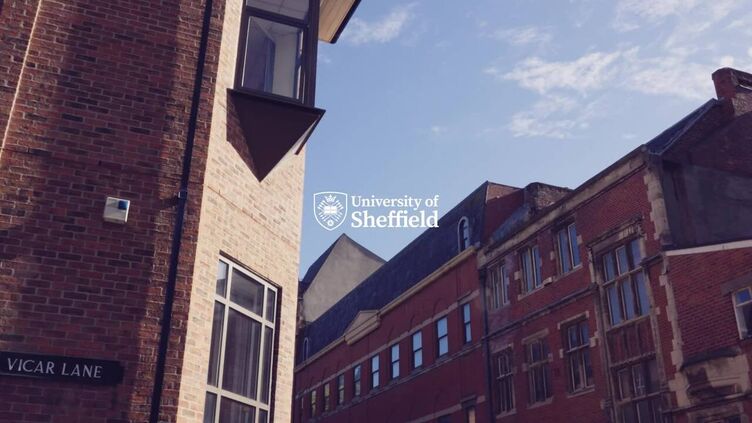
The School of Economics is based in the Elmfield building, close to The Wave, the new home for the Faculty of Social Sciences. The Wave features state-of-the-art collaborative lecture theatres, study spaces and seminar rooms.
Teaching may take place in Elmfield, The Wave, or in other buildings across campus, many of which are close together so it’s easy to walk between them and it’s a great way to get to know the city. You will also be close to our Students' Union and central libraries.
Facilities
Our state-of-the-art classrooms are in the same building as our staff offices. You'll also have your own social space with computer access.
School of Sociological Studies, Politics and International Relations
Department statistics
A Top 10 university for politics
The University of Sheffield is ranked 8th in the UK, The Guardian University Guide 2026.
Top 10 in the UK for international relations
Guardian University Guide 2025
World top 100 for both sociology and politics
QS World University rankings by subject, 2025
90.4% of politics and international relations graduates were in employment or further study 15 months after leaving university
UK undergraduates, Graduate Outcomes Survey 2021-22
We’re proud to be one of the UK’s top providers for research and teaching. Our academics are recognised internationally for their expertise, contributing to national and international policy and working alongside organisations around the world to address society’s major challenges.
Each brings cutting-edge research into your studies and uses their professional expertise to support your learning and development.
During your time with us, you will:
- tackle contemporary challenges - all our courses are designed to engage with and discuss the most pressing challenges, with our research-active staff bringing in their expertise to your learning
- develop your own expertise - we offer a range of optional modules so you can tailor your degree to your own interests
- receive comprehensive support - with a wide range of support available, including academic tutors and dedicated support services, you will be supported throughout your time with us and beyond
- engage with diverse and interactive teaching - a mix of teaching formats ensures you will learn in new and innovative ways throughout your course
- be career confident - develop key skills for the world of work and gain professional experience with placements, internships and other employability opportunities
Our staff are based in The Wave, the home of the Faculty of Social Sciences, and across the road in Elmfield. The Wave offers the newest lecture theatres on campus, plenty of collaborative and private study spaces, and a cafe.
Elmfield features state-of-the-art seminar rooms and a communal student room to study and socialise. Teaching may take place across both buildings, as well as other buildings on campus which are only a short walk away.
School of Sociological Studies, Politics and International Relations
University rankings
A world top-100 university
QS World University Rankings 2027 (82nd)
Number one in the Russell Group for student voice
National Student Survey 2026
92 per cent of our research is rated as world-leading or internationally excellent
Research Excellence Framework 2021
University of the Year for Student Experience
The Times and The Sunday Times Good University Guide 2026
Number one Students' Union in the UK
Whatuni Student Choice Awards 2024, 2023, 2022, 2020, 2019, 2018, 2017
Number one for Students' Union
StudentCrowd 2025 University Awards
7th best University for Work Experience
Higherin 2026-27
Student profiles


Fees and funding
Fees
Additional costs
The annual fee for your undergraduate course includes a number of items in addition to your tuition. If an item or activity is classed as a compulsory element for your course, it will normally be included in your tuition fee. There are also other costs which you may need to consider. These costs may increase due to price increases outside of the University’s control, if you defer entry or if you choose to change course.
Examples of what’s included and excluded in undergraduate fees
Funding your study
Depending on your circumstances, you may qualify for a bursary, scholarship or loan to help fund your study and enhance your learning experience.
Use our Student Funding Calculator to work out what you’re eligible for.
Placements and study abroad
Placement
Recent placements have been with Bank of England, Lloyds Bank, IBM, ASOS and Mercedes-Benz.
Study abroad
Visit
University open days
We host five open days each year, usually in June, July, September, October and November. You can talk to staff and students, tour the campus and see inside the accommodation.
Online events
Join our online information sessions to find out more about different aspects of University life.
Subject tasters
If you’re considering your post-16 options, our interactive subject tasters are for you. There are a wide range of subjects to choose from and you can attend sessions online or on campus.
Offer holder days
If you've received an offer to study with us, we'll invite you to one of our offer holder days, which take place between February and April. These open days have a strong school focus and give you the chance to really explore student life here, even if you've visited us before.
Campus tours
Our weekly guided tours show you what Sheffield has to offer - both on campus and beyond. You can extend your visit with tours of our city, accommodation or sport facilities.
Apply
The awarding body for this course is the University of Sheffield.
Recognition of professional qualifications: from 1 January 2021, in order to have any UK professional qualifications recognised for work in an EU country across a number of regulated and other professions you need to apply to the host country for recognition. Read information from the UK government and the EU Regulated Professions Database.
Any supervisors and research areas listed are indicative and may change before the start of the course.