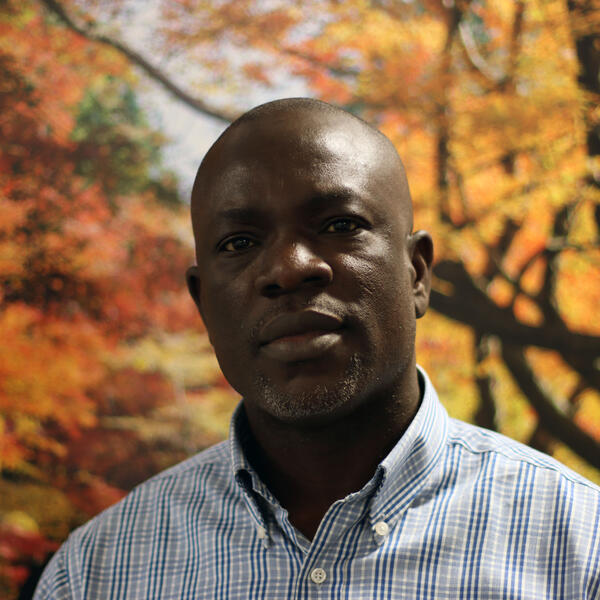
Dr Robert Akparibo
Dr Robert Akparibo is an Associate Professor in Global Health and Nutrition at the University of Sheffield's School of Medicine and Population. His research focuses on global health, nutrition and the double burden of malnutrition, particularly in Africa.

What is your research background and what are your current research interests?
My research sits at the intersection of global health, nutrition, and sustainable food systems, with a particular focus on understanding how food environments, dietary behaviours, and structural inequalities shape health outcomes across the life course. I have an interdisciplinary background combining public health nutrition, food systems research, and implementation science, with extensive experience working across Africa and the UK.
Much of my work examines how food insecurity, nutrition transitions, urbanisation, and socio-economic change influence dietary patterns and nutritional outcomes, particularly among vulnerable populations such as children, adolescents, women, and low-income communities. A key aspect of my research is translating evidence into policy and practice through collaboration with governments, international organisations, and community stakeholders to co-design interventions that improve dietary quality while supporting sustainable and equitable food systems.
My current research focuses on three main areas:
- Sustainable diets and food systems, including nutrient flows, dietary adequacy, and environmental sustainability.
- Nutrition for school-age children and adolescents, particularly school food environments and policy development.
- The double burden of malnutrition (undernutrition, overweight, and obesity) and nutrition transitions in rapidly changing urban contexts, particularly in sub-Saharan Africa.
Are there any particular projects or outputs of yours that you are particularly proud of or excited about?
I am particularly excited about several collaborative projects that aim to bridge research, policy, and practice.
One is the NutriShed project, funded by Innovative Methods and Metrics for Agriculture and Nutrition Actions (IMMANA) through the Bill & Melinda Gates Foundation. This project explores nutrient flows within food systems to better understand how urban food environments influence dietary adequacy and sustainability. By integrating spatial analysis with nutrition science, the project has developed a framework for tracking food and nutrition flows into African cities, generating actionable evidence for policymakers.
Another project I am proud of is the Dietary Transition of African Cities project, funded by the UK Medical Research Council. This research examined the factors shaping food consumption patterns (what people eat and how, where, when, and with whom they eat) within rapidly urbanising African contexts. Evidence generated from this project contributed to significant policy developments, including supporting the creation of Ghana’s first Food-Based Dietary Guidelines, which now inform food labelling regulations, public health policy, and clinical practice.
I am also proud of my contributions to global work on school-age nutrition through collaboration with international partners such as UNICEF, the World Food Programme, and UNESCO. This includes work to develop global indicators for tracking nutrition among school-age children and adolescents - contributing to policy frameworks integrating nutrition within education systems. It also addresses a historically under-prioritised population group despite its critical importance for lifelong health and human capital development.
What do you think are the most high-potential or important future directions for the type of research that you do?
Several key directions will shape the future of global nutrition and sustainable food systems research:
- Integrating nutrition and sustainability science to better understand how dietary choices impact both human and planetary health.
- Increasing focus on school-age children and adolescents, a critical but historically under-addressed population group.
- Systems-based and implementation research that moves beyond identifying what works to understanding how interventions can be scaled equitably in real-world settings.
- Data innovation and interdisciplinary approaches combining spatial analytics, behavioural science, and participatory methods to better understand complex food environments.
- Co-production with stakeholders to ensure research is grounded in lived experience and policy realities, thereby maximising real-world impact.
What are your links to the Institute for Sustainable Food?
My research aligns closely with the Institute for Sustainable Food’s mission to create equitable, resilient, and sustainable food systems. Through my work on nutrition-sensitive food systems, dietary sustainability, and food environments, I contribute to interdisciplinary collaborations that bring together nutrition science, public health, environmental sustainability, and policy engagement.
I am particularly interested in advancing collaborative research that explores how sustainable food systems can simultaneously address health inequalities, improve dietary quality, and support environmental goals. My teaching and research activities within Sheffield’s public health nutrition and sustainability programmes also strongly align with the Institute’s priorities.
Can you tell us a fun fact about you?
Outside academia, I enjoy following football, particularly the Premier League, and I am a dedicated Chelsea supporter. My weekends can be significantly influenced by match results! I also enjoy travelling and exploring food cultures from different parts of the world. Visiting local food markets and engaging with traditional cuisines during fieldwork provides both personal enjoyment and professional inspiration, helping me reflect on how culture, identity, and sustainability intersect within food systems.