
Digital Society Researchers Network
The Digital Society Researchers Network (DSRN) is a newly funded researcher development network focused on convening, harnessing, and developing the world-leading digital research expertise that exists within the Faculty of Social Sciences at the University of Sheffield.

The Digital Society Researchers Network (DSRN) is a newly funded researcher development network focused on convening, harnessing, and developing the world-leading digital research expertise that exists within the Faculty of Social Sciences at the University of Sheffield.
The DSRN has four main goals:
- Offering leading-edge digital methods training to staff and PGRs
- Facilitating collaboration on digital research within the Faculty, across the University, and externally
- Encouraging reputation building for researchers both internally and externally
- Supporting PGRs doing digital research.
The aim of the DSRN is to offer a ‘home’ for digital researchers in FSS outside of their Schools, offering an inclusive venue for learning, collaboration, and support.
Interested in getting involved? Email DSRN@sheffield.ac.uk or sign up for our mailing list.
- People
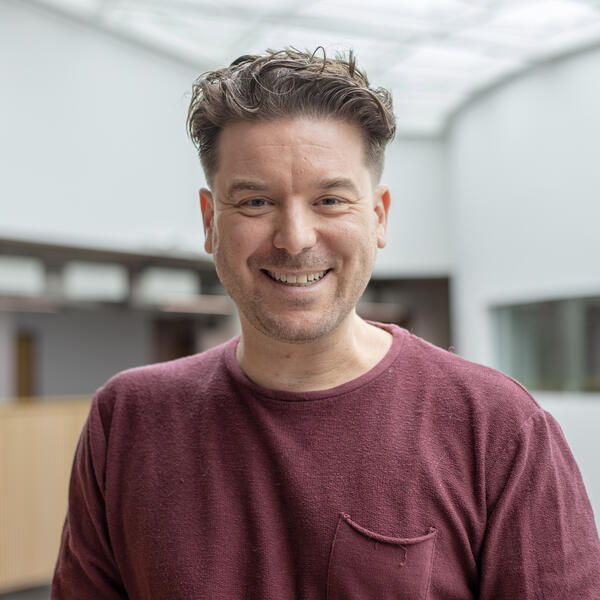
The DSRN is run by a multidisciplinary leadership team from across the Faculty of Social Sciences.
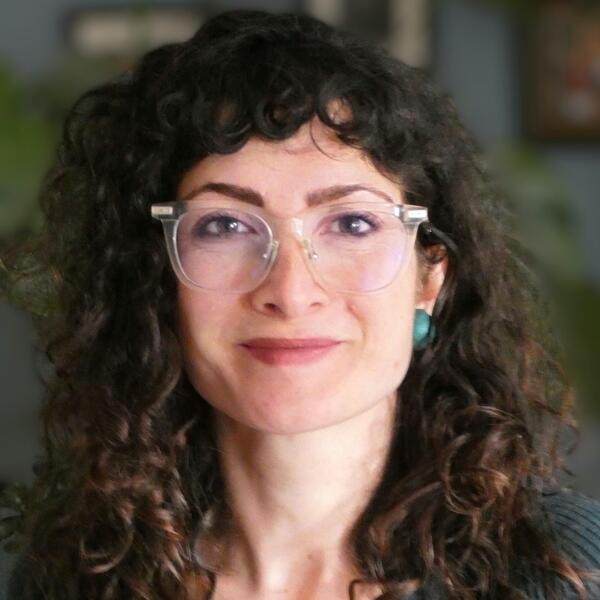
Dr Kate Miltner is Co-Director of the DSRN. Kate is a Lecturer (Assistant Professor) in Data, AI, and Society in the School of Information, Journalism and Communication at The University of Sheffield and a member of the UK Young Academy. Her research explores issues of power and inequality in digital systems, institutions, and cultures, and is centrally concerned with how (and in what forms) power circulates through digital ecosystems, how structural inequalities are (re)produced within and across digital contexts, and how this shapes inclusion and/or exclusion in digital spaces.
Dr Ozge Ozduzen is Co-Director of the DSRN. Ozge is a Lecturer in Digital Media and Society, and her research is on digital communities, identities and intimacies, particularly examining users’ experience and practices of online harms, grievances and resistances.
Dr Niall Docherty is Interdisciplinary Lead for the DSRN. Niall is a Lecturer in Data, AI and Society in the School of Information, Journalism and Communication at The University of Sheffield. His work explores the philosophical and political stakes of digital well-being.
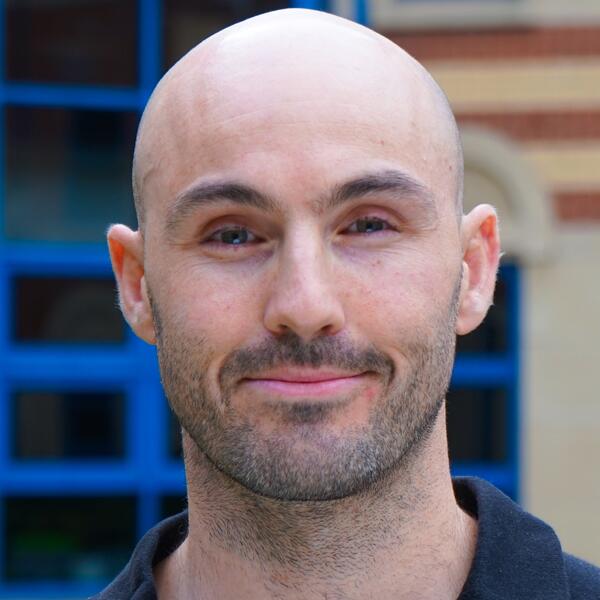
Dr Harrison Smith is Membership Lead for the DSRN. Harrison is a Lecturer in Digital Media and Society and serves as the programme lead for the MA Digital Media and Society course. Harrison’s research broadly examines the political economies of digital technologies with a particular interest in understanding their impacts on contemporary consumer cultures and digital marketing practices through industrial modes of surveillance and data analytics that track, measure, and categorize consumers in everyday life. His research synthesizes a wide range of theoretical approaches that connect digital platforms, infrastructures, and contemporary environments into new kinds of digital interactivities and modalities. Harrison has a particular interest in understanding the social shaping of digital futures, including the ways that emerging technologies such as AI are connected with larger social imaginaries, politics, and market arrangements.
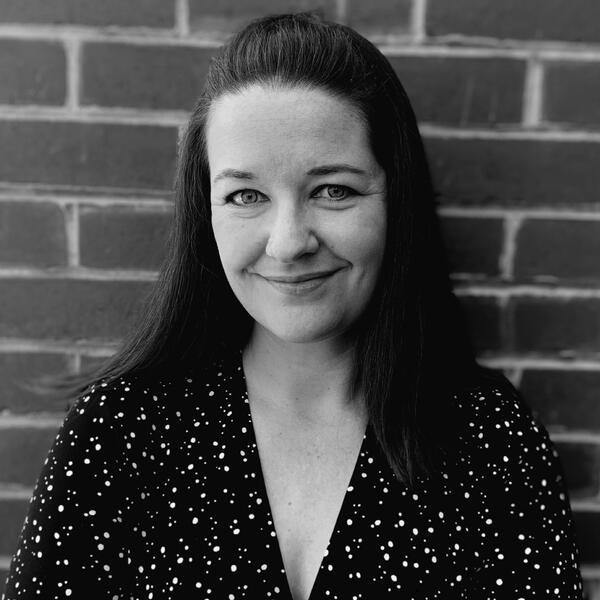
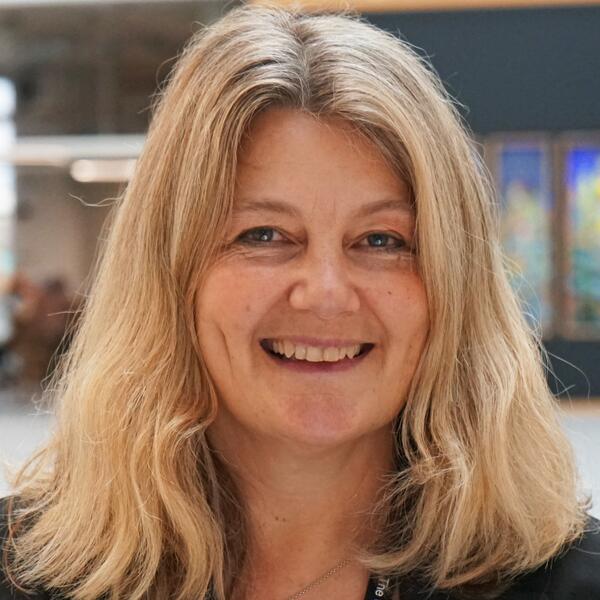
Dr. Sharon Wagg is Communications Lead for the DSRN. Sharon is a lecturer in Librarianship and Information Management at the University of Sheffield. With over a decade of expertise in digital inclusion, Sharon is a recognised thought leader who develops and delivers rigorous research and strategic stakeholder engagement across national, regional, and local landscapes. She has led projects funded by The British Academy, Arts Council England and Research England, Higher Education Innovation Funding and presented at national and international conferences. Sharon is currently co-lead on an impact case study, a Centre for Care associate, and a fellow of the Institute for Global Sustainable Development.



- Recent research
Enjoy recent publications and other outputs from members of the DSRN.

From authority to similarity: How Google transformed its knowledge infrastructure using computer vision
Pearce, W., Borie, M., Bruschi, L., Dell’Orto, D., Hanchard, M., Pilipets, E., Quets, A., & Xu, Z. (2026). From authority to similarity: How Google transformed its knowledge infrastructure using computer vision. Big Data & Society, 13(1). https://doi.org/10.1177/20539517261426452
We investigate the impact of computer vision models, a prominent artificial intelligence tool, on critical knowledge infrastructure, using the case of Google search engines. We answer the following research question: How do search results for Google Images compare internationally with those for Google Search, and how can these results be explained by changes in Google's knowledge infrastructure? To answer this question, we carry out four steps: (1) Theorise the relationship between web epistemology, calculative technology and issue configuration, illustrating the dynamics of critical knowledge infrastructures on the web; (2) provide a potted history of Google's use of computer vision in search; (3) undertake the first international comparison of search results from Google Search and Google Images; (4) analyse the visual content of search results from Google Images. Adopting a novel research design combining a suite of quanti-quali digital methods including visual content analysis, social semiotics and computer vision network analysis, we analyse six countries’ search results related to environmental change (climate change, biodiversity loss). We present two key findings. First, Google Images search results contain fewer authoritative sources than Google Search across all countries. Second, Google Images results constitute a narrow, homogenised visual repertoire across all countries. This constitutes a transformation in Google's web epistemology from ranking-by-authority to ranking-by-similarity, driven by a shift in calculative technology from web links (Google Search) to computer vision (Google Images). Our framework and findings open up new questions regarding the impact of computer vision on public access to knowledge in increasingly image-saturated digital societies.
Who's Coding: An Analysis of UK Bootcamp Experiences and Outcomes
Miltner, K.M., Sadar-Katat, G., Ashton, E., and Scorer, L. (2026). Who's Coding: An Analysis of UK Bootcamp Experiences and Outcomes. Big Data & Society. 13(1). https://doi.org/10.1177/20539517251412373
Bootcamps are intensive training programs that aim to turn adults with little to no experience into employable software developers and data scientists, typically in 3–4 months. The bootcamp model has been highly touted in the UK, with significant government investment. However, it is unclear whether UK coding and data science bootcamps make good on their key claims, particularly around employment and salaries. There is a dearth of evidence on UK bootcamp attendees and their motivations, experiences and outcomes. This study begins to address this research gap, identifying who goes to coding & data science bootcamps in the UK, their motivations, and the key factors that impact bootcamp students’ experiences and outcomes. Our research demonstrates that there are several demographic factors that impact bootcamp experience and success in the UK, including age, disability, immigration history, caring responsibilities, and financial circumstances. Overall, coding and data science bootcamps tend to most significantly benefit younger, non-disabled, native British people from financially stable backgrounds who do not have caring responsibilities. These findings contradict claims that bootcamps offer an accessible gateway for marginalised groups looking to obtain coveted, well-remunerated roles in the UK digital and data industries.
How Civil Society Coalition-Building Affects Information Integrity during Elections: Evidence from Four African Countries
Madrid-Morales, D., Wasserman, H., Davies-Laubscher, N., & Sow, F. (2026). How Civil Society Coalition-Building Affects Information Integrity during Elections: Evidence from Four African Countries. Information, Communication & Society. https://doi.org/10.1080/1369118X.2026.2647360
This article examines how civil society actors promote information integrity during elections through coalition-building, drawing on evidence from four African countries (the Democratic Republic of Congo, Kenya, Senegal, and South Africa) that held elections between 2022 and 2024. In these countries, disinformation, extreme speech, and other forms of information manipulation often target electoral processes, threatening to undermine public trust, and amplifying societal divisions. Based on an analysis of 36 semi-structured interviews with members of civil society organisations, fact-checkers, regulators, and media professionals, we describe how these actors creatively built coalitions to enhance information integrity, platform accountability, and democratic processes, and discuss how they responded to the presence/absence of policy and regulatory frameworks. Despite resource constraints, their efforts highlight the potential of broad-based coalitions to safeguard information integrity during elections, for example by linking fact-checkers with community media and grassroots organisations, while emphasising the importance of sustained interventions beyond election cycles. We also show how civil society coalitions engage platforms, regulators, and media actors to safeguard information integrity, offering lessons for global debates on information governance beyond platform-centric approaches.
- News
Latest news and media appearances from members of the DSRN.

Let’s Talk AI launched in April! Led by Dr Susan Oman, Let's Talk AI is a fresh,first-of-its-kind AI Awareness campaign devised by the people, with the people and for the people. It aims to bring conversations about AI out of tech labs and boardrooms and move them onto our streets and into our homes. Through relatable cartoons and community stories, we’re breaking down the basics of AI in everyday life — whoever you are. From bus stops and community libraries, to radio waves and social media feeds, we’re popping up across Sheffield to make sure everyone can take part. Visit LetsTalkAI.org.uk to find out more.
Dr Kate Miltner has had two recent appearances on BBC radio. On April 8, Kate was interviewed about AI slop and political propaganda on BBC Radio 5 Live, and on March 20 she was interviewed about AI and the Scottish economy on BBC Radio Scotland.
Dr Sharon Wagg’s Arts Council England funded project Digital arts and culture: The perfect ‘hook’ for digital inclusion completed with colleagues Dr Pamela McKinney and Laura Woods, and the team at 100% Digital Leeds has been included as a case study and an example of good practice in digital innovation within creative health on the National Centre for Creative Health (NCCH) website, and was referenced as part of a wider All-Party Parliamentary Group (APPG) on Creative Health Roundtable on Digital Health and CreaTech in April. Further details can be found on the project website.
In March and April 2026, Dr Kate Miltner took part in three interactive stakeholder workshops as part of the UKRI Future of the Internet project, a new initiative examining the future of the internet and its social, economic, cultural, and legal implications. Bringing together diverse perspectives from academia, government, cultural institutions, and civil society, these workshops examined the emerging challenges and opportunities shaping the internet landscape — from connectivity infrastructure and cybersecurity to ownership, online communities, digital trust, and internet regulation.
In March 2026, Sheila Webber gave a keynote, "Reflecting on Information Literacy in a time of polycrisis and cherry blossom", at the 21st LILAC (Information literacy) conference. The conference was co-organised by Dr Pamela McKinney and also included contributions from PhD students Laura Woods and Laura Williams, and from Masters students taking Information Literacy modules in the School of Information Journalism and Communication. Sheila (Sheila Yoshikawa in Second Life) was also part of an invited international panel at the 19th Virtual Worlds Best Practices in Education (VWBPE) conference, taking place within the 3D virtual world, Second Life. The panel consisted of previous winners of the VWBPE Thinkerer Award for contribution to immersive education. The session recording is here.
Dr Kate Miltner participated in the British Academy Policy Lab 'AI upskilling in the UK's creative industries: Building inclusive and responsible policy frameworks’ in March 2026. A range of academics, policymakers, and practitioners joined together with the aim of developing policy interventions that can address the central policy challenge: “How can government policy effectively support inclusive, responsible and sustainable AI upskilling in the UK’s creative industries, ensuring innovation goes hand in hand with equitable workforce development?”
Work by Dr Dani Madrid-Morales from the School of Information Journalism and Communication on Foreign Information Manipulation and Interference in Sub-Saharan Africa, and the recommendations made, are included in a new report by the Disinformation diplomacy: How malign actors are seeking to undermine democracy House of Commons' Foreign Affairs Committee. The full report is available here.
In February 2026, Dr Kate Miltner delivered an invited talk at The Royal Society PhD Training Programme. As part of a careers session, Kate discussed her career post-PhD, providing a brief overview of her career, learnings from her PhD, and how this has helped shape her career today.
On November 5th 2025, Dr Sharon Wagg and Dr Sarah Vannini (School of Information, Journalism and Communication) presented their research on digital inequalities at the House of Commons, at an event organised in collaboration with the Centre for Care. Sharon and Sara were part of a panel discussing issues of digital inequalities/exclusions while 15 MPs and other stakeholders were playing the human-sized board game "Mind the Gap", a game informed by their research which aims to make people experience what being digitally excluded might mean. Read more about the day and see the pictures here.
In November 2025, Dr Niall Docherty was awarded an AHRC Catalyst grant for his project 'Control Shift Escape: New Possibilities for Digital Well-being’. This project aims to move scholarship and society beyond current ideas of digital well-being as self-control. Instead of living well online being reduced to controlling personal technological habits, with the neoliberalized visions of life this implies, innovative theoretical investigations, interdisciplinary collaborations, and arts-based public research and events will provide new ways to understand, critique, design for, and practice digital well-being today. This project is led by Dr Niall Docherty at the University of Sheffield, with Co-I Dr David Young at King's College London, and Project Partners Bloc Projects - a non-profit community arts-space based in Sheffield. The grant is worth £300,000 and will run for 17 months from March 2026. Learn more here.