Sheffield artists log 1.85 billion Spotify streams in a single quarter as new report outlines blueprint for city's musical future
Sheffield’s top artists such as Arctic Monkeys, Bring Me The Horizon and Def Leppard are racking up over 1.85 billion Spotify streams in a single quarter, reaching a combined global fanbase of over 100 million listeners, according to a new report.

- A major new report reveals that Sheffield's top artists such as Arctic Monkeys, Bring Me The Horizon and Def Leppard generate almost 2 billion Spotify streams each quarter, highlighting the massive global reach of the city's music sector
- The University of Sheffield report calls for the establishment of a dedicated Sheffield Music Office to sustain and future proof a sector that supports 2,100 jobs in the city
- Sheffield’s unique ability to pass musical traditions down through generations is identified as the "secret ingredient" behind its knack for consistently producing world-class talent
- The landmark report comes ahead of the UK City of Culture 2029 shortlist announcement this autumn - the culmination of a potentially transformative, city-wide effort to make the cut. It also lands alongside two major funding opportunities for the sector - the South Yorkshire Creative and Cultural Investment Framework and the Government's new national music strategy, Turn It Up
Sheffield’s top artists such as Arctic Monkeys, Bring Me The Horizon and Def Leppard are racking up over 1.85 billion Spotify streams in a single quarter, reaching a combined global fanbase of more than 100 million listeners, according to a University of Sheffield report outlining a blueprint to secure the city’s musical future.
The ‘Sheffield: City of Music’ report explores the city’s rich musical heritage alongside its indelible cultural and economic impact - a scene that currently supports an estimated 2,100 full-time equivalent jobs. It argues for the establishment of a Sheffield Music Office to sustain and build on a legacy that has produced global icons, from The Human League to Pulp.
The wide-ranging report examines every facet of the city’s music sector, from chart-topping stadium fillers to the carol singing tradition that’s thrived in the city’s pubs for almost 200 years.
Sheffield’s unique ability to keep musical traditions alive from one generation to the next is identified as the ‘secret ingredient’ behind its ability to consistently produce world-class talent that wows global audiences. The report explores the secrets behind the Sheffield music scene and its enduring cultural impact, charting a line from a 250-year-old sword dancing tradition through to the massive crowds of the modern Tramlines festival and beyond.

While the findings show that the city has much to shout about, it warns that strategic support and investment is needed to survive modern pressures and adapt in what is a rapidly changing landscape.
Neil McSweeney, Senior University Teacher in Music at the University of Sheffield, co-founder and director of Hudson Records, and a practising singer-songwriter, led the research. He said: “Our research shows that Sheffield does not merely produce music - it keeps it alive.
“Original, generational talent of the type this city has produced time and time again does not emerge from a vacuum. It emerges from a city that has been making, listening to and innovating music for centuries. This regenerative cycle is why Sheffield continues to inspire new generations to produce music that matters, reaching far beyond our boundaries.
“However, we cannot take this for granted. From the financial pressures on grassroots venues to the shifting economics of global streaming, the challenges are significant.
“With a clear mandate and a dedicated Sheffield Music Office, we can safeguard our musical heritage and realise the vast social, cultural and economic benefits it offers the city.”
Sheffield’s music sector in numbers:
1,478 distinct entities across the music sector, from venues and festivals to musicians and publishers
123 music venues, from stadiums to pub stages
1.85 billion aggregate quarterly Spotify streams from 55 Sheffield artists
100 million+ global fanbase enjoying Sheffield music
2,100 Full-time equivalent roles estimated in the Sheffield music sector
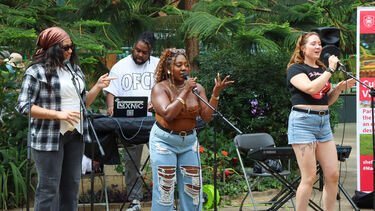
The report makes a clear distinction between what it refers to as ‘institutional’ and ‘extra institutional’ music, warning that both are under increasing pressure. The institutional refers to the organised frameworks such as schools, conservatoires and registered music organisations, to the extra institutional defined as ‘music as play’, encompassing everything from jam sessions to open mic nights.
It argues that each era of Sheffield’s musical life depends on musicians finding their way in, whether it’s through school music programmes or DIY music making in venues, parks and bedroom studios.
“The success of Sheffield’s entire music sector hinges on one thing: how well we support young people’s involvement in music, whether in the classroom or in grassroots venues ,” said Neil.
“While many factors determine how we compete and thrive in a changing global sector, nurturing the next generation is fundamental.
“Put simply, young people from every background and every corner of the city must be able to participate.”
The report identifies five strategic priorities to secure Sheffield music’s future:
- Establish a Sheffield Music Office - the single most important structural investment the city can make in its music sector.
- Protect and develop the infrastructure for young people's participation - across both formal music education and extra-institutional music-making.
- Invest in the management and business infrastructure that allows Sheffield's creative talent to build sustainable careers in the city.
- Integrate music into health, wellbeing and social care frameworks - building on Sheffield's emerging position as a leading centre for music and health innovation.
- Pursue UNESCO City of Music designation as a platform for civic narrative, international positioning and cross-institutional collaboration. The designation would position Sheffield within a global network of cities committed to music as a driver of cultural and economic development.
Matt Ritchie, Founder and Creative Lead of Hybrid 3 Studios and Founder-member of the Sheffield Grassroots Music Network said: "This report lands at exactly the right moment for Sheffield's music sector. Independent organisations like Hybrid and Sheffield Grassroots Music Network are seeing real growth right now, this year alone we've secured over £500,000 in long-term funding and more than doubled our studio space, but that growth is happening with no sector-wide infrastructure to connect it up.
“A Sheffield Music Office is genuinely achievable: the partners, the capability and the appetite already exist, it just needs a dedicated team to coordinate them. And from our perspective it's desirable because it fills a real gap. Sheffield has talent and ambition everywhere, but no single home pulling it together for musicians, venues and 3rd sector organisations alike.
“Let's get that central point anchored in and build the Sheffield Music Office together."
Daniel Dylan Wray is a Sheffield-based music and culture writer whose debut book, Groovy, Laidback & Nasty, offers a definitive history of the city’s independent music scene. He said: “Sheffield still remains an incredibly unique city, musically, that is too vast and varied to comfortably package or pigeonhole, but this report showcases the sheer depth and breadth of talent, along with the global reach and huge potential, of the music being made in this city."
Read the report and recommendations in full