
Subject pathways
Pathways include: Designing towards sustainable regeneration, People Power: Protest & Social Change in 20th Century Britain, Reflective leadership for successful teams, and Energy and the Environment.

About our Summer School
The Sheffield International Summer School is designed for inbound students not currently registered on full degree programmes at the University of Sheffield. Whether you want to try out the University of Sheffield for future study or you simply want to have an amazing summer in the heart of the UK, the Sheffield International Summer School is for you. We're 82nd in the world and 14th in the UK (QS World University Rankings 2027) and number one in the Russell Group (based on aggregate responses) National Student Survey (NSS) 2025.
There are multiple subject pathways in the Sheffield International Summer School across a range of academic disciplines. Each has been designed to explore key global issues and to develop the tools to tackle them, giving you the opportunity to develop a range of skills that you can use for your future studies and career.
You’ll be taught by experts in their fields and have the chance to explore one of the greenest and friendliest cities in the UK. There will be the chance to visit local points of interest and natural beauty including the Peak District and Chatsworth country house, as well as experiencing student life in Sheffield.
At the end of the Summer School you will be provided with a transcript confirming the module studied and grade awarded. Students who successfully complete selected modules will also receive 10 University of Sheffield credits (5 ECTS). Your home institution will be able to tell you if you are able to transfer the credit back.
Schedule information
The 2026 Sheffield International Summer School took place in July 2026. Planning for our 2027 programme is now underway, and details are scheduled to be published in December 2026.
Subject options
- Designing towards sustainable regeneration
School of Architecture and Landscape Architecture
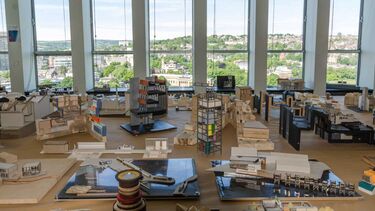
10 credits (5 ECTS)This course introduces a diverse range of research-based design and design-oriented research approaches to sustainable regeneration, with a particular focus on the regenerative design and ecological regeneration of the British historic environment.
It will explore practical and philosophical debates within architectural, landscape and urban studies, addressing contemporary issues and employing complementary approaches that have recently been innovated by the core teaching team.
The tutors and lecturers are leading landscape architects at the forefront of their field.
The aims of this module are:
- To develop knowledge of social, cultural, economic, political and ethical issues relating to sustainable regeneration design.
- To develop an understanding of the range of conceptual design and research methods in architecture and landscape.
- To develop the ability to interpret and evaluate design within the British historic environment.
- To develop the visual and verbal skills to debate design approaches.
Suitability: This course is suitable for students studying in the fields of Architecture and Landscape Architecture as well as areas such as Urban Studies and Planning.
Teaching: Combination of lectures, tutorials, seminars and fieldwork.
Additional activity: Field trip to York to explore the historic architecture and infrastructure of the city.
Assessment: Micro-studio design project
- People Power: Protest & Social Change in 20th Century Britain
School of History, Philosophy and Digital Humanities
10 credits (5 ECTS)In this module you will develop an understanding of Britain’s social, political and cultural history in the twentieth century. You will learn about the various groups that sought to challenge the status quo and how this changed the lives of British people. You will discover how women campaigned for the vote before the First World War, and how they sought economic, social and sexual liberation in the second half of the twentieth century. You will learn about how workers fought against social inequalities, and how the state evolved to provide a minimum standard of living. You will also look at youth movements and cultural awakenings and about the experience of migrant groups through a period distinguished by decolonisation and racial divisions.
The aims of this module are:
- Develop knowledge and understanding of British social, political and cultural history in the twentieth century
- Develop skills in interpreting primary source material within historical context
- Develop skills in presenting material visually and orally
- Develop skills in reflecting on your own academic development and on cultural difference
Suitability: Open to students from all academic backgrounds
Teaching: Lectures and seminars
Assessment: Reflective presentation and written coursework
- Reflective leadership for successful teams
Sheffield University Management School
10 credits (5 ECTS)This course aims to develop students into effective and valuable team players and leaders through practical exercises and self-reflection. It provides a strong foundation in leadership and teamwork theories, an understanding of factors that contribute to effective leadership and teamwork. Students strengthen their self-awareness for their behaviour as leaders and team members, ultimately leading to an improvement of skills in both areas.
The aims of this module are:
- To critical evaluate leadership and teamwork theories, and apply them to cases while considering influencing factors
- To critically discuss the principles of leader development and their implications for practice
- To draw on theories of leadership and teamwork to evaluate their own practice and team working skills
- To use increased self-awareness of own leadership behaviours to develop own leadership and team working skills.
Suitability: Open to students from all academic backgrounds
Teaching: Lectures, tutorials and group work
Assessment: Combination of reflective written coursework and group presentations
- Energy and the Environment
Faculty of Engineering
Not for creditThe Energy and the Environment Summer School (EESS) is an exciting opportunity to explore the science, technology and innovation driving the transition to a low-carbon future.
Through interactive lectures, hands-on laboratory sessions and field trips, you’ll gain practical insights into renewable energy, power generation, carbon capture utilisation and storage, hydrogen fuels, nuclear power and energy storage. Working with your international peers, you’ll develop the skills, confidence and global perspective needed to tackle one of the greatest challenges that we currently face: how to power the world sustainably.