
Beyond Accommodation: Imagining Anti-Ableist Research Cultures in the University
On Wednesday 26th August, Dr Kirsty Liddiard visited the Disability Publics Lab at Toronto Metropolitan University to deliver a talk to students and staff entitled, The power, place and potentiality of disability in the university.

On Wednesday 26th August, Dr Kirsty Liddiard visited the Disability Publics Lab at Toronto Metropolitan University to deliver a talk to students and staff entitled, The power, place and potentiality of disability in the university.
Returning to Toronto Metropolitan University (TMU), where I undertook my first postdoctoral fellowship in the School of Disability Studies, was a wonderful experience. The School of Disability Studies is the first in Canada to provide a degree education exclusively from a disability studies perspective. To undertake a postdoc there - getting to think, create and write with disabled scholars and researchers - was a rich experience that has shaped my scholarship ever since. Returning to TMU last month with over a decade of collaborative research, with the aim of sharing and learning from Canadian colleagues, was even more exciting. I centred my talk on two Wellcome Trust–funded projects I have the privilege to work on with colleagues here at Sheffield —the Anti-Ableist Research Culture Project (WAARC) and Cripping Breath: Towards a new cultural politics of respiration. You can read my talk in full below, but in this blog post I want to share the experience!
Much of my talk spoke to forms of academic ableism - within our research cultures, projects and university structures. In academic environments, "anti-ableism" can still feel provocative because it demands that we value more than just ability. Intersectional analysis is essential here too: marginalised bodies—whether Black, disabled, or queer—can be routinely Othered within elite institutions. Canadian colleagues and I mapped out similar kinds of ableism in and across our universities. There were many overlaps: academic ableism is not the preserve of British institutions or research cultures.
However, the value of WAARC was about making space to re-imagine disability in the university: to think about the possibilities and potentialities of what might happen if we stop treating disability as an obstacle to accommodate, and start valuing it as a source of creativity, critical insight, and collective strength. WAARC brought together researchers, our professional services colleagues, and Disabled People’s Organisations (DPOs). DPOs were paid co-leaders across every project phase, reshaping not just our methodologies and our analyses, but our dissemination methods and ways of sharing. A series of resources from the WAARC team which will be of interest to anyone in the university who is seeking to develop and promote anti-ableist practice is available here.
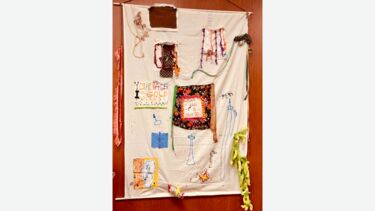
It was also great to share what we are doing in Cripping Breath in terms of disrupting, or pushing back on, standard academic timelines, and ways of being and doing in the academy. In the project, resisting the "projectification" of academia allows us to practice slow/er scholarship rooted in radical care. I also talked about the value of things like co-production and arts and theatre to health research, and the integral role of our Community Researcher Cooperative. If you want to know more about the project, check out our blog here.
Upon returning home, I was interviewed by The Eyepener. The Eyeopener is Toronto Metropolitan University’s independent student newspaper, and has been since 1967. It is owned and operated by Rye-Eye Publishing Inc., a non-profit corporation owned by the students of TMU. You can read the article here.
In sum, I think what both WAARC and Cripping Breath are showing is that by fostering genuine co-leadership, valuing lived experience, and dismantling bureaucratic and institutional barriers, we can cultivate new forms of community and care within the university. When we ground our work in solidarity, trust, and compassion, we create research environments where disabled scholars and communities can truly thrive.
The power, place and potentiality of disability in the university
Dr Kirsty Liddiard, School of Education and iHuman, University of Sheffield
To cite: Liddiard, K. (2026) ‘The power, place and potentiality of disability in the university’. Disability Publics Lab, Toronto Metropolitan University, Wednesday 26th August 2026.
Dedication: I want to dedicate my talk today to Dr Rod Michalko, an early scholar of Disability Studies in Canada, who died on August 14, 2026. Rod was a powerhouse in Canadian disability studies. In the words of Tanya, ‘For more than five decades, Rod brought to his scholarly and creative work an unusual combination of theoretical sophistication, humour, curiosity, and attention to ordinary life. Blindness was a throughline in much of his work. Rod’s body of scholarship will continue to challenge and provoke communities who wish to learn how to think differently, to question generously, and make intellectual life a form of friendship’. If you don’t know Rod’s work - which is probably unlikely (!) - here are some of my favourites:
The Two-in-One: Walking with Smokie, Walking with Blindness (1999)
The Difference That Disability Makes (2002)
Letters with Smokie: Blindness and More-than-Human Relations (2023)
Introduction: In this talk I want to pose some critical questions about the power, place and possibility of disability in the university. I want us to explore three key questions together: (i) How might we imagine anti-ableist research practices and cultures together? (ii) What should inclusive research feel like? And importantly (iii) How must we sustain ourselves and our communities, and why does this matter? I don’t pretend to have all the answers (!) but want to share with you some of what we are learning across two key projects: the Wellcome Trust Anti-Ableist Research Culture Project (or WAARC for short) and Cripping Breath, also funded by the Wellcome Trust in the UK. To conclude, I’d love to share some of our resources with you that we’ve developed - that I hope will be useful in your own research, scholarship and activism.
Introducing WAARC: The first project I want to introduce you to is our Anti-Ableist Research Culture project - also known as WAARC - which was funded by an Institutional Research Culture Award from the Wellcome Trust. Culture awards were part of a £23.3 million grant initiative that provided UK and Irish universities with up to £1 million each to pilot ambitious projects fostering equitable, diverse, and supportive research environments. The motivation for WAARC was simple. As Goodley et al. (2025: 121) argue, ‘...the university is an ableist institution. Disabled students and staff experience exclusionary admissions and recruitment, poor career pipelines and in/formal support, under-employment and precarity’. Furthermore, ‘disabled and neurodivergent academics and researchers contest everyday forms of ableism and disablism in the academy’ as routine (Goodley et al. 2025: 121).
So, our project set out to explore how sustained, collaborative work that centres disabled researchers and our professional services colleagues - as well as organisations run by disabled people - can shift not just policy, but the everyday culture of a university. Rather than treating disability as something to accommodate, WAARC set out to reimagine the university with disability as a source of creativity, critical insight, and collective strength.
We chose the language purposefully. In conservative institutions, anti-ableism can be a provocative term: it desires a university where we value more than just ability. Anti-ableist work is often developed in conversations with anti-sexist, anti-colonial, anti-heterosexist and anti-racist practices. And most significantly anti-ableism learns from and collaborates with the politics of disability developed by disabled people’ (Goodley and Lawthom 2025: np.)
An intersectional analysis here is key. You may have heard of the recent death of Professor Jason Arday in the UK. Arday was Professor of Education at the University of Cambridge. His appointment in 2023 was hailed as a progressive moment for British research cultures, as he was Cambridge’s youngest ever Black Professor. He was also neurodivergent. I won’t go into too much detail here, as I haven’t fully formulated an analysis yet, and the reason for his death on Friday 14th August has not yet been confirmed. But Arday was harassed by the British press; deeply let down by elite institutions; and digitally hunted by online communities which knew very little about research and scholarship. His death for me is a stark reminder that Black, disabled, and queer bodies - or any marginalised folks - are routinely at risk of being considered suspect, alien and Othered in the University.
We brought together academic, postgraduate, early career and contract researchers and professional services colleagues and disabled people’s organisations - to develop a suite of activities that centre disability and contest systemic ableism in relation to three Priority Areas: #1 Environment, #2 Development and #3 Collaboration.
The environment phase - led by Armineh Soorenian and myself - experimented with new ideas for inclusive recruitment and employment for disabled researchers. As part of this work, Armineh interviewed 30 staff about their experiences of working at Sheffield; staff shared their stories of ableist practices within their working environments and recommended ways to remove the barriers they identified.
Development - led by Nikita Hayden and Lauren White - produced new guidelines on accessible research events and delivered a new course on inclusive research methods to raise capacities of all researchers.
Collaboration - led by Sophie Phillips and Dan Goodley - offered funding, via an Open Call in our university, targeting other researchers and professional services colleagues to produce their own inclusive research projects with a disabled people’s organisation (DPO).
Our fourth strand was a cross cutting one - led by Elaina Gauthier-Mamaril and Antonios Ktenidis - which offered an evaluation framework to benchmark progress towards delivering the very anti-ableist environments and systems we wanted to create.
Our professional services colleagues Liz Dew and Elinor Noble tirelessly supported all of this work; they also developed their own intellectual work on disability, ableism, and administration.
Introducing Cripping Breath: So, the second project I want to share with you today is called Cripping Breath. Cripping Breath is an interdisciplinary co-produced project that centres the lives of people who have had their lives saved and/or sustained by ventilatory medical technologies. This includes people with a wide range of health conditions - those with neuromuscular impairments, Motor Neurone Disease (MND), COPD and many other forms of chronic respiratory illness - people who use non-invasive ventilation such as a CPAP or BIPAP, or more invasive forms of ventilation, such as intubation or a tracheostomy.
In the project, we ask: Where are the accounts and perspectives of ventilated people? We know that these voices are routinely excluded from health research, but that lived and embodied experiences are critical towards better understanding forms of illness.
The original desire to explore ventilation actually emerged from my own lived experiences of becoming a ventilator user in 2018 as someone now living with respiratory failure. My Bipap ventilator, who’s called Betty (Betty Bipap), supports my breathing while I sleep. Over the last 8 years together, since diagnosis, Betty has transformed my life. For me, ventilation is not as deficit, but deeply affirmative - Betty is a technology that quite literally enables life - for me to be a Mum, academic, researcher, carer, and partner. Rethinking and reframing lived experience in such ways, then, can offer opportunities to understand illness through new lenses. So the project centres these very intimate understandings of what it’s like to live on ventilation.
But Cripping Breath is also exploring what we are currently calling a ‘new cultural politics of respiration’. If we think about ableist cultures of pandemic recovery and response; the suffering, injury and debilitation caused through global climate crises; crises that are caused, as Fritsch and McGuire state (2026: 247), by ‘globalised structures of violence’ and what Mitchell (2024: 51) calls ‘continuous and ongoing colonial ecological destruction’; not to mention the acute intersections of social deprivation and respiratory health; and more recently, energy poverty and cost of living crises (see Bligh 2025; Glover et al. forthcoming), we can see that breathing is far from only autonomous and automatic. Breathing is a social, political and embodied process which emphasises the need for intersectional conversations about respiratory health - both in an ongoing pandemic and as we imagine post-pandemic futures. In Cripping Breath, we are sketching out these relationships between the micro and the macro politics of breathing. Our overarching aim in the project is to focus on why and how breath matters for us all as what Górska (2021) calls co-respirators.
- How might we imagine anti-ableist research practices and cultures together?
I want to start with relationships, and who we collaborate with in our research. Who are our allies, partners, and supporters? In WAARC, this has been, without a doubt, our disabled people’s organisations partners (or DPOs). None of the successes of WAARC would have been possible without our core DPOs who were paid to work in collaboration with us across the different phases of our work.
We worked with Pathfinders Neuromuscular Alliance, a charity set up by disabled young people for disabled young people; Speakup Self-advocacy and Sheffield Voices, two advocacy organisations for people with learning disabilities (to use UK language) and the National Association of Disabled Staff Networks (NADSN). We also funded the involvement of DPOs in four additional Collaborative Projects funded as part of the Open Call I mentioned earlier. These were small project grants given to early career researchers to conduct a short project with a DPO (Our Vision Our Future, Extant; Buckinghamshire Disability Service; The Professors). We also engaged DPOs in our hybrid events, webinar series and podcast series - which I’ll share with you at the end (Sheffield Public Health, Love Sheffield, Prestige Network, WealdBSL, Becoming Visible, Manchester Centre for the Deaf, Sunderland People First; Quiplash). DPO partners were involved in all stages of WAARC from the original writing of the project proposal to the funder through to ethics, methodological planning, analysis and dissemination. DPOs have also made us rethink how we approach dissemination - the sharing at the end of a project. Rather than producing long reports or guidance documents, we have been encouraged to embrace Easy Read, Plain English, BSL, film and audio formats. This renders information not only more easy to access, but just more interesting and dynamic to engage with.
Like WAARC, Cripping Breath is also a project that relies heavily on deep disability knowledge, experience and expertise. In Cripping Breath, Artists-in-Residence, community researchers, academics, community organisations, and clinicians are working in collaboration to curate and coproduce new understandings of the experiences of ventilated people. Across the project, we make use of artistic, narrative, ethnographic and archival methodologies, each rooted in co-production. Again, are embedded in partnerships with disabled people’s organisations (DPOs), and arts organisations, which centre certain kinds of knowledge within the academy in ways that can both trouble and transform theory, methodology and analysis (see Goodley et al. 2025).
At the heart of the project is our Community Researcher Cooperative - a group of community-based researchers employed by the university to work on the project. Our community researchers are aged from 18 to 60+, with varied experiences of ventilatory tech, some using for just a few months, others for a lifetime. People with congenital and acquired respiratory illness; people with myriad life experiences, skills, knowledges and passions. The Cooperative - Vicky, Amanda, Mitch, Libby, Ruth, Conor, Jenny, Haffizah, and Connor - supported by our Research Associates Jen and Suzanne - are undertaking virtual narrative methods, including online interviews and photographic storytelling, to capture a range of participants' stories of ventilation. Community researchers have led and undertaken all of our data collection, and in Autumn, begin a collaborative analysis.
Similarly, in our Arts Stream, led by Grace Joseph, and our two Artists-in-Residence to the project, Louise Atkinson and Jamie Hale, we are working with a group of disabled Artist and Theatre collaborators - Kate, Tatum, Stephanie, Chris, Rachel and Libby - all of who have lived experience of ventilation and who are working in research-informed theatre and contemporary arts residencies in the project about breath, breathing and ventilation.
And in our Archival Stream, we are undertaking virtual archival research with three lived experience archival researchers, Annie, Haffizah and Ruth. In Cripping the Archives, we are co-producing and exhibiting creative responses to archival collections which rewrite or re-story chronic respiratory illness from the perspectives of those with lived experience. We’ve also created a Museum of Breathing on Instagram - there’s a QR code and a link on the slide if you want to check it out.
So, my point here is that bringing together different folks across the project, in different work streams, enables the privileging and prioritising of lived and embodied knowledge that is so often erased. Rather than omitted, it sits at the core of how we are co-creating new knowledge on breathing, respiratory illness and ventilation together.
So, how might we imagine anti-ableist research practices and cultures together? You’ll see then, across both projects, that the key to imagining and developing anti-ableist research practices and cultures can only happen through including - and co-leading with - disabled people. You’re probably thinking that’s not rocket science - and it isn’t! But in the entrenched everyday ableism of academia, and its routine hostility towards unrecognisable bodies and actors, putting disabled people in (paid) positions as creators, leaders, knowledge producers, theorists, artists, writers and thinkers still feels radical (when it really shouldn’t).
- What should inclusive research feel like?
Next, I want to move onto how we work together. As Goodley et al. (2025) state, ‘disability drives a rethink of how we understand and work with one another in the university’. In WAARC, we’ve been working on embedding an understanding of inclusive research methods into the broader university curriculum. As part of this, we are delivering a new course on inclusive research methods that will be utilised within different research methods courses and modules across the university. We cannot assume ‘inclusive research methods’ are the same across disciplines, or even topics of study. Training is needed on a more bespoke level, too. With our partner Speak Up Self-Advocacy we made an educational resource that talks about some of the fundamentals of inclusive research. You can watch it here. For context, Speak Up Self-Advocacy is an organisation for people with learning disabilities based in Rotherham, in the North of England. Many Disabled People’s Organisations (DPOs) have pioneered their own forms of inclusive research that university researchers should draw upon. So it felt right for WAARC team members to co-create with Speak Up our film, What is inclusive research?
In Cripping Breath, rethinking inclusive approaches has meant Cripping, or contesting the usual temporalities, or timelines, of the research process. Firstly, as a project team, we embrace Crip time, which refers to the relationships between disability and time. Alison Kafer says of Crip time (Kafer 2013: 27): ‘Crip time is flex time not just expanded but exploded; it requires reimagining our notions of what can and should happen on time, recognising how expectations of “how long things take” are based on very particular minds and bodies….’ In practice in the project this means embracing flexibility, adaptability, asynchronous working and radical care (see Piepzna-Samarasinha 2018) across the team, recognising we all bring various types of impairment, embodiment, and chronic illness (see Piepzna-Samarasinha, 2018), as well as forms of caring responsibilities for others. Secondly, we try to push back on what William Viney calls the “projectification” of academic research. Viney states, ‘projects attempt to resolve research aims, questions, collaborating organizations, methods, and outputs before beginning their work…In the economic life of the project human lives – contract workers, participants, ‘patients’ – are rendered as technical inputs and outputs, so the performance of projects can be measured, graded, and optimized’ (Viney, 2024: np). In practice, resisting this means slowing down, taking our time, pushing back on metrics, and undertaking meaningful collaborative and accessible work together. Thirdly, there's also just the realities of our material bodies to consider, meaning we have to embrace slower scholarship as routine. For the wider team, everyday project processes can and do get slowed down by prioritising flexibility around hospital appointments, taking time off sick, waiting for antibiotics and other medications to kick in, and managing sudden hospitalisations and surgeries. In essence, we are a project of very vulnerable bodies, and the research process needs to make space for that.
So, what should inclusive research feel like? Across both projects, I hope the examples I’ve shared show that inclusive research can feel comfortable, safe, flexible, accessible and even joyful. Our emotional selves are rooted in and integral to the research we lead - when you’re a member of a marginalised community, inclusive research can be a deeply intimate and relational practice. It should feel like a space full of access intimacy: what feminist activist Mia Mingus (2011: np.) refers to as that ‘elusive, hard to describe feeling when someone else “gets” your access needs’. A space where disability isn’t just accommodated, but welcomed. Ultimately, inclusive research is about reshaping our research processes to ensure a co-created space where lived and embodied experience are meaningfully valued and, most importantly, shape analyses (see Liddiard et al. 2019).
- How must we sustain ourselves and our communities, and why does this matter?
Finally, I want to speak about pushing back in the university in relation to sustaining ourselves, and draw attention to the role of our senior leaders in our institutions. Any positive changes to university research culture rely on the buy-in and support of senior leaders in the university as well as an openness to truly civic relationships with disabled people and their communities in and outside of the university. The biggest achievement of WAARC I think has been to illuminate and celebrate disability as a productive phenomenon that - if approached correctly - offers real opportunities for making university research cultures more inclusive, purposeful, meaningful, exciting and responsive. Furthermore, we raised and continue to raise awareness amongst senior university colleagues about anti-ableist philosophies and practices. Having senior leaders who are signed up to the principles of anti-ableism and disability justice is crucial, and we are fortunate to have colleagues who are very much allies and supporters to WAARC’s work.
Furthermore, much of the work across both projects has been about engaging with what Goodley et al. (2025: 122) call the ‘performative and bureaucratic machinations of the university’. Institutions love bureaucracy. Tanya Titchkosky (2020: 200) describes bureaucracy as ‘written rules developed by offices subject to lines of hierarchical organisation’. Such bureaucratic governance reveals the university as ‘a pathological system where disabled colleagues are often not imagined to be present nor participating’ (Goodley et al. 2025: 122). As such, across both projects, lots of invisible labour and advocacy behind the scenes has been spent on changing the systems and structures of the university which give home to our research projects.
Examples include things like:
- In WAARC, we have helped revise university travel and financial procedures to recognise the funding of personal assistants for disabled colleagues during international travel;
- We’ve normalised that our contract research staff should have one day per week for their own work and career development. To give some context, in the UK, we have a document that universities sign up to called the Researcher Concordat, which is a set of best practice guidelines around supporting research careers. The Researcher Concordat advises contract research staff to have 10 days per year for their own development; at Sheffield thanks to WAARC we’ve set a precedent of this being one day per week.
- And finally, we’ve been in conversations about the need to simplify legal contracts that are appropriate and easily accessible to non-academic partners engaged in collaborative university research.
Similar kinds of advocacy and lobbying are routine parts of Cripping Breath too:
- In Cripping Breath, after much work, we’ve been able to use university mechanisms to recruit our community researchers (who come from a variety of educational backgrounds) in university contracts, and be paid at a postdoctoral pay level;
- We’ve also managed to use finance systems to recognise and pay for the access workers of our disabled artist and theatre collaborators;
- We’ve created new opportunities for library access for our project collaborators who are not university staff nor students - pushing back on the ways in which universities typically very tightly gatekeep their own resources.
- And finally, we're critically questioning the role of intellectual property and re-imagining ways this can be better shared in funded projects.
So, how must we sustain ourselves and our communities, and why does this matter? All of this matters to how we sustain ourselves, and the sustain disability research and knowledge production in our current times. Getting a seat at the table; engaging in meaningful co-leadership and collaboration rather than tokenistic forms of involvement; and creating spaces where disability is both deeply valuable and valued can both sustain and nourish our intellectual and activist selves in the neoliberal-able university. Furthermore we’ve found, again across both projects, that anti-ableist practice brings people together in ways that can cultivate new forms of Crip community and kinship (see Fritsch and McGuire 2026). Reminding ourselves of the relationality of our work is important: thinking about things like kindness, consideration, trust, connection, solidarity and compassion, particularly if we are working in and with marginalised and minoritised communities, is crucial (see Ellis et al 2025).
To conclude: Sharing our resources I’m conscious not to formally conclude this talk - the work is very much in progress, and ableism is still very much alive and well in our universities. Instead, I wanted to share some of our resources developed in WAARC, for your own interest. I hope they’ll be useful in your own research, scholarship and activism.
So, by way of finishing I want to take you through them:
- We’ve been able to create a website specifically for our anti-ableist resources - the first link on the slide.
- The second bullet point features our work on anti-ableist recruitment and employment practice and provides a detailed overview of findings from interviews with disabled researchers and their associated recommendations.
- The third link takes you to our podcast, "Cripping Research Culture", a podcast that asks the question, ‘How can we make better working conditions for disabled staff in higher education?’
- The fourth link will take you to an Accessibility Guide for University-led Events co-produced with Sheffield’s Centre for Equity and Inclusion.
- The final link is our project zine published in GeoZone. The zine is a collection of frustrations, tensions, and hopes for the future of an anti-ableist university.
Our WAARC Collaborative Projects
- Making Bills Easier to Understand: Ideal Bill, The Simple Guide and Podcast (Enion, Abdullayeva, Jabbarzade and our Vision Our Future.)
- An invitation to listen: Five films (Kill and The Professors, 2026)
- Accessing Archives: Accessing Archives Recommendations (Cleall, Bright and BUDS)
- Open Scholar: Film
Inclusive Research Methods Video Training
- Video one: What is inclusive research?
- Video two: Listening to, and understanding, others
- Video three: Everyone’s contributions are important (Link to Vimeo, forthcoming)
- Video four: Organising Inclusive Events (Link to Vimeo)
- Video five: Video five – Making Research Matter (Link to Vimeo)
- Bonus material - Our Blooper Reel!
References
- Atkinson, L., Hale, J., and Liddiard, K. (2024) ‘Rethinking Crip time and embodiment in research’, Polyphony. Available Online at: https://thepolyphony.org/2024/04/25/rethinking-crip-time-and-embodiment-in-research/. (Accessed March 13, 2025).
- Crow, L. (1996) Rippling raspberries: Disabled women and sexuality [Unpublished MSc dissertation]. South Bank Polytechnic
- Ellis, J., Atkinson, L., Glover, S., Kettle, J., Joseph, G., Hale, J., Jones, A., Coles, M., Bligh, L., Bridgens, R., O'Kane, C., Negus, J., Ali, H., Thompson, C., Waters, S., Coats, C., Gibson, B.J., Weiner, K., Lawson, R. and Liddiard, K. (2025) ‘Cripping inquiry: breathing life into co-produced disability methodologies’, Frontiers in Sociology, 10:1600693. doi: 10.3389/fsoc.2025.1600693
- Fritsch, K. and McGuire, A. (2026) Broken Worlds, Disabled Kin: Strategies for collective survival. Minneapolis: University of Minnesota Press
- Garland-Thompson R. (2005) ‘Feminist disability studies’, Signs: Journal of Women in Culture and Society, 30: 2, 1557–1587
- Goodley, D. and Lawthom, R. (2025) Disrupting the Default: Anti-Ableist Research Culture. Online. Available from: https://whiterose.ac.uk/news/disrupting-the-default-anti-ableist-research-culture-and-waarc/ [Accessed 11/8/26]
- Goodley, D. Liddiard, K. and Lawthom, R. (2025) ‘The Depathologising University’, Scandinavian Journal of Disability Research, 27: 1, 120 - 133, DOI: 10.16993/sjdr.1240
- Górska, M. (2021) Why is breathing political? Lambda Nordica, 26(1), 109 - 117.
- Kafer, A. (2013). Feminist, queer, Crip. Bloomington, Indiana: Indiana University Press.
- Liddiard, K. (2018) The Intimate Lives of Disabled People. Routledge Publishing Limited
- Liddiard, K., Goodley, D., Runswick-Cole, K., Whitney, S., Vogelmann, E., Watts, L., Aimes, C., Evans, K. and Spurr, R. (2022) Living Life to the Fullest: Disability, Youth and Voice. Bingley: Emerald Publishing
- Liddiard, K., Atkinson, L., Evans, K., Gibson, B., Goodley, D., Hale, J., Lawson, R., Runswick-Cole, K., Spurr, R., Vogelmann, E., Watts, L., Weiner, K., & Whitney-Mitchell, S. (2024). “No-one’s contribution is more valid than another’s”: Committing to inclusive democratic methodologies’, Research in Education, 0: 0, https://doi.org/10.1177/00345237241249376
- Loureiro, A. (2024) “Why I No Longer Believe We Can Say Academics Are the Smartest People.” Available from: https://medium.com/@cosmonist/why-i-no-longer-believe-we-can-say-academics-are-the-smartest-people-f6b84b4d723d [Accessed November 18, 2024]
- Martin, P., Pearce, W., De Saille, S., and Liddiard, K. (2022) Being Human in Covid-19. Bristol: Bristol University Press
- Mingus, M. (2011) Access Intimacy: The Missing Link. Online. Available from: https://leavingevidence.wordpress.com/2011/05/05/access-intimacy-the-missing-link/ [Accessed 25/3/26]
- Morris J. (1996). Encounters with strangers: Feminism and disability. Women’s Press.
- Mountz, A., Bonds, A., Mansfield, B., Loyd, J., Hyndman, J., Walton-Roberts, M., et al. (2015). For slow scholarship: a feminist politics of resistance through collective action in the neoliberal university. ACME 14, 1235–1259. doi: 10.14288/acme.v14i4.1058
- Piepzna-Samarasinha, L. (2018) Care work: dreaming disability justice. Vancouver: Arsenal Pulp Press.
- Reeve, D. (2008) ‘Negotiating Disability in Everyday Life: The Experience of Psycho-
Emotional Disablism’, PhD thesis, Lancaster University
- Runswick-Cole, K. Curran, T. and Liddiard, K. (eds.) (2018) The Palgrave Handbook of Disabled Children’s Childhood Studies. Basingstoke: Palgrave Ltd
- Thomas, C. (1999). Female Forms: Experiencing and Understanding Disability. Buckingham: Open University Press.
- Viney, W. (2024) “What is a Medical Humanities Project?” Online. Available from https://thepolyphony.org/2024/06/18/med-hums-projects/ [Accessed 4/3/26]

iHuman
How we understand being ‘human’ differs between disciplines and has changed radically over time. We are living in an age marked by rapid growth in knowledge about the human body and brain, and new technologies with the potential to change them.