

Growing the UK’s Modern Industrial Bioeconomy, launched this week in the UK Parliament, presents an evidence-based framework for shifting from fossil-derived materials to biogenic carbon and moving towards an industrial system that delivers environmental value rather than environmental cost. The report was co-authored by experts from across industry, government and academia, including the University of Sheffield’s Professor Joanna Gavins (School of English), Professor Rachael Rothman (School of Chemical, Materials and Biological Engineering) and Dr Stuart Walker (Grantham Centre for Sustainable Futures).
The report emphasises that around ten percent of global greenhouse gas emissions stem from producing essential materials used in packaging, clothing, transport and healthcare. Despite the UK’s strength in engineering biology and sustainable materials research, many university innovations currently scale overseas due to more favourable regulatory and fiscal environments. The authors argue that a long-term National Bioeconomy Growth Plan is needed to ensure that UK research is commercialised domestically and to prevent the country losing ground to international competitors.
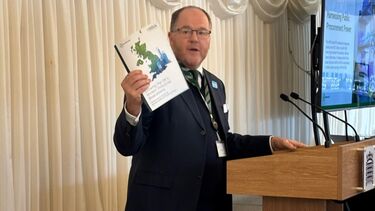
The urgency of this work is reinforced by recent interventions such as the House of Lords report Bleeding to death: the science and technology growth emergency, and the European Commission’s new Strategic Framework for a Competitive and Sustainable EU Bioeconomy. Both highlight the global race to develop sustainable materials and the economic risks of inaction.
The result of more than a year of research and consultation, the white paper identifies several barriers currently slowing the UK’s progress, including regulatory and fiscal structures that favour fossil-based materials. It calls for coherent policy, fair taxation and consistent, science-based standards to support the growth of bio-based and biodegradable alternatives. The paper also uses evidence from Professor Gavins’ corpus-linguistic and cognitive-linguistic research to highlight the need for a shared and clearly defined lexicon around terms such as “bio-based”, “biodegradable” and “compostable”, noting that confusion in this area hampers policymaking and contributes to greenwashing.
Public procurement, particularly through the NHS, is identified as one of the strongest levers available to accelerate the sector. With its considerable purchasing power, the NHS has the potential to create early and reliable markets for sustainable materials, helping reduce emissions and waste while stimulating domestic manufacturing.
Dr Jen Vanderhoven, CEO of BBIA and Project Lead for BB-REG-NET, said:
“The modern industrial bioeconomy is one of the most exciting growth opportunities for the UK. Our report sets out that with coherent policy, fair taxation and science-based standards, the UK can become the world leader in bio-based chemicals and materials innovation and commercialisation. But this will only happen if we act now.”
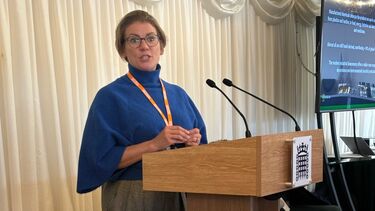
The Rt Hon Alistair Carmichael MP, Chair of the Environment, Food and Rural Affairs Committee and author of the report’s foreword, added:
“The transition to a circular, resource-efficient economy is one of the great industrial and economic opportunities of our generation. The modern industrial bioeconomy offers huge potential for the UK, providing jobs and economic growth across a wide range of market and industry sectors.”

The report follows the UK Government’s signing of the Biofuture Platform Declaration on Sustainable Chemicals and Materials at COP30 and will inform the forthcoming Circular Economy Growth Plan, expected in early 2026. As the UK seeks to revitalise its industrial base and lead in clean growth, the modern industrial bioeconomy represents a major opportunity hiding in plain sight. With aligned policy, fair regulation and coordinated national ambition, the UK can turn research excellence into industrial strength, create high-value green jobs and accelerate the transition away from fossil-based materials.