
Rethinking practical teaching
The Central Teaching Laboratories will do more than provide new laboratory space. They will support a new approach to practical science, health and related teaching at Sheffield.

Practical teaching has changed significantly since many of our existing laboratories were built. Students now need spaces that support larger and more varied cohorts, collaborative learning, digital tools, shared equipment and stronger links between practical work, data analysis and taught content.
The new building will bring together teaching that is currently delivered across a number of older and more fragmented spaces. This will help create a more consistent experience for students and give academic and technical teams more flexible spaces to plan, prepare and deliver practical sessions.
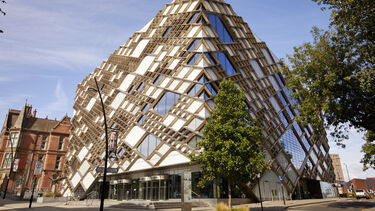
The approach builds on examples from elsewhere in the sector, including large, flexible “superlab” models in London and Sydney, as well as what we have learned from major teaching spaces here at Sheffield, such as the Diamond. The aim is not simply to create bigger laboratories, but to create spaces that can adapt to different subjects, different class sizes and different ways of teaching over time.
Practical teaching in the 21st Century
Practical teaching remains essential to science, health and related subjects. Students need to develop hands-on skills, learn how to use specialist equipment, work safely, collaborate with others and apply theory in real-world settings.
However, the way practical teaching is delivered has evolved. Modern laboratory teaching increasingly involves team-based work, digital tools, live demonstrations, shared datasets, simulation, analysis and discussion, as well as traditional hands-on experimentation.
Many of our current teaching laboratories were designed for a different model of teaching. They continue to support high-quality education, but they are often constrained by layout, building services, equipment, storage, access and location. This can make it harder to adapt sessions, share equipment or provide a consistent experience across different subjects and cohorts.
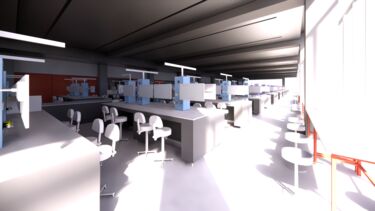
A more flexible model
The new teaching laboratories will provide flexible spaces that can support different types of practical teaching. This could include larger practical classes, smaller group activities, demonstrations, data analysis, collaborative work and sessions that combine practical activity with discussion and reflection.
Bringing spaces together in one facility will also make it easier to plan teaching across the week. Instead of specialist spaces sitting unused for parts of the timetable, the new building is being designed so laboratories, equipment and technical support can be used more consistently and intensively.
This is an important part of the wider Future Campus approach: creating spaces that work harder, are easier to use and can adapt as teaching needs change.
Learning from elsewhere
The project has looked at examples of large, flexible teaching laboratories elsewhere in the sector. These include London Metropolitan University’s superlab model and the University of Technology Sydney’s Science Super Lab, which was modelled on London Met’s approach and adapted for its own faculty needs.
These examples show how a shared laboratory environment can support multiple practical sessions, improve access to specialist equipment and create a more consistent student experience. They also show that flexibility is key: the most successful spaces are not fixed around one subject or one teaching method, but can be adapted for different activities, technologies and learning styles.
The Central Teaching Laboratories will take learning from these examples and apply it to Sheffield’s own teaching needs, curriculum, estate and student experience.
Building on what works at Sheffield
We have also learned from major teaching spaces already on our campus.
Buildings such as the Diamond, the Heartspace and the Wave have shown the value of investing in high-quality teaching environments that bring students, staff and technical support together in visible, well-used locations. Consultations as part of our Future Campus plan told us that staff and students value modern, flexible and well-equipped spaces, but also that future teaching spaces need to be adaptable, inclusive and easy to use.
The new teaching laboratories build on that principle. They will provide a clear hub for practical teaching, while also learning from the strengths and limitations of existing buildings. The focus is on creating flexible, shared spaces that support different teaching approaches, rather than spaces tied too closely to one discipline or one way of teaching.
Supporting academic and technical teams
The new facility will also support the academic and technical teams who make practical teaching possible.
By bringing practical teaching into one purpose-designed building, the project will create better opportunities for teams to share equipment, coordinate preparation, support different sessions and work across subject areas. This will make it easier to develop consistent approaches to practical teaching, while still recognising the specialist needs of different disciplines.
The building is being developed with input from academic, technical, timetabling, IT and estates colleagues, so that the spaces support not only what is taught, but how teaching is planned, prepared and delivered.
A better experience for students
For students, the aim is to create a practical teaching experience that feels clearer, more consistent and better connected.
The new teaching laboratories will help students move between practical work, group discussion and analysis more easily. They will support access to modern equipment, clearer teaching environments and spaces designed around current and future learning needs.
This matters because practical teaching is often where students build confidence in their discipline. It is where they test ideas, learn from mistakes, work with others and develop the skills they will use in future study, research, clinical practice, industry or employment.
Designed to adapt
The building is being designed for the future, not only for the programmes we teach today.
Science, health and related subjects will continue to change. New technologies, new methods, new forms of assessment and new expectations from students and employers will shape how practical teaching develops over time.
The Central Teaching Laboratories will give the University flexible spaces that can adapt to those changes, supporting practical teaching at Sheffield for decades to come.