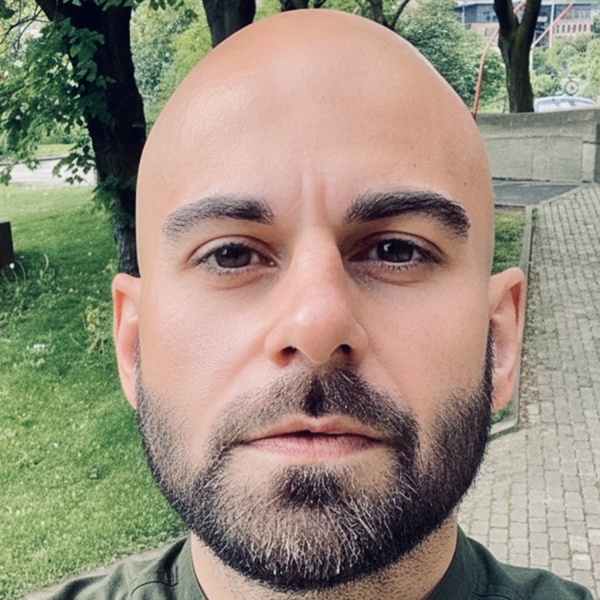
Dr Pasquale Balzan
BSc (Hons), MSc, PhD
School of Allied Health Professions, Pharmacy, Nursing and Midwifery
SLT Lecturer

Full contact details
School of Allied Health Professions, Pharmacy, Nursing and Midwifery
Room 127
362 Mushroom Lane
Sheffield
S10 2TS
- Profile
-
I am a University Lecturer in the School of Allied Health Professions, Pharmacy, Nursing & Midwifery at the University of Sheffield. Prior to joining the school, I worked as a Senior Speech and Language Therapy Practitioner in Malta within the public health sector for 10 years, primarily in stroke and progressive neurological conditions, including Parkinson’s and motor neuron disease.
In 2018, I was awarded a Doctoral Academy Scholarship from the Faculty of Medicine, Dentistry and Health at the University of Sheffield. My PhD, completed in 2024, focused on laying early groundwork for investigating the use of neuromuscular electrical stimulation (NMES) as an adjunct therapy approach in the treatment of acquired dysarthria. My areas of teaching include acquired communication difficulties, primarily motor speech disorders, and evidence-based practice. I’m also a co-lead of the Dysarthria Clinic at the University’s Speech and Language Therapy Clinic.
- Qualifications
-
PhD in Human Communication Sciences – University of Sheffield (2024)
MSc in Acquired Communication Disorders (with Distinction) – University of Sheffield
BSc (Hons) in Communication Therapy (First Class) – University of Malta
- Research interests
-
My research interests centre on dysarthria assessment, with particular emphasis on speech intelligibility, as well as post-stroke dysarthria rehabilitation using non-invasive neuromodulation approaches (e.g. NMES). I am also interested in the integration of technology-enabled interventions for speech and language rehabilitation in adults with stable and progressive neurological conditions.
- Publications
-
Journal articles
- Mapping the development process of transcutaneous neuromuscular electrical stimulation devices for neurorehabilitation, the associated barriers and facilitators, and its applicability to acquired dysarthria: a qualitative study of manufacturers’ perspectives. Disability and Rehabilitation: Assistive Technology, 19(5), 1923-1934. View this article in WRRO


- Speech and language therapists' management practices, perceived effectiveness of current treatments and interest in neuromuscular electrical stimulation for acquired dysarthria rehabilitation: an international perspective. International Journal of Language & Communication Disorders, 59(2), 744-761. View this article in WRRO
- Non-invasive brain stimulation for treating neurogenic dysarthria: a systematic review. Annals of Physical and Rehabilitation Medicine, 65(5). View this article in WRRO
- Assessment of intelligibility in dysarthria: development of a Maltese word and phrase list. Clinical Linguistics & Phonetics, 33(10-11), 965-977. View this article in WRRO
- Mapping the development process of transcutaneous neuromuscular electrical stimulation devices for neurorehabilitation, the associated barriers and facilitators, and its applicability to acquired dysarthria: a qualitative study of manufacturers’ perspectives. Disability and Rehabilitation: Assistive Technology, 19(5), 1923-1934. View this article in WRRO