
Civil Engineering BEng
If you're not sure which area of civil engineering you want to go into, this broad-based course is a good choice. The first and second years introduce the core disciplines of structures, water, geotechnics and environmental issues. In the third year, you'll work as part of a team working on a realistic engineering design project.
-
A Levels
AAA -
UCAS code
H202 -
Duration
3 years -
Start date
September -
Attendance
Full-time
- Accredited
- Course fee
- Funding available
- Optional placement year
- Study abroad option
Explore this course:
Course description
Why study this course?
Tailor your degree
By studying at BEng level, you have the option to graduate, continue your education with an MSc, or (subject to performance) change to an MEng programme after year two.
Project-based learning
Our series of design projects allow you to integrate technical knowledge with more practical design considerations. You can develop capability in tackling realistic projects and address the complex challenges in engineering a low carbon future.
Learning from experts
You will be taught by specialist researchers and a team of teaching specialists with a wealth of industry experience who support design-based learning.
Specialist teaching facilities
'Learning by doing' is the reason The Diamond was built. Dedicated to engineering, this is where you’ll apply the theory you learn in lectures – consolidating your understanding alongside students from other disciplines, and beyond the bounds of the curriculum.
Professional skills development
Supported by a team of staff with industry experience, our programmes empower and support you to take responsibility for your own development and develop skills and attributes that prepare you for a future as a professional civil or structural engineer.

With an ethos of sustainability guiding every decision, this course emphasises both strong technical skills, and the importance of engineering for the good of society.
Taught by research-active academics and teachers with extensive industrial experience, the Civil Engineering BEng at Sheffield is the right choice if you’re passionate about the subject, but not sure which direction your career will take.
Civil and structural engineering is at the forefront of improving the way we live. Whether it's providing the facilities that keep our day-to-day lives running smoothly - from roads and railways to clean water supplies - or working to meet the ever-changing needs of our society in the areas of sustainability, renewable energy and climate change - by designing innovative buildings, you'll be helping to create and protect the world we live in.
The course integrates a strong focus on civil engineering analysis and design with the latest research on sustainable development - equipping you to tackle challenges in the built environment and design innovative solutions that minimise impact on the environment.
In the first two years, you will study the core subjects needed to be a successful civil engineer: structural engineering, materials, fluid mechanics, and geotechnics.
Design projects will see you take on complex real-world problems - applying your engineering knowledge, while developing the transferable skills like communication, team working and project management, sought after by employers.
You’ll have plenty of opportunities to apply your theoretical knowledge in project work - taking on civil engineering challenges, including climate-resilient infrastructure.
During your final year, you’ll explore aspects of sustainable building and infrastructure design. In the final semester, this all comes together in your individual project.
By the time you graduate, you will have developed important skills and attributes so that you are well prepared for the next stage in your career.
Accreditation
This degree is accredited by the Joint Board of Moderators (JBM) comprising the Institution of Civil Engineers, Institution of Structural Engineers, Institute of Highway Engineers, the Chartered Institution of Highways and Transportation and the Permanent Way Institution on behalf of the Engineering Council for the purposes of partially meeting the academic requirement for registration as a Chartered Engineer (CEng). Candidates must hold a masters or doctorate accredited as further learning for CEng registration.
Visit the JBM website for further information and details of Further Learning programmes for CEng:


Placements and study abroad
Modules
A selection of modules are available each year - some examples are below. There may be changes before you begin your studies. As you progress through your course, we’ll confirm additional details for the core and optional modules available to you.
Choose a year to see modules for a level of study:
UCAS code: H202
Years: 2026, 2027
Core modules:
Core modules:
- Structural Mechanics
-
This module is delivered in both the Autumn and Spring Semesters. Teaching in the first semester is designed to provide a basis of knowledge and understanding of elastic structural analysis and will be applied to two key structural forms - trusses and beams. The focus of the second semester is on the analysis of stress, strain and elastic deformation of beams.
20 credits - Mathematics and Python Programming
-
This module aims to reinforce and extend students' previous knowledge of mathematics studied before university, and introduces the use of computer programming to solve engineering and mathematical problems.
20 credits
Mathematics is further taught to develop new basic mathematical techniques needed to support the engineering subjects taken at levels 1 and 2. It also provides a foundation for the level 2 mathematics courses in the department. Combined with the mathematics teaching, this module teaches the opensource programming language, Python, which can be used to efficiently solve a variety of practical scientific and numerical problems.
A combination of formal lecture content, tutorials and assisted computer lab sessions, help the students learn and apply mathematical and programming theory. Practice problems are presented showing the links between mathematics and programming learning, to show how the skills learnt can solve practical problems of relevance to the students. - Hydraulic Principles and Flow in Pipes
-
This module aims to build a common understanding of the principles of fluid mechanics, progressing from statics such as pressure and force on objects, through properties and laws of hydro-dynamics including continuity, energy and momentum principles of fluid in motion, leading to the ability to understand and analyse fluid flows in pipes including simple networks and the operation of pumps. Overall, you will gain the essential understanding of fluid mechanics and application to pipe flows. This will be achieved through a series of lectures, building to practical real world examples, laboratory classes and tutorial sheets. Theory is reinforced through practical experimentation and problem solving.
20 credits - Strength of Materials and Structures
-
This module focuses on materials for structural applications and covers all the main classes of materials (ceramics, metals, polymers, natural materials, and composites), describing the properties that they show, the root cause of their properties, the structure, and how we can use engineering processes to get the properties we want. The course will also introduce some ways to select the best material for a given purpose. The module also investigates how decisions made at the element and structural level alter the demands that are placed on the constituent material a structure is subjected to. For example, how the shape of an element's cross-section can change the failure mode from crushing (strength-governed) to buckling (stiffness-governed).
20 credits - Design Project 1: Make and Break
-
Get ready to shape the future and build a better world from day one! This isn't just theory; it's where you'll dive straight into solving real-life problems and see your designs come to life with tangible results. This dynamic first-year module introduces the essential knowledge and skills for 21st-century engineers. Through hands-on, interactive exercises, you'll develop critical thinking and problem-solving abilities, applying your practical maths and physics skills to real-world applications. You'll explore concepts like systems thinking and risk management, and learn from case studies of iconic projects. We'll also spark your passion for sustainability, as you learn to design and construct safe and efficient structures. You will work on exciting design challenges, and start to develop your project management skills. The highlight is a group practical project where you'll design, construct, and destructively test a physical structure.
20 credits - Design Project 2: Sustainable Buildings
-
This module is where you'll move from initial concepts to designing complex infrastructure that addresses real-world needs and shapes the built environment.
20 credits
You'll begin with an intensive, interdisciplinary design project, to find a sustainable solution to an urgent societal problem. This immersive experience will rapidly advance your teamwork, detailed design, and communication skills.
Then, you'll dive into your main task: designing an entire building and its surrounding infrastructure. You'll synthesise your first-year engineering knowledge, informed by on-the-ground measurements, historical architectural precedents, and thorough site analysis. This is about creating holistic solutions that achieve a crucial balance of social, environmental, and economic needs.
You'll communicate your vision effectively using both hand sketching and computer-aided drawing in 2D and 3D. In this module you'll learn how to make a difference in communities and shape a better future for humanity and the planet.
In your second year, you’ll continue to build your technical knowledge and skills, which you’ll apply in context within design projects.
- Mathematics and Parametric Modelling
-
This module forms part of a coordinated set of second-level modules that build on your prior mathematical and programming knowledge, while introducing techniques relevant to modern engineering practice. It reinforces essential mathematical concepts and extends them into areas that support subsequent engineering modules, while also developing the fundamental principles underpinning state-of-the-art parametric and computational design. Through a combination of lectures, tutorials and computer laboratory sessions, you will deepen your understanding of mathematical theory and gain practical experience with parametric modelling and computational design.
20 credits - Soil Mechanics
-
This module is an introductory module to the use of soils in engineering practice. As soils are a naturally varying material, the creation of different soil types is first discussed, giving you a background in why soils differ. This then progresses into the engineering classification of soils. The module then focuses on applying a fundamental understanding of mechanics to geotechnical problem-solving, with an emphasis on fluid-soil and structure-soil interaction.
20 credits
The approach is designed to link soil mechanics theory (e.g. seepage, consolidation, shear strength, settlement) to practical application (e.g. deformation and failure of foundations and slopes) through the use of physical models, numerical models and case studies.
The module will encompass lectures, tutorials, group work, including laboratories, and directed and independent reading. - Structural Analysis and Design
-
This module focuses on detailed concepts of elastic and plastic structural analysis methods for statically determinate and indeterminate structures and covers fundamental principles and theoretical background of structural design concepts. Computational structural analysis is introduced as well as giving hands-on experience with laboratory sessions.
20 credits
The module will also provide a comprehensive introduction to the design of key structural elements. You will transition from basic structural analysis to the practical application of design codes. Emphasis is placed on our responsibility to ensure structural safety through rigorous calculation and minimize environmental impact through sustainable material specification and simple structural optimisation. - River Engineering and Flooding
-
The effective management of open channel/river flows is critical for societal wellbeing and risk management. In this module you will learn physics based engineering methodologies for the characterisation of open channel flows, river systems and simple hydraulic structures as well as applied hydrological techniques to assess flood risk. You will undertake laboratory experiments to characterise and measure complex flows with spatially varying characteristics. The module will also include the use of computational flood modelling techniques to characterise inundation risk at a real world case study site.
20 credits - Design Project 3: Sustainable Infrastructure
-
This second-year design module will complement your studies in water and geotechnical engineering. You will start to consider infrastructure on a large scale, assessing social, environmental and economic implications and understanding how civil engineers can shape the world for the long-term benefit of humanity.
20 credits
You will be challenged to complete an options study for a major new water infrastructure project, using geographic information system (GIS) techniques to assess different routes. You will use a systems thinking approach to consider long-term consequences, and apply your new engineering expertise to demonstrate technical viability.
Through practical hands-on experiments, and field trips, you will be introduced to key concepts of geotechnical engineering.
For the culmination of the module you will focus on a discrete element of the larger scheme, applying your technical skills to design a civil engineering structure, incorporating a viable geotechnical solution. - Design Project 4: Application of Structural Design
-
In this immersive, hands-on module you will deepen your understanding of structural engineering and put the theory into practice by designing, and then constructing, your own structural systems.
20 credits
In the first part of the module you will develop a rigorous understanding of conventional structural materials such as steel, timber and reinforced concrete, tackling the real-world challenges of buildability through a series of practical construction exercises.
You will then start to push the limits of typical construction, exploring highly optimised geometries and innovative structural forms, and learning how to work with low-carbon alternatives to traditional structural materials.
Working as part of a collaborative team, you will design your own elegant and efficient structure, culminating in putting your designs to the test through the construction and load-testing of a scale model.
By the end of this module you will understand current practice, be able to design better structures, and advocate for positive change.
In your third year, you’ll enhance and refine your skills in advanced structural analysis and design, as well as consolidate your knowledge of key topics like environmental engineering and infrastructure engineering, allowing you to complete a substantial research project.
- Advanced Buildings and Bridges
-
In this module you'll build on the structural analysis and design skills you've developed in your first two years and apply these to the design of bridges and building structures, within the context of the climate emergency.
20 credits
Bridges provide vital links in our transport networks. They are among the largest structures we build, typically crossing challenging terrain and often have long lifespans which may include significant maintenance or alterations.
You'll be introduced to the key aspects of bridge engineering, including both design of new structures and management of existing assets. The focus of the module will be on areas where design or analysis considerations are different or in addition to those considered in design of other structure types e.g. buildings.
Buildings are ubiquitous, engineers need to be able to design structures that are appropriate, safe and sustainable is a key skill structural engineers need to You'll develop your building design skills through a case study of real building, looking at how the structural solution develops from identifying the site and building constraints, through concept design to detailed design, before applying these to your own design in the group coursework. - Design Project 5: Management of Resilient Infrastructure
-
Build on your technical expertise as you confront the professional realities of designing, constructing, and managing large-scale infrastructure. You will address long-term maintenance, economic viability, and the strategic decisions that define modern infrastructure development and management.
20 credits
You will participate in two interactive projects. First, you'll design and plan the construction sequence for a major piece of infrastructure, testing your strategy through hands-on workshops. You will then expand your horizon to grapple with the entire project lifecycle, from initial feasibility through adaptation and eventual decommissioning, developing a robust asset management strategy that ensures safety, reliability and sustainability for the long term.
By integrating technical and ethical insights, you will learn to balance commercial, social, and environmental needs. You'll develop the strategic insight and decision-making skills required to manage high-value infrastructure in a rapidly changing world. - Urban Water Systems
-
The module introduces students to water quality assessment and sustainable water management in engineering practice, with a focus on the design and delivery of drinking water supply, urban drainage systems and wastewater treatment services. It addresses public health issues and the challenges posed by climate change. Students will develop practical skills in water quality measurement, critical interpretation of data, and the design of water infrastructure systems. The module also explores Sustainable Development Goal 6 (Clean Water and Sanitation), including the challenges of providing essential water services in the UK and in developing countries. Sustainable water engineering approaches, such as water reuse, nature-based solutions, and stormwater harvesting, are also considered.
20 credits - Investigative Project
-
This module provides an opportunity to undertake a substantial, individual research project which requires the integration and application of knowledge and skills from across the degree programme, to tackle a complex, open-ended problem. You will work under the guidance of an academic supervisor to define, plan, and execute a project, which may be theoretical, computational, experimental, or design-based in nature. The module emphasises independent learning, critical thinking, problem formulation, project management, and professional engineering practice. You are expected to engage with relevant academic literature, select and apply an appropriate methodology, interpret results critically, and communicate your findings effectively in written and oral forms.
40 credits - Geotechnical Engineering
-
This module builds directly on the introductory soil mechanics module and shows how established concepts are developed into practical geotechnical design methods. The focus is on translating mechanical understanding into structured calculations, and on how idealisations and safety concepts are introduced to deal with uncertainty in ground conditions, groundwater behaviour, and soil response at both Ultimate Limit State and Serviceability Limit State.
20 credits
You will develop and apply design calculations for shallow and deep foundations, retaining structures, and reinforced soil systems, with reference to Eurocode 7. Settlement calculations are explicitly addressed, building on consolidation theory introduced previously. The mechanical basis of the module draws on elasticity and plasticity, applied in a form appropriate to soil behaviour and geotechnical problems. Teaching is delivered through lectures, tutorials, laboratories, software based exercises, and a design project, supported by physical models, numerical analysis, case studies, and directed and independent study.
The content of our courses is reviewed annually to make sure it's up-to-date and relevant. Individual modules are occasionally updated or withdrawn. This is in response to discoveries through our world-leading research; funding changes; professional accreditation requirements; student or employer feedback; outcomes of reviews; and variations in staff or student numbers. In the event of any change we will inform students and take reasonable steps to minimise disruption.
Learning and assessment
Learning
We take a practical 'learn by doing' approach which puts engineering practice at its core. You will work in state-of-the-art facilities using the same equipment, computer modelling and simulation software found in the workplace.
You will learn to think like an engineer by solving real industry challenges. Your learning will include:
- lectures and tutorials: to build your core knowledge
- practical lab sessions and design classes: hands-on activities in our state-of-the-art facilities to apply your knowledge to real engineering problems
- computer modelling and simulation: using industry-standard software
- project work: where you will learn important group work skills and have the opportunity to work with industry partners to solve real-world problems
- an individual investigative project: where you organise and conduct your own research, showcasing your ability to work independently.
As well as your formal timetabled sessions, you will be expected to manage your own time and undertake independent study. To support this, you will have 24/7 access to our online library service and various study spaces designed for both individual work and group collaboration.
Assessment
We use a wide range of assessments designed to match the specific skills you are developing in each module, ensuring they mirror the tasks that you’ll face in your engineering career. Depending upon your module choices, you can expect a mix of:
- coursework: including reports, presentations, posters and a wide range of other formats used by engineers to communicate information
- practical work: assessing your hands-on capability to meet complex engineering challenges
- exams: written examinations and online assessments.
This variety ensures you’ll graduate with a range of both engineering and professional skills, ready to present ideas, write professional reports and solve industrial problems - exactly what you’ll need in your future career.
Entry requirements
With Access Sheffield, you could qualify for additional consideration or a contextual offer - find out if you're eligible.
The A Level entry requirements for this course are:
AAA
including Maths
- A Levels + a fourth Level 3 qualification
- AAB, including A in Maths + A in the EPQ; AAB, including Maths + A in AS or B in A Level Further Maths
- International Baccalaureate
- 36, with 6 in HL Maths; 34, with 6 in HL Maths, and A in the Extended Essay
- BTEC Extended Diploma
- DDD in Engineering + A in A Level Maths
- BTEC Diploma
- DD in Engineering + A in A Level Maths
- T Level
- Not accepted
- Scottish Highers + Advanced Higher/s
- AAAAB + A in Maths
- Welsh Baccalaureate + 2 A Levels
- A + AA, including Maths
- Access to HE Diploma
- Award of the Access to HE Diploma in a relevant subject, with 45 credits at Level 3, including 39 at Distinction (to include Maths and Science or Engineering units) and 6 at Merit + A in A Level Maths
-
GCSE Physics (or Combined Science) grade 6/B
-
Acceptable Maths subjects include Maths, Maths with Mechanics, Further Maths or Applied Maths, but not Statistics or Use of Maths. Pure Maths is only acceptable when combined with Physics
The A Level entry requirements for this course are:
AAB
including Maths
- A Levels + a fourth Level 3 qualification
- AAB, including A in Maths + A in the EPQ; AAB, including Maths + A in AS or B in A Level Further Maths
- International Baccalaureate
- 34, with 5 in HL Maths
- BTEC Extended Diploma
- DDD in Engineering + B in A Level Maths
- BTEC Diploma
- DD in Engineering + B in A Level Maths
- T Level
- Not accepted
- Scottish Highers + Advanced Higher/s
- AAABB + B in Maths
- Welsh Baccalaureate + 2 A Levels
- B + AA, including Maths
- Access to HE Diploma
- Award of the Access to HE Diploma in a relevant subject, with 45 credits at Level 3, including 36 at Distinction (to include Maths and Science or Engineering units) and 9 at Merit + A in A Level Maths
-
GCSE Physics (or Combined Science) grade 6/B
-
Acceptable Maths subjects include Maths, Maths with Mechanics, Further Maths or Applied Maths, but not Statistics or Use of Maths. Pure Maths is only acceptable when combined with Physics
You must demonstrate that your English is good enough for you to successfully complete your course. For this course we require: GCSE English Language at grade 4/C; IELTS grade of 6.5 with a minimum of 6.0 in each component; or an alternative acceptable English language qualification
Equivalent English language qualifications
Visa and immigration requirements
Other qualifications | UK and EU/international
If you have any questions about entry requirements, please contact the school.
Graduate careers
School of Mechanical, Aerospace and Civil Engineering
Our graduates work all over the world, from the UK to Australia and the USA. Recent graduates have gone on to work for AECOM, Arup, Atkins, Buro Happold, Eastwood & Partners, and Kier.
You'll be able to apply your knowledge and skills to fields as diverse as the built environment, sustainability and improving the environment.
In addition, architectural engineering graduates might go into a broad range of engineering areas ranging from building services to mechanical, electrical or acoustic engineering.
Or as a structural engineer, you'll be helping to shape the world around us. Structural engineers design and construct multi-storey buildings, bridges, sports stadiums, tunnels, airports and schools.

Coming to Sheffield has to be one of the best decisions I’ve ever made – I’ve loved my time here and will miss it in the future
Undergraduate student,
MEng Civil Engineering
School of Mechanical, Aerospace and Civil Engineering
Department statistics
5th in the UK for civil engineering
The Guardian University Guide 2027
Top 5 in the Russell Group for civil engineering
National Student Survey 2026
UK top 10 for civil engineering
The Times and The Sunday Times Good University Guide 2026
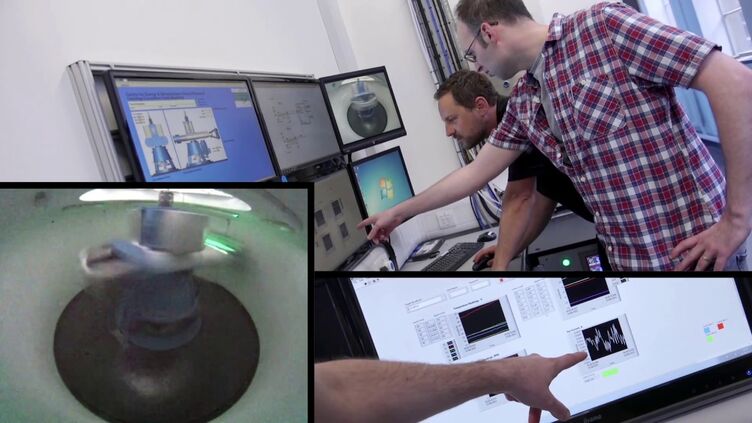
As part of a world top-100 university and a leader in excellent student experience, our school brings together expertise from across the mechanical, aerospace and civil engineering disciplines to help you create a better future. Whether you want to design sustainable transport, build resilient cities, or pioneer new technologies, we provide innovative teaching and practical experience to help you get there. And we inspire and empower our researchers and students to solve the challenges of today and tomorrow.
At Sheffield, we believe in learning by doing and our courses are designed to give you both the academic knowledge and practical experience that employers look for. You’ll take part in projects where you’ll connect engineering theory to practice, including our interdisciplinary Global Engineering Challenge and Engineering You’re Hired project weeks where you get to solve real-world problems alongside other student engineers. There’s also the opportunity to join our student-led engineering teams, building everything from single-seat racing cars, rockets and miniature locomotives, to sustainable wind turbines and human-powered aircraft.
From day one, you’ll be immersed in a research-led curriculum, taught by academics who are experts in their fields, with a wealth of experience, many involved in the latest engineering research. You'll also have the opportunity to work with our industrial partners, giving you experience that will support your employability. You’ll have an academic personal tutor who will support and guide your progress throughout your studies.
You'll be taught in The Diamond, one of the best teaching spaces in the UK.
Facilities
Our students connect engineering theory to practice in The Diamond, developing the skills, knowledge and experience that global employers demand.
The Diamond features some of the best engineering teaching spaces in the UK. You’ll be taught in specialist state-of-the-art teaching and dedicated lab facilities such as our structures and dynamics lab, fluids engineering lab, and our thermodynamics and mechanics lab. This means you'll directly apply what you’ve learnt in lectures to lab sessions helping you to put theory into practice.
Alongside teaching and study spaces, the Diamond is also home to iForge – the UK's first student-led makerspace.
University rankings
A world top-100 university
QS World University Rankings 2027 (82nd)
Number one in the Russell Group for student voice
National Student Survey 2026
92 per cent of our research is rated as world-leading or internationally excellent
Research Excellence Framework 2021
University of the Year for Student Experience
The Times and The Sunday Times Good University Guide 2026
Number one Students' Union in the UK
Whatuni Student Choice Awards 2024, 2023, 2022, 2020, 2019, 2018, 2017
Number one for Students' Union
StudentCrowd 2025 University Awards
7th best University for Work Experience
Higherin 2026-27
Student profiles


Fees and funding
Fees
Additional costs
The annual fee for your undergraduate course includes a number of items in addition to your tuition. If an item or activity is classed as a compulsory element for your course, it will normally be included in your tuition fee. There are also other costs which you may need to consider. These costs may increase due to price increases outside of the University’s control, if you defer entry or if you choose to change course.
Examples of what’s included and excluded in undergraduate fees
Funding your study
Depending on your circumstances, you may qualify for a bursary, scholarship or loan to help fund your study and enhance your learning experience.
Use our Student Funding Calculator to work out what you’re eligible for.
Visit
University open days
We host five open days each year, usually in June, July, September, October and November. You can talk to staff and students, tour the campus and see inside the accommodation.
Online events
Join our online information sessions to find out more about different aspects of University life.
Subject tasters
If you’re considering your post-16 options, our interactive subject tasters are for you. There are a wide range of subjects to choose from and you can attend sessions online or on campus.
Offer holder days
If you've received an offer to study with us, we'll invite you to one of our offer holder days, which take place between February and April. These open days have a strong department focus and give you the chance to really explore student life here, even if you've visited us before.
Campus tours
Our weekly guided tours show you what Sheffield has to offer - both on campus and beyond. You can extend your visit with tours of our city, accommodation or sport facilities.
Apply
The awarding body for this course is the University of Sheffield.
Recognition of professional qualifications: from 1 January 2021, in order to have any UK professional qualifications recognised for work in an EU country across a number of regulated and other professions you need to apply to the host country for recognition. Read information from the UK government and the EU Regulated Professions Database.
Any supervisors and research areas listed are indicative and may change before the start of the course.