
Civil and Structural Engineering with a Foundation Year MEng
In civil engineering you'll study structures, water, geotechnics and environmental issues. The foundation year will give you the essential skills and knowledge you’ll need to commence your MEng in Civil and Structural Engineering, giving you a strong start to your degree.
-
A Levels
BBB; BBC -
UCAS code
H201 -
Duration
5 years -
Start date
September
- Course fee
- Funding available
- FY Foundation year
Explore this course:
Course description
Why study this course?
Project-based learning
Our series of design projects allow you to integrate technical knowledge with more practical design considerations. You can develop capability in tackling realistic projects and address the complex challenges in engineering a low carbon future.
Semester-long integrated design project
Explore both concept and detailed design for a range of real-world built-environment problems.
Professional skills development
Supported by a team of staff with industry experience, our programmes empower and support you to take responsibility for your own development and develop skills and attributes that prepare you for a future as a professional civil or structural engineer.
Personalised, tailored education
As a large school with many academics, we offer a diverse selection of optional modules that cover the world-leading research we undertake, empowering you to shape your degree by selecting subjects aligned with your interests.
Specialist teaching facilities
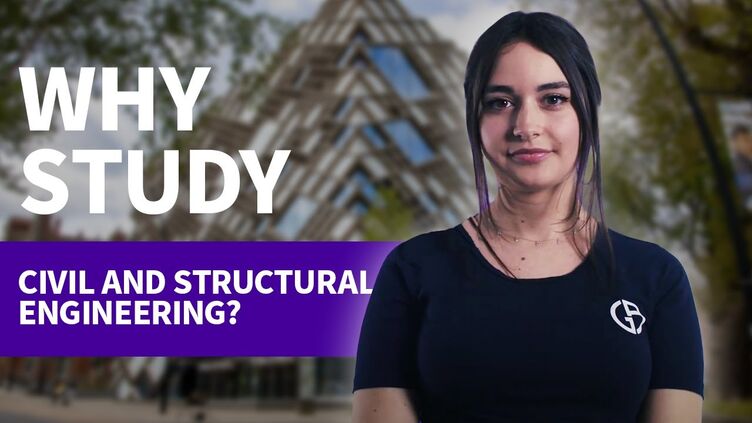
'Learning by doing' is the reason The Diamond was built. Dedicated to engineering, this is where you’ll apply the theory you learn in lectures – consolidating your understanding alongside students from other disciplines, and beyond the bounds of the curriculum.

Give yourself the best possible grounding in the principles behind civil and structural engineering, leaving your options open for a range of careers in the industry.
If you don't have the usual scientific or mathematical background for an engineering degree, a foundation year is for you. After successfully completing the foundation year, you can start the MEng degree.
Research-active academics and teachers with extensive industrial experience give you a broad-base understanding in this civil and structural engineering degree - making it perfect if you're not sure which area of civil engineering you want to go into.
The course integrates a strong focus on civil engineering analysis and design with the latest research on sustainable development - equipping you to tackle challenges in the built environment and design innovative solutions that minimise impact on the environment.
Years one and two will see you concentrate on the core disciplines of structural engineering, water infrastructure engineering, fluid mechanics, and geotechnical mechanics, from both an analysis and design perspective.
The second half of the course follows more specialised and advanced structural engineering areas such as bridge engineering, multi-storey building design, sustainability, geotechnics and your independent research project.
During your third year, you'll spend a full semester doing the integrated design project. You’ll unleash your creativity on a grand scale: devising plans for an entire urban regeneration project based on a real site in Sheffield. You'll investigate new design methods and construction materials while developing detailed designs such as elegant bridges, sustainable and environmentally sensitive multi-storey buildings, or state-of-the-art sports venues.
The course challenges you to solve increasingly complex problems - building on your core knowledge with specialist modules in the final year so that you'll graduate as a skilled, competent and well-rounded engineer.
Modules
After successfully completing the foundation year modules, you can start your main degree.
UCAS code: H201
Years: 2027
Core modules:
Core modules:
- Introduction to Engineering
-
This module will introduce the application of engineering principles to foundation year students and give the student an appreciation of the breadth of engineering activities across the faculty and identify to students what knowledge areas and skills are needed in order to contribute to their development and be successful. It will also help create links with departments and draw on the other modules that students will take in the foundation year especially maths and physics.
40 credits - Further Foundation Mathematics
-
The syllabus for MPS001 covers important material which appears on the A level maths and further mathematics A Level curriculum. The module is for students who are taking MPS002 and need a deeper background in mathematics for their degree course. The module covers advanced principles of algebra, geometry and calculus. Following the introduction of new material, students have the opportunity of extensive problem solving, both in the problem classes with tutors and in their own time.
10 credits
Optional modules. You must choose one of the following:
Optional modules. You must choose one of the following:
- Foundations of Physics with Computing
-
Students will study forces, motion and energy in 1 and 2 dimensions, in linear and circular motion. This will be applied in a programming context to develop logic and arithmetic operations, understanding of the stages of software development, memory allocation, data structures and testing. Students will then study electricity and magnetism, voltage, current and simple devices applied to the programming of a microcontroller, developing understanding of power supplies, digital and analogue I/O, and simple devices such as switches and LEDs. An understanding of physical limitations such as noise, processing speed and memory.
30 credits - Foundations of Physics
-
This module provides students with the foundations of Physics required to enter the first year of a regular Physics or other scientific degree course, or an engineering course where detailed knowledge of Physics is needed. Understanding will be developed in 3 lectures per week over a full academic year. Problem solving and example classes are integrated into lectures. The following topics will be covered: Dynamics/Mechanics; Electricity and Magnetism; Thermal Physics; Oscillations, Waves, and Optics; Properties of Matter; Atomic and Nuclear Physics. The greatest advances in technology have taken place in the last hundred years. In 1897 few would have imagined that the probing of materials at the atomic level would reveal so much. These early discoveries of atomic constituents and their structure would pave the way for semi-conductor electronics, develop key concepts in physical laws, and offer a replacement energy source for fossil fuels in the form of nuclear power. This course summarises key discoveries in early particle physics and combines historical background with the detailed physics understanding needed to fully appreciate the subject. These full modules aim to provide a sound foundation in Physics in preparation for Level 1 Physics modules. It introduces (i) Properties of Matter, (ii) Oscillations, waves and optics and (iii) Atomic and Nuclear Physics. (i) Properties of Matter discusses structural, mechanical and electrical properties in terms of simple models. (ii) treats vibration and waves introducing the concepts of wavelength, frequency and wave speed. (iii) discusses the physics of the atom, including historical aspects, the electron, the photo-electric effect, Bohr's atomic model, nuclear structure and radioactivity.
30 credits
Optional modules. You must choose one of the following:
Optional modules. You must choose one of the following:
- Core Foundation Mathematics
-
The syllabus for MPS002 covers the common core A Level curriculum. The unit is tailored for students who have been away from mathematics for a period of time, but who will have gained some A-Level or similar qualifications. The unit covers the basic principles of algebra, geometry and calculus. Following the introduction of new material in the lectures, students have the opportunity of extensive problem solving, both in the tutorial sessions with the lecturers and in their own time.
40 credits - Foundation Core and Enhanced Mathematics
-
This module builds on the common core curriculum from A level maths (which is a prerequisite). This unit covers enhanced comprehension of topics in pure maths, statistics, probability, and numerical methods. These topics are chosen to further prepare students for their undergraduate studies in the science and engineering faculties.
40 credits
After successfully completing the foundation year, you can start your MEng degree.
The content of our courses is reviewed annually to make sure it's up-to-date and relevant. Individual modules are occasionally updated or withdrawn. This is in response to discoveries through our world-leading research; funding changes; professional accreditation requirements; student or employer feedback; outcomes of reviews; and variations in staff or student numbers. In the event of any change we will inform students and take reasonable steps to minimise disruption.
Learning and assessment
Learning
We take a practical 'learn by doing' approach which puts engineering practice at its core. You will work in state-of-the-art facilities using the same equipment, computer modelling and simulation software found in the workplace.
You will learn to think like an engineer by solving real industry challenges. Your learning will include:
- lectures and tutorials: to build your core knowledge
- practical lab sessions and design classes: hands-on activities in our state-of-the-art facilities to apply your knowledge to real engineering problems
- computer modelling and simulation: using industry-standard software
- project work: where you will learn important group work skills and have the opportunity to work with industry partners to solve real-world problems
- an individual investigative project: where you organise and conduct your own research, showcasing your ability to work independently.
As well as your formal timetabled sessions, you will be expected to manage your own time and undertake independent study. To support this, you will have 24/7 access to our online library service and various study spaces designed for both individual work and group collaboration.
We've academic staff who are world-leaders in their respective fields and some have over 20 years' experience in industry. Our staff experience demonstrates how engineering fundamentals are applied in practice through project work that mimics real-life situations. We also bring in leading industry experts to enhance and support our teaching and advise on our curriculum.
Assessment
We use a wide range of assessments designed to match the specific skills you are developing in each module, ensuring they mirror the tasks that you’ll face in your engineering career. Depending upon your module choices, you can expect a mix of:
- coursework: including reports, presentations, posters and a wide range of other formats used by engineers to communicate information
- practical work: assessing your hands-on capability to meet complex engineering challenges
- exams: written examinations and online assessments.
This variety ensures you’ll graduate with a range of both engineering and professional skills, ready to present ideas, write professional reports and solve industrial problems - exactly what you’ll need in your future career.
Entry requirements
The A Level entry requirements for this course are:
BBB; BBC
BBB (any A Level); BBC including Maths and at least one of Physics, Chemistry or Biology
- International Baccalaureate
- 32; 31, with Maths and at least one of Physics, Chemistry or Biology at Higher Level 5 or Standard Level 7
- BTEC Extended Diploma
- DDD in Engineering or Applied Science (including Biomedical Science, Analytical & Forensic Science and Physical Science streams) + GCSE Science grade 6/B and Maths grade 7/A
- BTEC Diploma
- DDD in Engineering, Applied Science (including Biomedical Science, Analytical & Forensic Science and Physical Science streams) or Construction and the Built Environment + GCSE Science grade 6/B and Maths grade 7/A
- T Level
- Distinction in the relevant T Level, including grade B in the core component + GCSE Science grade 6/B and Maths grade 7/A
- Scottish Highers
- AABBB (any subjects); ABBBB, including Maths and at least one of Physics, Chemistry or Biology
- Welsh Baccalaureate + 2 A Levels
- B + BB (any A Level subjects); B + BC in Maths and either Physics, Chemistry or Biology
- Access to HE Diploma
- Award of the Access to HE Diploma in a relevant subject, with 45 credits at Level 3, including 24 at Distinction (to include 12 Maths units) and 21 at Merit + GCSE Maths grade 7/A
-
If you are studying both Maths and at least one of Physics, Chemistry or Biology at A Level (or equivalent), there are no additional GCSE requirements. If studying any other subject combination, we require GCSE Science grade 6/B (or 65 in GCSE Double Award Science) and Maths grade 7/A
-
Relevant T Level subjects include: Design, Surveying & Planning for Construction; Building Services Engineering for Construction; Maintenance, Installation & Repair for Engineering & Manufacturing; Engineering, Manufacturing, Processing & Control; or Design & Development for Engineering & Manufacturing
You must demonstrate that your English is good enough for you to successfully complete your course. For this course we require: GCSE English Language at grade 4/C; IELTS grade of 6.5 with a minimum of 6.0 in each component; or an alternative acceptable English language qualification
Equivalent English language qualifications
Visa and immigration requirements
Other qualifications | UK and EU/international
If you have any questions about entry requirements, please contact the school.
Graduate careers
School of Mechanical, Aerospace and Civil Engineering
Our graduates work all over the world, from the UK to Australia and the USA. Recent graduates have gone on to work for AECOM, Arup, Atkins, Buro Happold, Eastwood & Partners, and Kier.
You'll be able to apply your knowledge and skills to fields as diverse as the built environment, sustainability and improving the environment.
In addition, architectural engineering graduates might go into a broad range of engineering areas ranging from building services to mechanical, electrical or acoustic engineering.
Or as a structural engineer, you'll be helping to shape the world around us. Structural engineers design and construct multi-storey buildings, bridges, sports stadiums, tunnels, airports and schools.
School of Mechanical, Aerospace and Civil Engineering
Department statistics
5th in the UK for civil engineering
The Guardian University Guide 2027
Top 5 in the Russell Group for civil engineering
National Student Survey 2026
UK top 10 for civil engineering
The Times and The Sunday Times Good University Guide 2026
As part of a world top-100 university and a leader in excellent student experience, our school brings together expertise from across the mechanical, aerospace and civil engineering disciplines to help you create a better future. Whether you want to design sustainable transport, build resilient cities, or pioneer new technologies, we provide innovative teaching and practical experience to help you get there. And we inspire and empower our researchers and students to solve the challenges of today and tomorrow.
At Sheffield, we believe in learning by doing and our courses are designed to give you both the academic knowledge and practical experience that employers look for. You’ll take part in projects where you’ll connect engineering theory to practice, including our interdisciplinary Global Engineering Challenge and Engineering You’re Hired project weeks where you get to solve real-world problems alongside other student engineers. There’s also the opportunity to join our student-led engineering teams, building everything from single-seat racing cars, rockets and miniature locomotives, to sustainable wind turbines and human-powered aircraft.
From day one, you’ll be immersed in a research-led curriculum, taught by academics who are experts in their fields, with a wealth of experience, many involved in the latest engineering research. You'll also have the opportunity to work with our industrial partners, giving you experience that will support your employability. You’ll have an academic personal tutor who will support and guide your progress throughout your studies.
You'll be taught in The Diamond, one of the best teaching spaces in the UK.
Facilities
Our students connect engineering theory to practice in The Diamond, developing the skills, knowledge and experience that global employers demand.
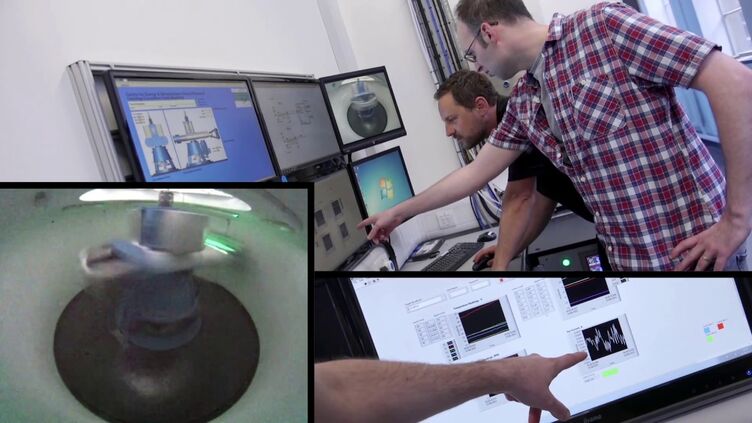
The Diamond features some of the best engineering teaching spaces in the UK. You’ll be taught in specialist state-of-the-art teaching and dedicated lab facilities such as our structures and dynamics lab, fluids engineering lab, and our thermodynamics and mechanics lab. This means you'll directly apply what you’ve learnt in lectures to lab sessions helping you to put theory into practice.
Alongside teaching and study spaces, the Diamond is also home to iForge – the UK's first student-led makerspace.
University rankings
A world top-100 university
QS World University Rankings 2027 (82nd)
Number one in the Russell Group for student voice
National Student Survey 2026
92 per cent of our research is rated as world-leading or internationally excellent
Research Excellence Framework 2021
University of the Year for Student Experience
The Times and The Sunday Times Good University Guide 2026
Number one Students' Union in the UK
Whatuni Student Choice Awards 2024, 2023, 2022, 2020, 2019, 2018, 2017
Number one for Students' Union
StudentCrowd 2025 University Awards
7th best University for Work Experience
Higherin 2026-27
Student profiles


Fees and funding
Fees
Additional costs
The annual fee for your undergraduate course includes a number of items in addition to your tuition. If an item or activity is classed as a compulsory element for your course, it will normally be included in your tuition fee. There are also other costs which you may need to consider. These costs may increase due to price increases outside of the University’s control, if you defer entry or if you choose to change course.
Examples of what’s included and excluded in undergraduate fees
Funding your study
Depending on your circumstances, you may qualify for a bursary, scholarship or loan to help fund your study and enhance your learning experience.
Use our Student Funding Calculator to work out what you’re eligible for.
Visit
University open days
We host five open days each year, usually in June, July, September, October and November. You can talk to staff and students, tour the campus and see inside the accommodation.
Online events
Join our online information sessions to find out more about different aspects of University life.
Subject tasters
If you’re considering your post-16 options, our interactive subject tasters are for you. There are a wide range of subjects to choose from and you can attend sessions online or on campus.
Offer holder days
If you've received an offer to study with us, we'll invite you to one of our offer holder days, which take place between February and April. These open days have a strong department focus and give you the chance to really explore student life here, even if you've visited us before.
Campus tours
Our weekly guided tours show you what Sheffield has to offer - both on campus and beyond. You can extend your visit with tours of our city, accommodation or sport facilities.
Apply
The awarding body for this course is the University of Sheffield.
Recognition of professional qualifications: from 1 January 2021, in order to have any UK professional qualifications recognised for work in an EU country across a number of regulated and other professions you need to apply to the host country for recognition. Read information from the UK government and the EU Regulated Professions Database.
Any supervisors and research areas listed are indicative and may change before the start of the course.