
Iconic Arts Tower at University of Sheffield celebrates 60 years
The University of Sheffield is celebrating 60 years since the official opening of one of the city’s best-known buildings

- The University of Sheffield is celebrating six decades since the opening of the iconic Arts Tower, one of the city’s most recognisable landmarks
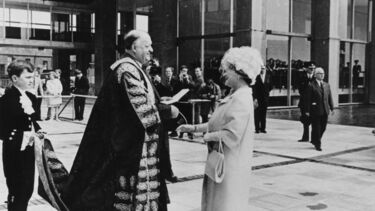
- Officially opened by HM Queen Elizabeth The Queen Mother in 1966, the Grade II listed building remains the tallest structure on the University’s campus, standing at 78 metres
- One of the building’s most famous features is its paternoster lift, recognised by Guinness World Records as the world’s tallest, made up of 38 open two-person cars operating continuously
- The distinctive lift has become an enduring symbol of the Arts Tower, a rite of passage for generations of Sheffield students and an online fascination attracting viewers from around the world
- Sixty years after opening, the Arts Tower remains a vibrant hub for teaching, creativity and collaboration, housing the School of Architecture and Landscape Architecture, professional services teams and the newly opened John’s Van café
The University of Sheffield is celebrating 60 years since the official opening of one of the city’s best-known buildings.
The Arts Tower was opened by HM Queen Elizabeth The Queen Mother on 23 June 1966, marking the beginning of six decades as one of the University’s most distinctive landmarks. Standing at 78 metres, the Arts Tower remains the UK’s tallest academic building. At the time of its construction, it was also the tallest academic building in Europe.
One of the building’s most famous features is its distinctive paternoster lift, recognised by Guinness World Records as the world’s largest. With 38 open two-person cars operating on a continuous cycle up and down the tower, the lift has become a symbol of the Arts Tower, a rite of passage for Sheffield students and a source of fascination online, where videos of the unusual lift continue to attract attention from people all over the world on social media.
One of the best early paternoster stories was recalled by George Porter, Professor of Physical Chemistry at the University of Sheffield from 1955 to 1966, who later shared the 1967 Nobel Prize in Chemistry for his work on flash photolysis. Professor Porter remembered travelling to a tea party on the 13th floor with his wife when the paternoster stopped, leaving them stranded at neck height to the floor. Rather than abandon the occasion, the Vice-Chancellor joined them at a higher level and served tea while they waited for the lift to restart.
The Grade II* listed building was designed by Gollins, Melvin Ward and Partners and has become an enduring symbol of the University’s post-war modernist architecture. Visible across the city, it has been part of Sheffield’s skyline for generations of students, staff, alumni and local residents.
Since opening, the Arts Tower has been carefully maintained and refurbished, ensuring it can continue to support University life while preserving its architectural significance. A major refurbishment in the late 2000s improved the internal environment and helped secure the building’s future for decades to come, including significant work to protect and upgrade the paternoster lift.
Today, the building remains a busy and vibrant part of campus. The School of Architecture and Landscape is based across the upper floors, making use of the tower’s views, studios, teaching spaces and exhibition areas. The remaining floors are home to colleagues from a range of professional services departments, following recent moves that have brought more than 850 staff into the building as part of the University’s work to use its estate more efficiently.
In the basement, another Sheffield institution has recently become part of the Arts Tower story, with John’s Van opening a café in the building. A favourite with generations of Sheffield students, the café brings a new social space to the tower and adds to the sense of activity around one of the University’s most recognisable locations.
Linda Goodacre, Director of Estates & Facilities Management at the University of Sheffield, said: “The Arts Tower is one of the most recognisable buildings in Sheffield and a hugely important part of our University’s identity. For 60 years, it has been a place where students have learned, staff have worked and generations of alumni have made memories.
“It is a building that people feel real affection for, from its views across the city to its famous paternoster lift. But it is also a building with a very active future. Through the School of Architecture and Landscape Architecture, our professional services teams and the new café in the basement, the Arts Tower remains a busy, creative and social place at the heart of campus.
“As we develop plans for the future of our campus, the Arts Tower shows how we can celebrate and protect the buildings that make Sheffield special while making sure they continue to support the needs of our University community for years to come.”
The University’s Future Campus Plan is shaping how the University will make its estate more vibrant, sustainable and fit for the future. It focuses on creating a more compact, high-quality and better-connected campus, making the best use of existing buildings, improving public spaces and strengthening the sense of life and activity across the University. As one of the University’s most iconic and hard-working buildings, the Arts Tower will remain central to that future.
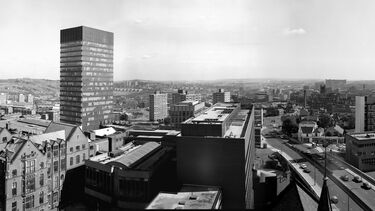
Things you might not know about the Arts Tower:
- The Arts Tower began as part of a 1953 vision for a new arts building, but its design changed significantly before the final “cube of steel, glass and concrete” was agreed.
- Its height kept increasing during planning. According to an academic involved in its design at the time, “every meeting seemed to add another two storeys”, until the building reached 19 storeys.
- The building stands on solid rock around 30 feet below Tower Court and took almost four years to build.
- When it opened, the Arts Tower brought together 18 departments and 160 staff, many of whom had previously been spread across separate buildings.
- The Arts Tower originally included shallow pools and fountains at the front of the building, but these were later covered over after the tower’s wind tunnel effect blew water over those using the main entrance. Their outline was reintroduced in brick setts when the entrance steps and tile flooring was refurbished in 2026.
- The School of Architecture was given space on the upper floors so staff and students could look out across Sheffield and see the city’s post-war redevelopment taking shape.
- The Queen Mother described the building as Sheffield’s “tower of light and learning” when she opened it in June 1966.
- The paternoster lift was chosen to help move large numbers of students and staff between floors, with 38 cars carrying two people each. It makes short journeys between floors much quicker and more efficient than waiting for the traditional lifts.