Arctic has entered a new era of extreme weather, study suggests
Extreme weather events have become significantly more common in the Arctic over recent decades, posing a threat to vital polar ecosystems, according to new research by an international team of scientists.

- New research by an international team of scientists has found that Arctic regions are facing unprecedented climate conditions
- Study has found that extreme weather events have become more common over the past 30 years, threatening plants and animals
- Findings show hotspots for extreme weather events are Western Scandinavia, the Canadian Arctic Archipelago and Central Siberia
- Damage from extreme weather can also affect the livelihoods of Arctic people such as reindeer herders and may also harm the ability of the Arctic to absorb carbon and slow climate change.
Extreme weather events have become significantly more common in the Arctic over recent decades, posing a threat to vital polar ecosystems, according to new research by an international team of scientists.
The study, published in the journal Science Advances, suggests the Arctic has entered a new era of extreme weather with likely severe consequences for plants, animals and humans living in the region.
Led by researchers from the Finnish Meteorological Institute, with an international team including the University of Sheffield, the study is the first to comprehensively examine long-term changes to the Arctic’s bioclimate - climate conditions that affect living organisms.
The scientists investigated changes spanning more than seven decades. They found that in addition to rising average temperatures, Arctic ecosystems are increasingly experiencing a range of extreme weather events, such as prolonged heatwaves, frost during the growing season, and warm winter spells. The extent and intensity of these changes vary across different parts of the Arctic.
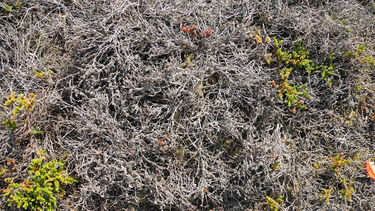
The study shows that in many areas, some of the examined extreme weather events have only begun to appear in the past 30 years. One example is rain-on-snow events. The researchers identified new regions affected by rain-on-snow events covering more than 10 per cent of the Arctic land area. Rain falling onto snow creates particular challenges for mammals, as it promotes the formation of ice layers within the snowpack. For example, reindeer are then unable to access the lichens they rely on in their winter grazing grounds.
The researchers also identified regions, so called hotspots, where changes in both seasonal conditions and extreme events have been especially strong. Such areas are found in Western Scandinavia, the Canadian Arctic Archipelago, and Central Siberia.
Professor Juha Aalto from the Finnish Meteorological Institute said: “Seasonality, such as the growing season and snow conditions, is known to be crucial for ecosystem functioning and the success of northern species. However, changes in bioclimatic extreme events have not been previously studied in a comprehensive way.”
Professor Gareth Phoenix, Professor of Plant and Global Change Ecology at the University of Sheffield, said: “Our research shows that the frequency of extreme weather events has increased sharply in the Arctic. Across one-third of the Arctic domain these events have only recently begun to occur and therefore show that the Arctic is entering a novel era of weather extremes with likely severe consequences for ecosystems there.
“These events can cause plants to die over large areas and can also cause high mortality in animals, such as reindeer, which can also harm the livelihoods of Arctic people such as reindeer herders. For people not living in the Arctic, the damage is also important because it can harm the ability of the Arctic to absorb carbon and slow climate change.”
Findings from the study suggest the Arctic is now facing unprecedented climate conditions. When looking at multiple types of extreme events together, the researchers found that at least one new extreme event has begun to occur across one-third of the Arctic land area. Professor Miska Luoto from the University of Helsinki said: “This finding suggests that as the climate changes, Arctic ecosystems will be increasingly exposed to climate conditions they have never experienced before. This may have significant long-term consequences for Arctic nature.”
The research used modern atmospheric reanalysis data, from which the bioclimatic variables were calculated. Reanalysis combines observations with a weather model, providing the best possible information on atmospheric and surface conditions. This is particularly valuable in remote regions where direct measurements are sparse, such as large parts of the Arctic.
Accurate, up-to-date information on bioclimate is needed for monitoring and predicting Arctic biodiversity, as well as to support climate change adaptation in societies.
The study, A new era of bioclimatic extremes in the terrestrial Arctic, is published in Science Advances. Read the paper.