Reimaging Disability and Inclusion in the Professional Sphere : A Critical Reflection By Bhavishya
Student submission from the Introducing Critical Disability Studies: Indian Contexts, Global Perspectives online course.
The conversation around disability in workplaces is gradually changing in meaningful ways. Earlier, disability was mostly viewed through a medical perspective, where disabled individuals were seen as people who needed to be “fixed” or adjusted to fit existing systems. However, scholars such as Dr. Armineh Soorenian and Dr. Krishna challenge this understanding and encourage a completely different way of thinking about disability and inclusion. Their work highlights that the real issue is often not the individual’s impairment, but the systems, attitudes, and environments that create exclusion.
Both scholars emphasize that workplace inclusion should move beyond legal compliance or token representation. Inclusion is not simply about hiring disabled employees or installing ramps in offices. Instead, it involves redesigning workplace culture itself so that everyone can participate equally and meaningfully. Their ideas encourage organizations to rethink productivity, flexibility, communication, and accessibility in ways that benefit all employees, not just disabled individuals.
This reflective and critical discussion explores these ideas in detail while also considering how they reshape our understanding of work, inclusion, and human diversity.
Moving Beyond the Medical Model of Disability
One of the most important ideas presented by Dr. Soorenian and Dr. Krishna is the rejection of the medical model of disability. The medical model views disability as an individual problem that must be treated, cured, or managed. In workplaces, this often leads to disabled employees being seen as less capable or as people requiring extra support that may inconvenience the organization.
In contrast, the social model of disability argues that people become disabled because society is designed in exclusionary ways. The problem is not necessarily the impairment itself but the barriers created by inaccessible environments, rigid systems, and discriminatory attitudes. For example, a wheelchair user is not disabled by the wheelchair itself, but by buildings without elevators or ramps. Similarly, a visually impaired employee is excluded when digital platforms are not designed accessibly.
Dr. Krishna’s idea of “flipping the script” is especially powerful because it shifts responsibility from disabled individuals to institutions. Instead of asking disabled people to adapt to workplaces, organizations must rethink how workplaces are designed. Accessibility, therefore, becomes a shared responsibility rather than an individual struggle.
Personal Reflection
Reading about this shift made me reflect on how often society unconsciously expects disabled people to “fit in” rather than questioning why systems are exclusionary in the first place. I realized that many workplace structures are designed around a narrow idea of what a “normal” employee should look like. This perspective changed my understanding of inclusion from being an act of kindness to being a matter of equality and justice.
Challenging the Idea of the “Ideal Worker”
Another important argument discussed by Dr. Krishna is the idea of the “ideal worker.” Most workplaces are built around the assumption that employees should always be productive, energetic, emotionally stable, and available without interruption. This creates unrealistic expectations not only for disabled employees but for everyone.
The concept of “Crip Time” challenges these rigid ideas of productivity. It recognizes that people function differently and that human life naturally involves rest, care, recovery, and flexibility. Instead of measuring worth only through speed and efficiency, Crip Time values sustainable ways of working that respect individual needs.
This idea is important because modern workplace culture often glorifies overwork and burnout. Employees are expected to constantly perform at high levels without acknowledging their personal challenges, mental health needs, or physical limitations. Disability perspectives reveal how harmful these expectations can be.
Critical Reflection
At first, the idea of flexible productivity may seem unrealistic in highly competitive workplaces. Many organizations fear that flexibility could reduce efficiency. However, the COVID-19 pandemic proved that workplaces can adapt quickly when necessary. Remote work, flexible schedules, and online communication became common almost overnight.
Interestingly, many accommodations disabled people had requested for years suddenly became possible for everyone. This reveals that the real issue is often not practicality but willingness to change.
Barriers Faced by Disabled Employees
Inaccessible Communication and Information
Dr. Soorenian explains that access to information is essential for independence and equal participation. However, many organizations still use inaccessible communication methods. Job descriptions are often overly complicated, websites may not support assistive technologies, and application processes may exclude disabled candidates from the beginning.
Even after recruitment, disabled employees may face difficulties in meetings, training sessions, or digital communication platforms that are not designed inclusively.
Reflection
This made me realize that accessibility is not limited to physical spaces. Communication itself can become a barrier. Something as simple as inaccessible documents or unclear instructions can exclude people from participating fully. Accessibility should therefore be considered in every aspect of workplace functioning.
Physical and Digital Accessibility
Physical barriers continue to affect the daily experiences of disabled employees. Heavy doors, inaccessible washrooms, poor lighting, broken elevators, and inaccessible public transportation can make ordinary activities exhausting.
Dr. Krishna discusses the idea of a “broken chain” of accessibility. For example, an accessible office building becomes meaningless if transportation systems remain inaccessible. Accessibility must therefore exist across all systems rather than in isolated spaces.
Digital accessibility is equally important in modern workplaces. Inaccessible software, websites, or online platforms can prevent disabled employees from working independently and comfortably.
Personal Reflection
This discussion helped me understand how much invisible labor disabled people often perform every day simply to navigate systems that others take for granted. Accessibility is not just about convenience it directly affects dignity, independence, and emotional well-being.
Attitudinal Ableism and Emotional Impact
One of the most harmful barriers highlighted in the material is attitudinal ableism. Disabled employees are often stereotyped as less productive, dependent, or expensive to accommodate. These assumptions influence hiring decisions, workplace relationships, and opportunities for growth.
Dr. Soorenian’s idea of “psycho-emotional disablement” explains how constant discrimination and exclusion affect mental and emotional health. Repeated experiences of being underestimated or excluded can damage confidence, self-esteem, and motivation.
Critical Reflection
What stood out to me most was how subtle ableism can be. Discrimination is not always open or intentional. Sometimes it appears through low expectations, exclusion from leadership opportunities, or excessive pity. These attitudes can be just as harmful as physical barriers because they affect how disabled individuals see themselves and their place in society.
Co-Production and Inclusive Workplaces
A major solution proposed by Dr. Soorenian is co-production, which is based on the principle “Nothing About Us Without Us.” This means disabled people should actively participate in creating policies, systems, and workplace practices that affect them.
Instead of treating disabled employees as passive recipients of support, co-production recognizes them as experts with valuable lived experiences and insights.
Universal Design
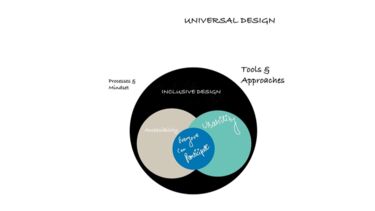
The idea of universal design is closely connected to co-production. Universal design involves creating spaces and systems that are accessible to everyone from the beginning rather than adding adjustments later. Features such as captions, flexible work arrangements, accessible entrances, and user-friendly digital systems benefit all employees, not just disabled individuals.
Reasonable Adjustments
Reasonable adjustments should not be viewed as favors or privileges. They are necessary changes that help remove barriers and create equal opportunities. These adjustments may include assistive technologies, flexible schedules, remote work options, or modified communication methods.
Reflections
The principle of co-production deeply resonated with me because it values disabled voices instead of speaking on their behalf. Too often, decisions are made for marginalized groups without involving them directly. Genuine inclusion requires collaboration, listening, and shared decision-making.
Disability as a Source of Innovation
One of the most inspiring aspects of the material is the idea that disability can contribute to creativity and innovation. Disabled individuals often develop unique problem-solving strategies because they constantly navigate inaccessible environments.
Rather than viewing disability only through the lens of limitation, organizations should recognize how diverse experiences and perspectives strengthen workplaces.
Reflection
This idea completely changes the narrative around disability. Inclusion is not charity, and accessibility is not simply about helping disabled employees. Diverse perspectives can improve workplaces for everyone by encouraging flexibility, empathy, and innovation.
Conclusion
The work of Dr. Armineh Soorenian and Dr. Krishna presents a powerful rethinking of workplace inclusion and accessibility. Their ideas move beyond token gestures and challenge organizations to transform workplace culture itself. The shift from the medical model to the social model highlights that disability is often created by inaccessible systems
rather than individual impairments. Their critique of the “ideal worker” exposes how rigid expectations around productivity and availability can exclude many people. Concepts such as Crip Time, co-production, universal design, and reasonable adjustments encourage workplaces to become more flexible, humane, and inclusive. Most importantly, their work reframes disability as a valuable perspective capable of reshaping the future of work. Inclusive workplaces are not only more ethical; they are also more creative, resilient, and democratic. The real challenge for organizations is no longer how disabled people can fit into existing systems, but how workplaces themselves can evolve through the knowledge and experiences of disabled individuals.
References
Acas. (2025). What reasonable adjustments are – Reasonable adjustments at work. Acas.
Krishna, Dr. (n.d.). Accessible workplaces and inclusive cultures [PowerPoint slides].
Oliver, M. (1990). The politics of disablement. Macmillan Education.
Shakespeare, T. (2018). Disability: The basics. Routledge.
Soorenian, A. (2026, March 2). Co-producing an inclusive work culture: Challenges and opportunities [Paper presentation/PowerPoint slides]. WAARC Project, University of Sheffield.
United Nations. (2006). Convention on the Rights of Persons with Disabilities. United Nations CRPD.

iHuman
How we understand being ‘human’ differs between disciplines and has changed radically over time. We are living in an age marked by rapid growth in knowledge about the human body and brain, and new technologies with the potential to change them.