
Priorities
What are the health priorities of disabled people in Australia, Canada, India, Singapore and the United Kingdom?

Lead: Ankita Mishra (University of Sheffield)
Reimaginations and Experimentations through Participatory, Decolonial and Creative Praxis
Introduction: Rethinking Disability, Health, and Knowledge
Phase 2 of the Disability Matters programme brings together a shared question across five national contexts: what are the health priorities of disabled people, and how might these priorities reshape the ways health is understood, researched and acted upon? Rather than applying a single model across India, Singapore, the UK, Australia and Canada, we are developing an approach that is responsive to local histories, relationships, community priorities and ways of knowing.
This phase asks us to rethink what counts as knowledge about disability and health, and whose knowledge is recognised, valued or pushed to the margins. Dominant approaches to health research have often privileged colonial, western, medicalised and positivist frameworks, while overlooking Indigenous, embodied and community-rooted ways of knowing. This phase challenges these hierarchies by centring disabled people as researchers and co-creators of knowledge, and by working against extractive and damage-centred approaches to research. We seek to make space for the contextual, cultural, spiritual and community-rooted understandings through which people make sense of health in their everyday lives.
Working across India, Singapore, the UK, Australia and Canada, we explore how disabled people conceptualise, experience and imagine health. We ask:
- How do disabled people define and experience health and wellbeing?
- What social, cultural and political forces shape these experiences?
- Who sets health priorities, and whose needs and voices are centred?
- How might we co-create new understandings and priorities for health with, for and by disabled people?
- What are disabled people’s health priorities and aspirations for health justice and livable futures?
This phase is grounded in and guided by de/anticolonial ways of being and knowing, critical disability studies, global majority feminisms, disability and racial justice and an intersectional social justice orientation. As a transnational phase, we began in India with a deliberate focus on local knowledge(s), community priorities, and intersectionality where disability connects with gender, class, race, caste, religion, place and sexuality. This is a commitment to challenging the direction in which research and knowledge has historically travelled, with western and euro-american frameworks often treated as authoritative and knowledge from the geopolitical South marginalised. Beginning in India allows us to learn with and from disabled people and communities whose experiences and understandings of health can unsettle these hierarchies. As the phase develops across Singapore, the UK, Australia and Canada, we carry these questions forward without assuming that what we learn in one context can simply be transferred to another. Each partnership calls for renewed relationships, situated knowledge and a willingness to be changed by what we learn together.
This phase confronts epistemic injustice by shifting away from extractive, top-down models of research. Instead, it embraces Participatory Action Research (PAR) and creative storytelling to centre disabled people as knowledge co-creators of health in their own lives and communities. There is a commitment to shifting power, redistributing voice, and reimagining the structures that define health for disabled people. We seek to reimagine policy-making, resist exclusionary futures, and highlight disabled people’s embodied knowledge as central to building more just, inclusive, and life-affirming worlds. The phase is iterative with relationships and co-design informing how the research takes shape; collective interpretation brings community knowledge into dialogue with policy and institutional structures; and knowledge exchange creates opportunities to return findings, reflect together and inform advocacy and future action.
Our guiding values for the work we do in this phase: nothing about us without us; participatory, community-embedded inquiry; long-term, trust-based relationships and connections with Disabled People’s Organisations (DPOs); the sharing of power, reciprocity, care and accountability; a willingness to stay with messiness, discomfort and tension; joy, playfulness, creativity and love held as radical tools. By centring disabled knowledge, this phase works to reclaim care, joy, interdependence and resistance as core principles of health.
Fieldwork
Fieldwork is a deeply troubling word. ‘The field’ is an inheritance from anthropology’s colonial beginnings, a somewhere-else the researcher travels to, gathers from, and leaves, carrying the findings home to the place where knowledge is supposedly made. It assumes a clean line between the one who knows and the ones who are known, between the institution and the community, between home and away. For a project that centres disabled people as researchers and co-creators, that does not hold and we do not want it to. When we write about our work in India, we mean co-production embedded in relationships. We mean refusing the idea that knowledge travels in one direction, from a Southern ‘site’ or ‘field’ to a Northern desk. We mean treating the everyday instances of a shared meal, a translated consent form, a workshop that runs long because the conversation matters more than the schedule, as where the real research lives.
Our work in this phase began in India through our collaboration and partnerships with our Indian DPO partner on the programme, AADI in Delhi, and, owing to relational and personal connections (yes, the personal is political), with another DPO partner, Swabhiman, in the eastern state of Odisha, honouring the multiple Indias that exist alongside the urban metropolitan context of Delhi. Our partnerships with AADI and Swabhiman began as relationships, not as access to a site, and are intended to extend beyond the life of this funding. There is no 'field' we enter and exit. There is a long, uneven, care-full practice of being accountable to communities we are part of and answerable to. While the lead researcher travels to these places for some of the work, she is also an in-betweener, neither fully outsider nor fully insider, by heritage, ancestry, where she grew up, her connections to these places, and where her life is now based.
The unfolding of the relationships began in December 2024 and January 2025 through time spent with AADI and Swabhiman, meeting people, listening, and co-designing what the work might become (Read this blog to know more). Through the first half of 2025 much of the work involved co-producing our approach to ethics, the research proposal and plans, participatory budgeting, co-creating accessible consent and information materials (including a set of animated films in Hindi and Odia), and working through university bureaucracy to put partnership agreements in place so that co-researchers and partners could be properly remunerated.
From October 2025 to March 2026, across two periods of work, the lead researcher worked alongside co-researchers at Swabhiman and AADI. The first period ran state-wide across Odisha, with Bhubaneswar as a base, and then across Delhi NCR; the second returned to the same participants to go deeper, reached new communities in different parts of Odisha, and brought emerging findings into dialogue with disabled advocates and policy actors. Across both, co-researchers shaped the work at every stage by deciding where to go, who to meet, when to pause, when and how to proceed. Following that, the work turned to co-analysis: reading the materials together, holding interpretation close to the people who shaped it, and preparing for the knowledge exchange to come.
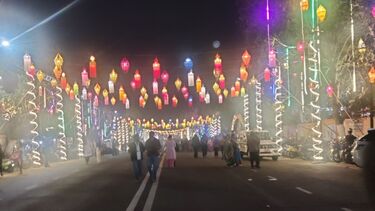
Together, this brought together over 120 disabled people across the metropolitan, urban centres, rural districts, forests, floodplains, Indigenous regions and disaster-prone landscapes: para-athletes and young neurodivergent people in Bhubaneswar, Odisha; cross-disability groups in the cyclone-and flood-prone district of Kendrapara and food insecurity and poverty stricken contexts in Bolangir, Odisha; Indigenous communities in Mayurbhanj and Koraput, Odisha; groups in urban Hauz Khas, Delhi, the peri-urban context of Sunder Nagri in east Delhi, and rural Dayalpur near Faridabad in Delhi NCR; and, in the second period, people living with blood disorders, acid-attack survivors, people with spinal cord injuries, and blind women university students in Cuttack and Bhubaneswar, Odisha. Two celebrations, the Anjali Children and Youth Festival in Bhubaneswar, Odisha and the India Inclusion Summit in Bangalore, Karnataka showed us how disability moved through art, music, theatre and celebration, and joy showed itself as a serious mode of knowledge.
Our method was participatory throughout, aligned with the disability movement's leitmotif: nothing about us without us. Much of the work took the form of gupshups or, in Odia, gapa sapa: unhurried, reciprocal conversations, the everyday art of gathering and being with one another, often held over shared meals. What we had planned as community story circles and criptopia workshops were approached, in practice, as gupshup spaces, where storytelling, photo and object elicitation, theatre, collective ranking and prioritisation, and letter writing moved fluidly as people explored their own understandings of health and dreamed more just and inclusive health futures. Lived-policy workshops took shape as we invited disabled advocates and activists from the grassroots to hold their lived experience against policy as it is written, naming what works, what is missing, and what exists only on paper, what needs to change. Conversations travelled across Hindi, Odia, English, Indian Sign Language and gesture, and the languages of Santhal, Durua and Kondh communities. The ethical commitments of the method followed from the relationships: the community’s authority over where, whether and how we worked, the right to refuse, and the principle that the knowledge produced belongs to the people who made it.
Our approach to ethics
Research ethics has too often been reduced to a procedural ritual merely as a form signed once at the start, an Institutional Review Board protecting the institution more than the community. By examining the tensions between procedural ethics and relational accountability, we interrogate how research can move beyond ‘damage-centered research’ (Tuck, 2009) towards approaches that celebrate community agency, interdependence and collaborative knowledge production. Feminist and Indigenous research approaches offer powerful alternatives to colonial research practices. Drawing on feminist and Indigenous research, our approach has centred relational accountability, communal knowledge production, reciprocity, mutual respect, community agency by recognising multiple ways of knowing. Speaking With, Not For, by drawing on Alcoff's (1991) critical interrogatory practices, is a significant principle of our approach which reminds us of our accountability to the communities we are part of and are engaged in research with.
The journey of ethical research is as important as its destination. It requires constant negotiation, deep listening, and a commitment to dismantling oppressive knowledge structures. Our approach to ethics is not a static, procedural checklist but a dynamic, relational process of mutual learning and transformation. It is underpinned by love as a critical ethical-political force in this research driving community solidarity, justice-oriented knowledge production, deeper relational understanding.
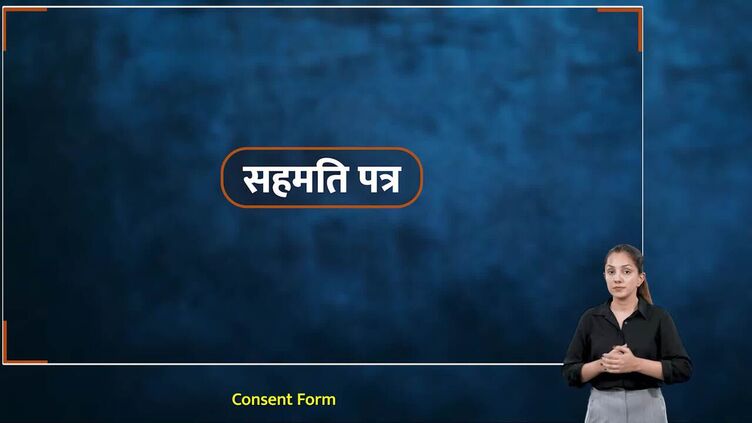
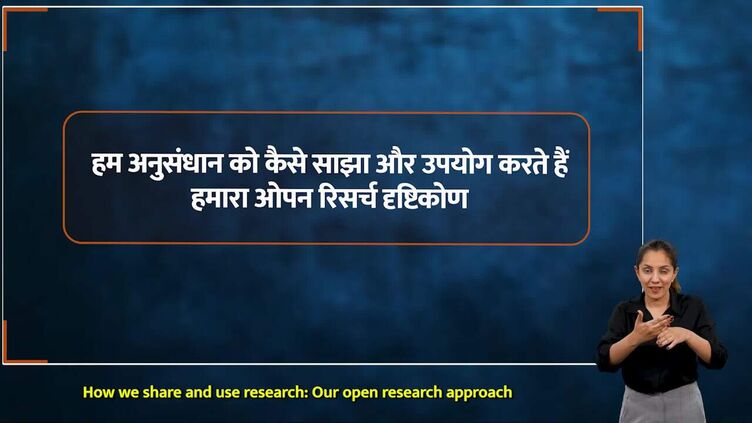
In practice, this means consent understood as an ongoing, dialogic process: a nod, a pause, a stepping away, a check-in before, during and after a photograph. And it meant asking, continually, who the research is for, and whether it finds its way back to the communities who shaped it. The animated consent, information and open-research films were co-created with AADI, Swabhiman and the accessible media company TOC Combine, in Hindi and Odia, combining Indian Sign Language and audio are accessible, multilingual and speak to the practice of doing inclusive collaborative research (see below and in Outputs).
Accessibility is the organising principle across all of this: Indian Sign Language interpretation, multilingual translation and captioning, easy-read materials, accessible venues, sensory-friendly spaces, travel support for disabled participants, and community-based ways of sharing. Throughout the process, we have tried to maintain transparency about institutional processes, aimed at providing meaningful compensation for community contributions and strived toward respecting participants’ agency and safety.
Working in collaboration with our DPO partners, AADI and Swabhiman, and an accessible media production company, TOC Combine, we have created a series of accessible and inclusive animated films introducing our research and explaining consent, our information sheets and open research in Hindi (presented below) and Odia (which can be found here).
Knowledge exchange
For us, knowledge exchange means knowledge moving in both directions, part of the participatory process itself, rather than a one-way transfer from the university to communities. It has been embedded from the start in co-designing the proposal, the ethics documents and the workshops, in the collaborative analysis of findings, and now in returning those findings to the communities who generated them, translated into forms that are meaningful, culturally relevant and accessible.
Planned for January and February 2027, the next stage completes this cycle. Our emerging themes such as navigating health systems, barriers to care, interdependence and community support, redefining health and wellbeing, and people's hopes for more equitable and accessible systems will shape a programme of creative, community-led events.
Films
Working with TOC Combine, we are co-creating two short films in Hindi and Odia, captioned in English, Hindi and Odia and carrying Indian Sign Language throughout. Co-created with our co-researchers based in our DPO partners through iterative scripting and review, the films hold both the findings and the process that produced them as an accessible research output and a record of participatory practice.
With AADI, across Delhi NCR
- Dayalpur (rural context): a film screening, a panel and community discussion, and a collaborative performance of Ragini, a traditional Haryanvi folk form.
- Sunder Nagri (peri-urban context): health-focused audio messages and jingles co-produced with disabled people and local artists, carried through the neighbourhood on electric rickshaws fitted with loudspeakers, honouring oral traditions and place-based knowledge followed by film screening and discussion.
- Hauz Khas (urban): a celebratory gathering of participants, researchers, practitioners and partners: film screening, exhibition, panels and performance to reflect on findings together and name future priorities.
With Swabhiman, across Odisha
A findings showcase in Bhubaneswar through an Odia-language film screening, an accessible report launch, exhibitions and facilitated discussion alongside a travelling exhibition that carries the work to villages and district centres across the state of Odisha. Findings will be brought into health panchayats: longstanding community institutions for collective discussion and decision-making, so that local priorities, concerns and recommendations can shape what happens next.
Teaching and continued exchange
An online course in India was carried out in partnership with Kamala Nehru College, University of Delhi co-led by Dr Christina Lee and Dr Sandeep R Singh during February-April 2026. This has been followed by online reading groups alongside ongoing online symposia with contributions from Indian colleagues to keep the knowledge exchange alive beyond any single event, and connect India’s contribution to the wider programme.
Disability Matters Together International Conference 2026 in Singapore
Co-designed with Professor Rebecca Lawthom and shaped collaboratively through inviting ideas and contributions from attendees, the conference programme was guided by an ethic of love, informed by bell hooks’ understanding of love as a practice of care, commitment, responsibility and accountability. We wanted to create more than a space for sharing research: a gathering in which community, connection, comfort, rest and joy were integral to how we came together, exchanged knowledge and built relationships.
Through playful and creative activities, intentional spaces for connection, and opportunities to participate in different ways, the programme sought to question the conventions of academic gatherings: the privileging of productivity, packed schedules and formal presentations over the time and conditions needed to connect, reflect and care for one another. We approached accessibility as a collective and relational responsibility, recognising that how we gather matters as much as what we gather to discuss.
Guided by the belief that all flourishing is mutual, and that times of urgency call for us to slow down together, the programme invited attendees to imagine different ways of being in community. It was an experiment in putting disability, care and relationality at the heart of an international research gathering, making room for connection, collaboration, pockets of hope and joy, and the possibilities that emerge when we create space to be together differently.
Outputs
Publications
Mishra, A. (forthcoming 2027). Fragile Solidarities: Practising Decolonial Disability Research within Colonial Institutions In X. T. Nguyen, D. Corfield, & N. Ghosh (Eds.), Emerging insights from decolonial disability work: Learning with and from the South. Springer Nature.
Mishra, A, White, L., Liddiard, K., Amanullah, P., Basahal, Z., Belfield, A., Darley, D., Mufti, M., Phillips, S., Rivers, K., Sawyer, T., Simon, E., Smith, S., Vince-Myers, B., Wang, S & Worthington, V. (2026). Hopes, Hiccups and Aspirations of Doctoral Researchers doing Participatory Research: Reflections from a Creative and Collaborative Research Project, International Review of Qualitative Research, doi.10.1177/19408447261484673
Mishra, A., & Jain, G. (2026). "Where is the love in my work?": Developing a restorative love praxis for ethical qualitative inquiry. Methods in Psychology, 15, 100269. https://doi.org/10.1016/j.metip.2026.100269.
Chatikobo, T., Griffiths, F., Hayden, N., Leeming, G., Mishra, A., Morris, E., Schirru, L., Sheehan, N., Williams, A., & Sekalala, S. (2026). Open Science, Health Data and Epistemic Harms: A Multidisciplinary Reflection. Data science journal, 25, 15. https://doi.org/10.5334/dsj-2026-015
Wong, M., Mishra, A., Quyoum, A. ( 2026). ‘Zine-ing’ Research Otherwise: Care, Joy, and Creative Co-Design with Racially Marginalised Communities. Journal of Creative Research Methods, Bristol University Press. https://doi.org/10.1332/30502969Y2025D000000011
Mishra, A. (2025). Confronting Ignorance of Disability: A Tribute to Anita Ghai’s Enduring Legacy. Disability Dialogues. Sheffield: iHuman, University of Sheffield.
Mishra, A. (2025, October 13). Masking in the margins: Navigating academia as disabled/chronically ill women of colour. Centre for Equity and Inclusion. https://equityinclusionsheffield.co.uk/2025/10/13/masking-in-the-margins-navigating-academia-as-disabled-chronically-ill-women-of-colour/
Mishra, A. (2025). Disability Dialogues Across Borders: Power, Politics, and Partnership. Disability Dialogues. Sheffield: iHuman, University of Sheffield.
Dew, L., Evans, H., Gauthier-Marmaril, E., Jones, D. P., Kill, C., Lee, C., Mishra, A., Phillips, S., Soorenian, A., & White, L. (2025). Imagining the anti-ableist university. GEOZONe. Imagining the anti-ableist university – GEOZONe
Mishra, A. (2024). How does your area of research engage with disability in the geopolitical south and challenge dominant epistemologies and paradigms of disability? In Goodley, D., Halsey, R., Scully, J., Singh, S., Titchkosky, T. and Wong, M.E. (Editors). The Disability Matters Scholarship Collection. Sheffield: University of Sheffield.
Conference papers by Ankita Mishra
Co-presented a paper with Lee, C., Halsey, R and Goodley, D. ‘Centring Disability in the Academy: Research Priorities, Knowledge Exchange and Career Development’ at the Leeds Disability Studies Conference (April, 2026)
Invited symposia speaker for Amplifying the mental health of Black university students: A Black, Mad, and Disability Studies Intersectional Inquiry, where I presented my paper on ‘The Fatigue of Masking: Slow Epistemologies and Restful Refusal among Chronically Ill Women of Colour’ (November, 2025)
Invited roundtable discussant on ‘Open Science Architectures: Lessons from global health research and innovation’ at the University of Warwick (September, 2025)
Invited panellist at the Sheffield City Council Social Care EDI Roundtable (July, 2025)
Invited panellist at the roundtable discussion on Decolonial Anti-Racist Evaluation at the Centre for Equity and Inclusion conference, University of Sheffield (June, 2025)
Co-presented a paper with Lee, C. ‘Disability as a driver of knowledge exchange and research priorites’ at the Spring Institute in the University of Toronto (May-June, 2025)
Co-facilitated a creative workshop with Annand, PJ. Craftivism and Weaving Community, Care and Resistance, BPS POWES Conference (June, 2025)
Invited speaker at the Department of Work and Pensions Policy Campus Roundtable on Youth Outcomes and NEETs (May, 2025)
Ethical and Political Dilemmas of Intersectional Feminist Research, Keynote, Gender Research Network, University of Sheffield (April 2025)
‘Disability in the Geopolitical South’, Invited speaker at the Disability Matters online International Symposium (December, 2024)Co-facilitated a creative workshop with Annand, PJ. ‘Reject Lounge: Experimenting with decolonial crip ways of gathering in community’ at the BPS Community Psychology Festivel (October, 2024).
Collaborations and partnerships
Nothing in this phase has been without collaborations, partnerships and relationships. The research questions, methods, ethics, creative outputs and plans for knowledge exchange have been shaped through relationships with Disabled People's Organisations (DPOs), disabled co-researchers, community members, creative collaborators and academic colleagues. When we write ‘we’ across this page, we mean this collaboration. We understand co-production as more than participation or consultation. It means creating the conditions for disabled people and community partners to exercise meaningful influence over the research: from deciding what questions matter and how to approach them, to interpreting findings, determining how knowledge is represented, and considering how it might be used for advocacy and change. Our co-researchers bring together lived experience, local knowledge, professional expertise and political insight. Their contributions are central to how the research is conceptualised, practised and understood.
This commitment also requires attention to the material and institutional conditions of collaboration. Participatory budgeting, fair remuneration, accessible and multilingual materials, time for relationship-building, and navigating university processes are part of the work itself. So too are the negotiations, tensions and uncertainties that arise when different forms of knowledge, institutional expectations and ways of working meet. We do not assume that collaboration removes differences in power. Rather, we seek to make those differences visible and work with them through transparency, reciprocity, care and accountability.
AADI (New Delhi) and Swabhiman (Bhubaneswar, Odisha) are Disabled People’s Organisations who have co-led the work in India as part of this phase. Our co-researchers based in these organisations shaped every stage, from planning and consent through facilitation to analysis. TOC Combine, an accessible media company, co-produced the multilingual, sign-language supported films with our partners and us. These are long-term, trust-based relationships. In India, the work is not a single field site; it runs as a thread across the whole programme, led by, and embedded within, the disability community it serves.
As the phase moves beyond India, each new partnership begins again from relationship and local priority. For instance we have started working with our DPO partner on the programme in Singapore, Disabled People's Association (DPA). We have co-created a proposal to centre disabled people as co-researchers in examining how structural barriers such as insurance discrimination, healthcare financing, and policy exclusions such as means-testing shape health priorities of disabled people in Singapore. A co-researcher collective of disabled people would co-design, carry out and interpret a creative, accessible survey, with findings feeding directly into DPA's advocacy. Similarly, the work in this phase continues to build and grow through creative collaborations and partnerships in the UK, Australia and Canada. Across the five contexts, we are holding together a shared commitment while allowing the work to take different forms. What emerges is not a universal definition of disabled people's health priorities, but a situated and evolving body of knowledge that can unsettle dominant assumptions, inform local action and open up possibilities for more just health futures.

iHuman
How we understand being ‘human’ differs between disciplines and has changed radically over time. We are living in an age marked by rapid growth in knowledge about the human body and brain, and new technologies with the potential to change them.