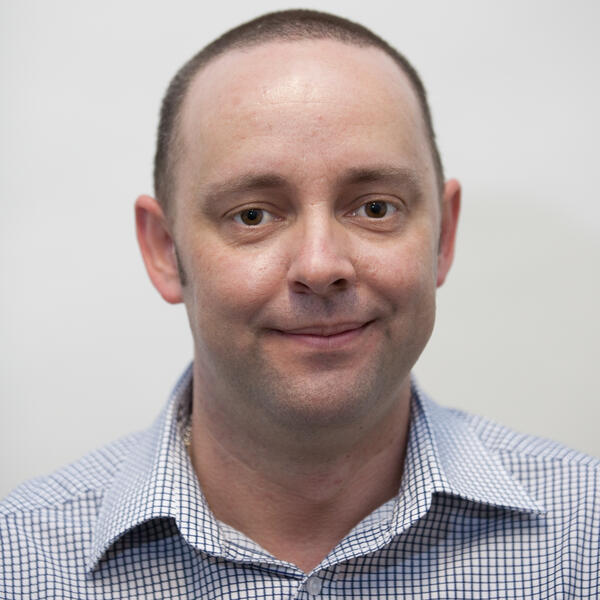
Professor Dan Gladwin and battery storage
From Professor Dan Gladwin

Energy storage is no longer optional – it’s central to how we transition to clean energy.
We can generate renewable power, but without the ability to store and control it, we cannot use it reliably. When I first started, there were no standards, no guidelines - this made the field really exciting. Now, as we head towards net zero, energy storage is essential to integrating renewables into the real world.
At the University of Sheffield, we operate one of the UK’s largest grid-scale energy storage test facilities, connecting real systems to the national grid, taking live market signals, and testing performance in real-world conditions. This is where theory meets reality: we can show that these systems work and perform as expected, giving confidence to industry and regulators alike.
Over ten years ago, we built one of the UK’s first independent grid-scale batteries – a 2 MW, 1 MWh lithium-titanate system connected at 11 kV that is still in operation today. There were no standards to work to, so we had to design, qualify, and get the system operational under entirely new conditions. What we learned was that battery energy storage systems could respond much faster than traditional power plants, providing reliability and stability for the grid in ways that conventional generation cannot.
Now, we are looking at the next evolution: longer-duration storage and hybrid systems that combine different technologies to provide power when it’s needed. At Sheffield, our approach is practical – we don’t just build models and simulate. We connect real systems, operate them at scale, and demonstrate solutions that truly work. This creates credibility with the industry and confidence in the regulators, because the systems are tested under real-world conditions.
Our work spans the whole supply chain, from materials through to full battery systems and applications. This breadth allows our industrial partners to have confidence that we can deliver innovations that meet real needs. Collaborations with energy sector leaders ensure we tackle the real challenges and co-develop solutions that are tested, reliable, and impactful.
Most people don’t notice energy storage if it’s working well – but if the sun isn’t shining or the wind isn’t blowing, you can still charge your electric vehicle. That reliability, combined with affordability and clean energy, is the difference we aim to make.
Going forward, I hope our research continues to push the boundaries of energy storage, accelerating the deployment of longer-duration and hybrid systems. I want to see storage solutions integrated into national and global grids, providing flexibility, resilience, and enabling the transition to net zero. Our ambition is to create sustainable, reliable energy systems that improve lives and protect the planet, while inspiring the next generation of engineers to push the boundaries of energy storage innovation.